

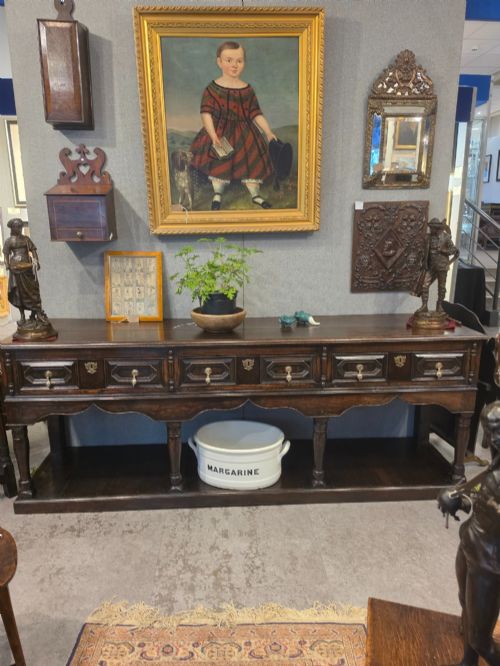
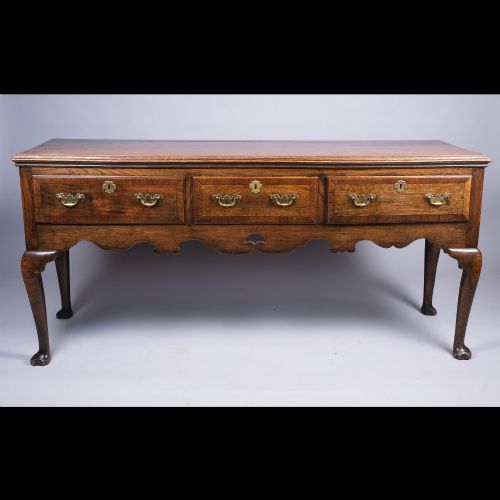
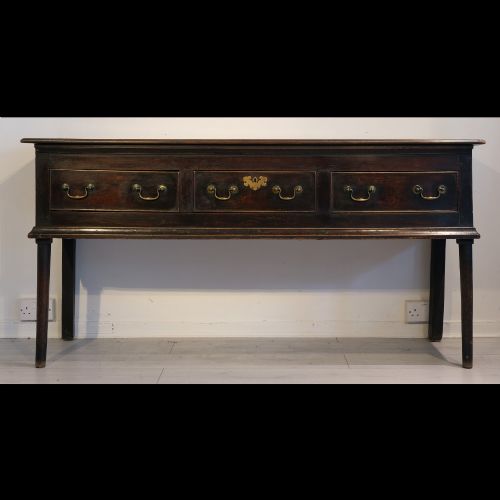
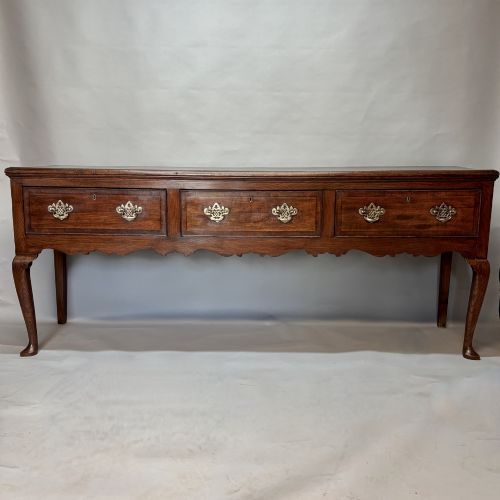

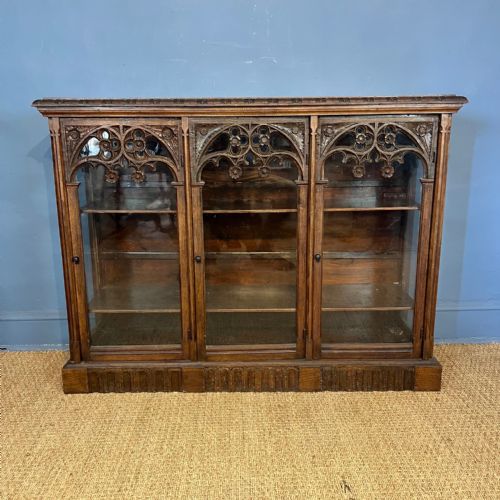
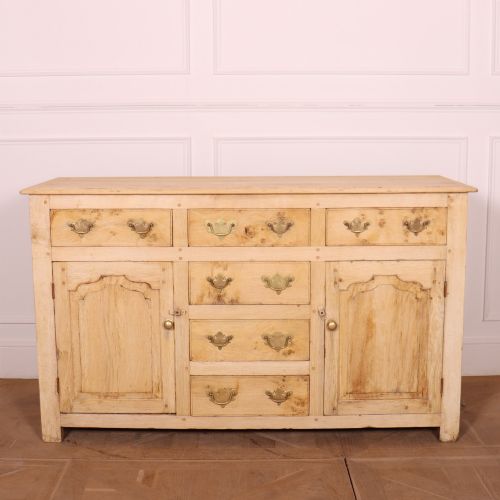
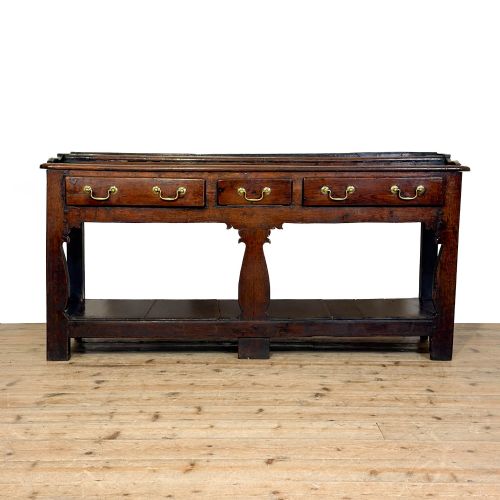
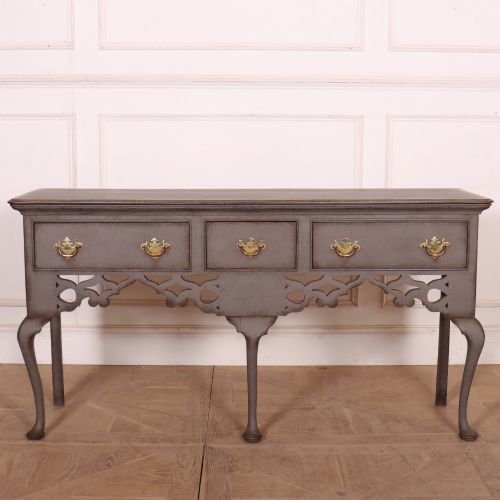

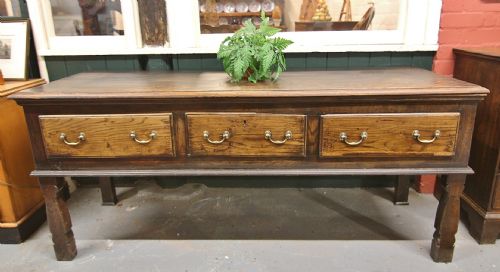
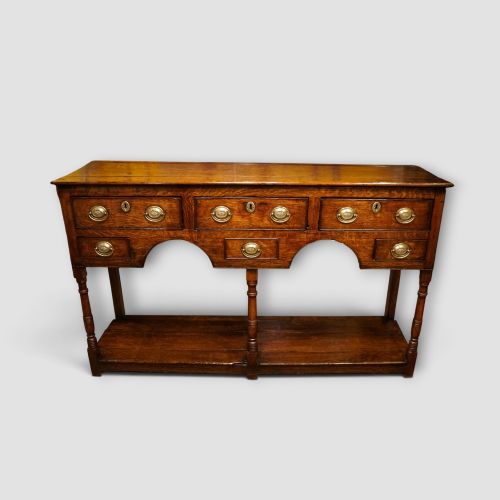
Oak Low Sideboard
An oak low sideboard brings honest timber and deep utility to a room, offering generous storage topped with sturdy historic character.
Oak Low Sideboard
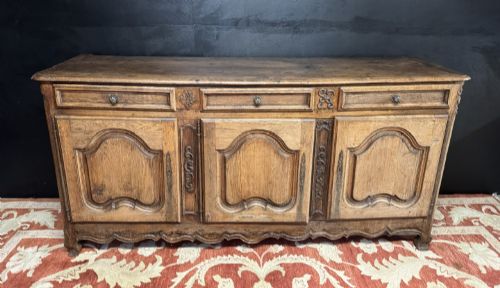
When you search for an oak low sideboard, you encounter substantial serving tables, dresser bases, and heavy cupboards built for practical use in domestic spaces. These pieces share a low profile designed for function, often originating from seventeenth, eighteenth, and nineteenth-century workshops.
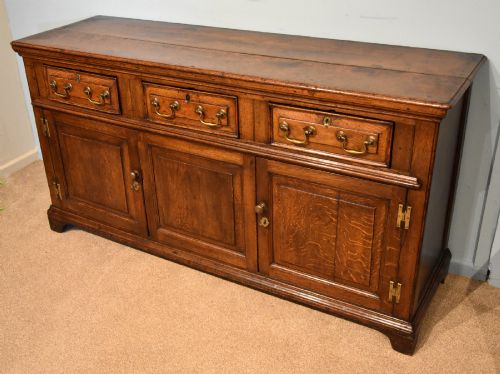
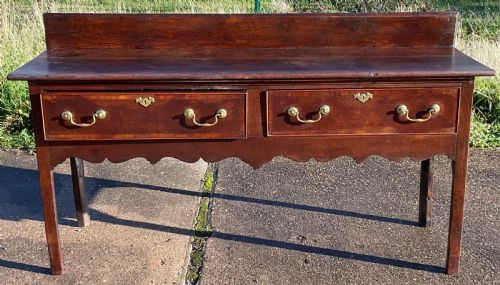
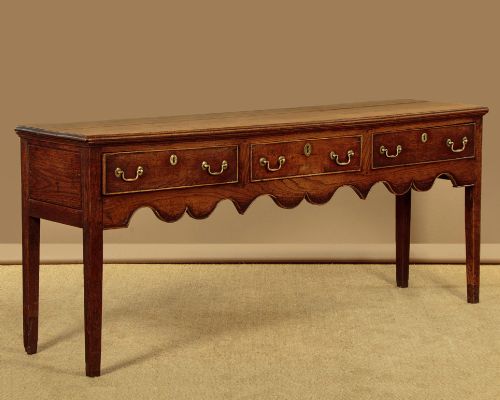
The version you meet most frequently on this page is the eighteenth-century oak dresser base, stripped of its upper plate rack and repurposed over generations as a low serving surface. Alongside these, you find Georgian country pieces, vernacular fruitwood variants, and occasional nineteenth-century Gothic or painted adaptations.
How they were made
Cabinetmakers built these low sideboards primarily from solid oak, sometimes incorporating secondary timbers like pine or fruitwood for internal elements and drawer linings. Joinery relied on sturdy pegged mortise and tenon frames designed to withstand heavy daily domestic labour.
Hardware played an essential functional role, utilising cast brass drop handles and iron hinges that secured panelled doors and supported deep drawers. Surfaces were left plain or treated with simple finishes, allowing the natural grain of the timber to dominate.
Oak Low Sideboard Retail Price Guide 2026
Typical asking prices for oak low sideboard among the pieces listed under this phrase on Sellingantiques today, from the lower quarter to the upper quarter. They describe what is for sale here now, not the wider market.
Materials recorded across these pieces include solid oak, fruitwood, pine, brass hardware, and painted timber surfaces.
What varies in quality
Quality rests in the integrity of the timber selection and the restraint of the joinery, distinguishing utilitarian kitchen furniture from finer parlour pieces. Superior examples display carefully chosen quarter-sawn oak boards, crisp mouldings, and well-balanced proportions across the low frame.
The handling of the drawer construction and the retention of original brass hardware elevate certain pieces above standard vernacular production. Honest signs of age and structural continuity matter far more than polished perfection.
The Oak Low Sideboard Glossary
- Dresser base
- A low utilitarian table fitted with drawers and cupboards below, originally used in kitchens for food preparation and storage before losing its upper shelving.
- Pot board
- An open lower shelf built into the base of a dresser or sideboard, historically intended for storing heavy pots and pans off the floor.
- Block front
- A cabinet front divided vertically into three sections, with the central section recessed and the outer sections projecting forward.
- Vernacular
- Furniture made by regional craftsmen using local traditions and available materials rather than following strict metropolitan design patterns.
Oak Low Sideboard: Frequently Asked Questions
How were these sideboards used historically?
These low wooden units served primarily in kitchens and dining rooms for food preparation, holding tableware, and storing heavy kitchen utensils.
Over time, many lost their upper plate racks, transitioning into general domestic serving surfaces and storage cabinets in family living spaces.
How do I tell an 18th century piece from a 19th century one?
Eighteenth-century examples often display hand-sawn timbers, pegged joints, and vernacular construction methods specific to regional British or European workshops.
Nineteenth-century pieces frequently introduce machine-sawn components, revival styles like Gothic elements, or alternative surface treatments such as ebonised finishes.
Can I use an antique dresser base as a modern sideboard?
Their low profile and generous cupboard space make these historic bases well-suited for modern dining rooms, hallways, or living areas.
They function effectively as media consoles or serving credenzas while introducing warmth and historic character to contemporary interiors.
What woods besides oak will I find?
While oak remains the dominant material across these listings, cabinetmakers frequently utilised fruitwood for regional vernacular pieces and pine for internal linings.
Some examples also feature painted timber finishes or ebonised wood applied during later nineteenth-century revival periods.