



Oak Liquor Tantalus
An oak liquor tantalus secures your spirits behind a locked frame while keeping them in plain sight.
Oak Liquor Tantalus
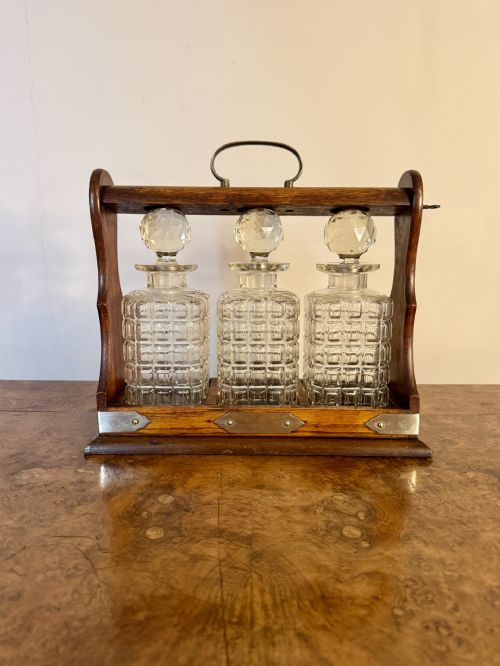
An oak liquor tantalus is a locking barware cabinet designed to hold three decanters securely on a tabletop or inside a games compendium. These pieces belong to the Victorian and Edwardian eras, spanning from eighteen-eighty to nineteen-hundred.
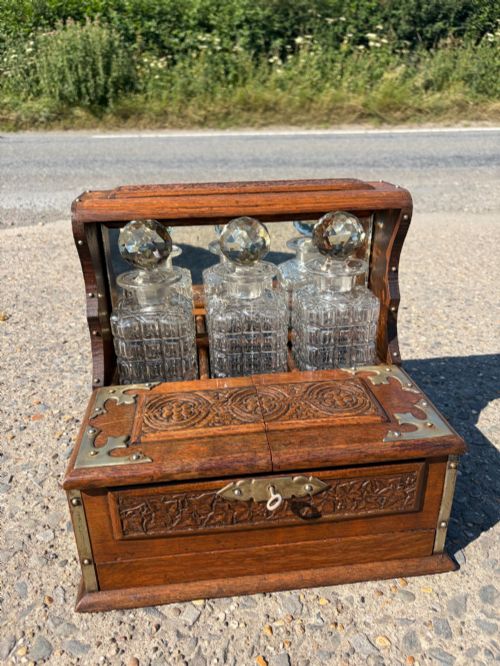
Most examples found here take the form of three-bottle tantalus frames or dry bar cabinets equipped with brass mounts and mirrored backs. The forms range from simple polished timber frames to complex partner's units with integrated storage for cigars and games.
Materials and construction methods
These pieces are built using solid timber carcasses, predominantly golden, pollard or standard oak, sometimes accented with delicate marquetry stringing. The wood is joined and finished to display the natural grain before metalwork and glass are fitted.
Makers integrated heavy brass mounts, locks and silver plate hardware to secure the frames, pairing them with cut glass or cut crystal decanters. Internal mirrors reflect the bottles, while integrated compartments provide space for barware and dry goods.
Oak Liquor Tantalus Retail Price Guide 2026
Typical asking prices for oak liquor tantalus among the pieces listed under this phrase on Sellingantiques today, from the lower quarter to the upper quarter. They describe what is for sale here now, not the wider market.
Listings feature oak, brass, glass, cut crystal, silver plate and mirror glass across Victorian and Edwardian periods.
Judging the quality of an oak liquor tantalus
The distinction between standard examples and superior pieces rests on the complexity of the cabinetwork and the integration of auxiliary functions. Elaborate units combine the locking decanter frame with humidor compartments or games compendiums.
Material selection and decorative detailing elevate certain pieces above routine production, notably those utilising pollard oak veneer, marquetry stringing or partner's layouts. The quality of the cast brass hardware and the weight of the cut crystal decanters further separate ordinary containers from finer ones.
The Oak Liquor Tantalus Glossary
- Tantalus
- A locking drink cabinet with a metal retaining bar that prevents the removal of decanters until the lock is opened with a key. The name derives from the mythological figure of Tantalus, who was kept just out of reach of food and drink.
- Decanter
- A heavy glass or crystal vessel used for holding and serving spirits such as whiskey, gin and brandy. These bottles often feature cut patterns and matching stoppers.
- Marquetry
- Inlaid wood veneers arranged in decorative patterns or pictures on the surface of furniture. It adds visual texture and contrast to the oak background.
- Silver Plate
- A thin layer of silver applied to a base metal object such as a mounting or handle. This technique provided the appearance of solid silver at a lower production cost.
- Games Compendium
- A fitted box containing equipment for various parlour pastimes such as cards, chess or dice. These are sometimes built into the lower sections of larger tantalus cabinets.
Oak Liquor Tantalus: Frequently Asked Questions
What is an oak liquor tantalus?
An oak liquor tantalus is a nineteenth-century locking frame designed to display three decanters of spirits while preventing unauthorised access to the contents. The metal locking bar engages the stoppers so the bottles cannot be lifted out without a key.
These pieces combine functional barware storage with decorative cabinetmaking, often appearing as tabletop frames or more complex dry bar furniture items.
How do you open a tantalus?
Opening a tantalus requires turning a working key in the integrated lock to release the retaining mechanism. When unlocked, the metal bar either slides sideways or pivots upward to free the decanter necks.
Historical pieces sometimes lack working keys, requiring a specialist locksmith to fit a replacement mechanism without damaging the surrounding timber.
What are decanter sets used for?
Decanter sets serve to hold and present potable spirits like whiskey, gin and brandy within a dining room, study or drawing room. They allow hosts to serve guests directly from heavy cut crystal vessels.
In period settings, these sets formed part of a gentleman's entertaining furniture collection alongside cigars and card games.
How do I date a Victorian tantalus?
Dating a Victorian tantalus involves examining the construction methods, lock types, brass casting styles and timber choices. Pieces from the eighteen-eighties often display simpler frames, while late nineteenth-century examples incorporate more elaborate marquetry and multi-use compartments.
Reference markers include patent dates stamped on the brass locking mechanisms and the specific configuration of the cut glass decanters.
Are keys usually included with antique tantalus cabinets?
Keys are occasionally present with antique tantalus units, though many pieces survive down the decades without their original keys. Locks can be picked or new keys turned by an experienced restorer if access is required.
The presence or absence of a working key does not alter the underlying construction period or timber quality of the cabinet.