




Oak Letter Rack Box
These oak letter rack box pieces combine desk storage and correspondence organisation in solid timber.
Oak Letter Rack Box
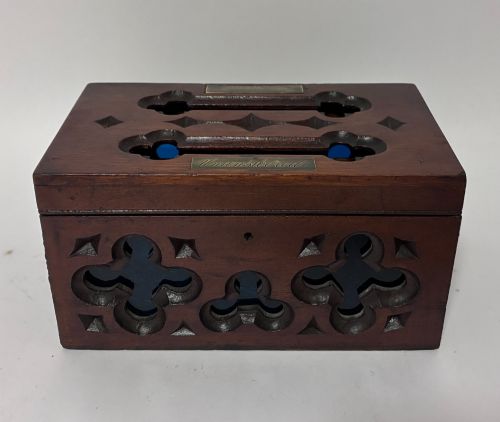
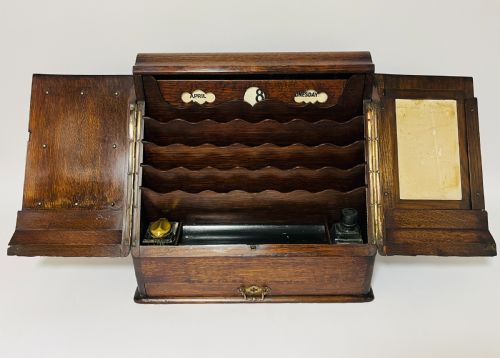
An oak letter rack box serves as a practical desk accessory or stationery cabinet for organising correspondence and writing materials. These pieces range from Victorian Gothic style correspondence boxes to Edwardian country house letter boxes and Arts and Crafts desk tidies.
Most examples encountered on this page date from the nineteenth century, the Victorian era, and the Edwardian period, constructed with fall fronts, wall organisers, and secret drawers. Alongside standard desktop stationery boxes, you will occasionally find purser's requisitions boxes and desktop cabinets featuring glass ink bottles.
The domestic forms reflect the rigorous writing habits of period households, where letters, stamps, and paper required dedicated containment. Their presence on a desk or table brings both functional division and period timber character to a room.
Materials and construction
The primary material across these pieces is solid oak, frequently described in golden or American varieties, paired with brass and metal hardware. Makers utilised these sturdy woods to construct durable desk tidies and wall organisers capable of enduring daily handling.
Internal fittings often incorporate secondary elements such as glass ink bottles, leather surfaces, and fabric linings to protect contents and assist with correspondence tasks. Construction methods range from simple dovetailed stationery boxes to architectural Gothic Revival cases.
Oak Letter Rack Box Retail Price Guide 2026
Typical asking prices for oak letter rack box among the pieces listed under this phrase on Sellingantiques today, from the lower quarter to the upper quarter. They describe what is for sale here now, not the wider market.
Some boxes hide secret compartments for private notes, proving that Victorians loved a good desktop mystery.
Distinguishing quality
Superior quality in these items shows in the selection of figured oak timber and the precision of the joinery used for fall fronts and internal compartments. Finer examples integrate thoughtful details like secret drawers and matching glass ink bottles rather than relying solely on basic box construction.
Stylistic ambition also separates standard storage from exceptional pieces, particularly in items displaying deliberate Gothic Revival or Arts and Crafts design choices. The integration of robust brass hinges and locks points to workshops that prioritised both longevity and visual presence.
The Oak Letter Rack Box Glossary
- Fall front
- A hinged panel that drops forward to reveal interior letter compartments and writing surfaces. This mechanism allows quick access to stored stationery.
- Stationery cabinet
- A desktop container designed specifically for paper, envelopes, and writing implements. These often feature multiple internal tiers and doors.
- Desk tidy
- A compact organiser intended to hold various small desk items in one place. They keep writing spaces orderly by separating letters and accessories.
- Gothic Revival
- An architectural and decorative style drawing on medieval forms, featuring pointed arches and heavy mouldings. Pieces in this style look substantial and dramatic.
- Secret drawer
- A concealed compartment built within a larger piece of furniture or box. It is accessed by hidden releases or removing adjacent sections.
Oak Letter Rack Box: Frequently Asked Questions
What is an oak letter rack box?
An oak letter rack box is a desk accessory designed to hold correspondence, envelopes, and writing paper in an orderly fashion. They appear in forms ranging from simple desktop tidies to elaborate stationery cabinets with fall fronts.
These pieces were essential items on period writing desks, keeping personal and business papers separated. Today they serve a similar functional role while adding period character to a study or living space.
How do I date an oak letter box?
Dating relies on stylistic markers such as Victorian Gothic elements, Edwardian country house proportions, or Arts and Crafts decorative details. Construction techniques and hardware styles also provide clues to the period of manufacture.
Makers often built these items to reflect prevailing architectural trends of the nineteenth and early twentieth centuries. Examining the type of oak and internal fittings helps narrow down the decade.
How do I live with antique stationery boxes?
These boxes fit well on modern desks, sideboards, or console tables, offering practical storage for contemporary mail and notebooks. Their solid oak construction makes them durable enough for everyday use.
Placing them away from direct heat sources helps protect the wood and any internal leather or fabric linings. Regular dusting and occasional wax care keep the timber finish in good condition.