


Oak Lawyers Cabinet
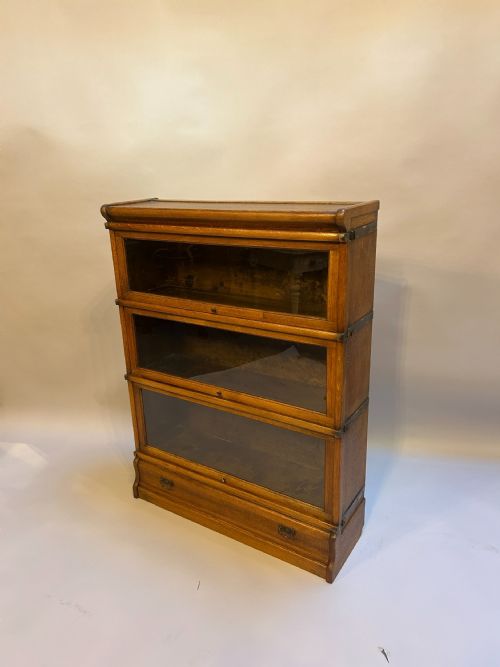
These oak lawyers cabinets are modular stacking bookcases offering practical elegance and versatile display for traditional studies.
Oak Lawyers Cabinet
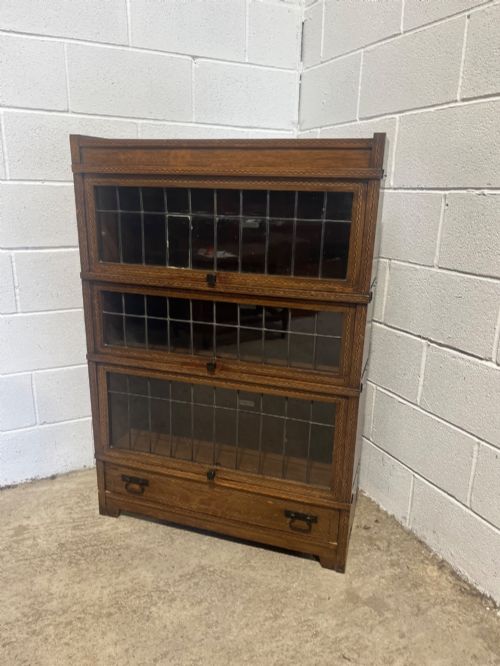
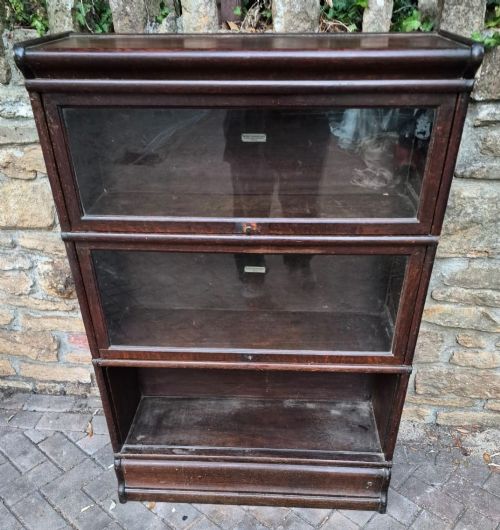
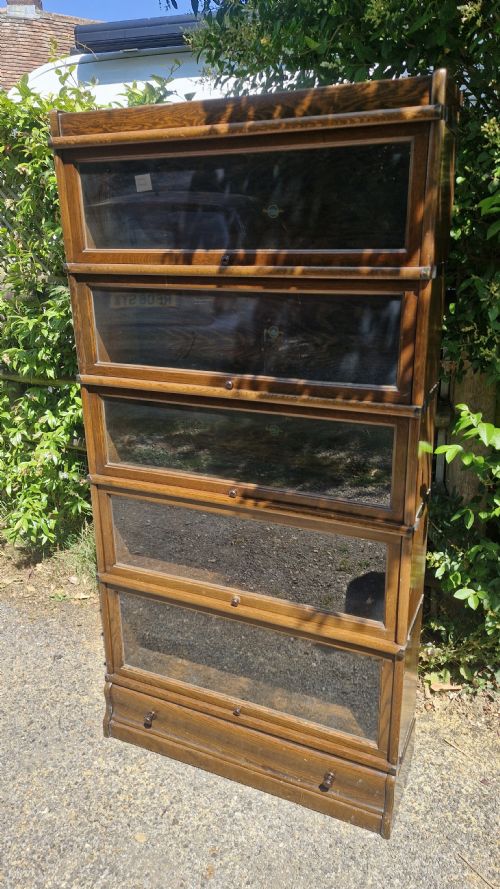
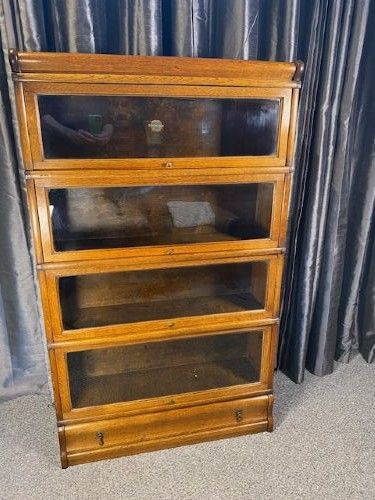
When you search for an oak lawyers cabinet, you are looking at modular sectional bookcases designed to protect professional libraries and valuable volumes from dust. These pieces are most commonly encountered on this page as Globe Wernicke stacking bookcases originating from the Edwardian era and the early twentieth century.
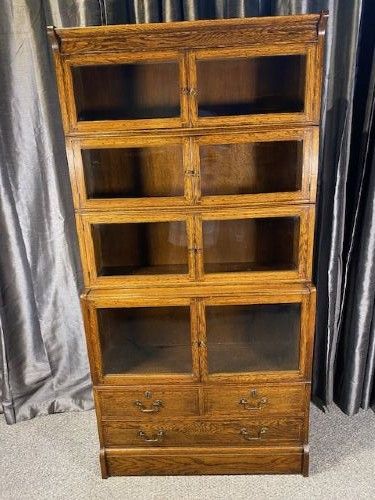
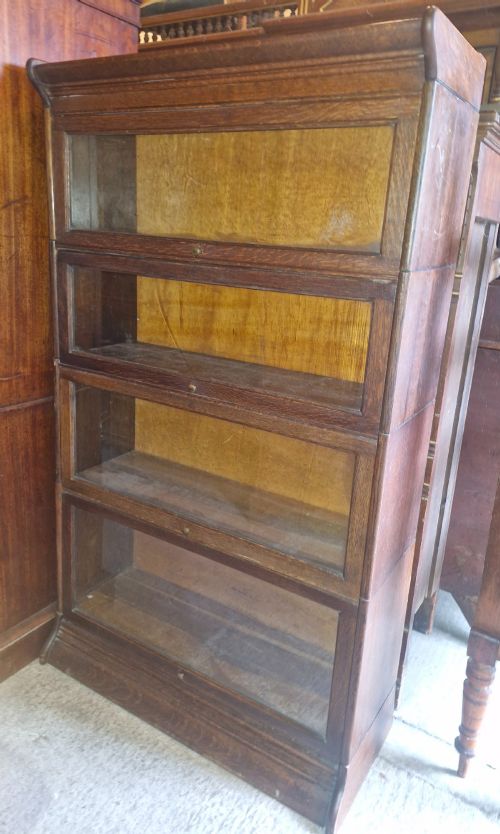
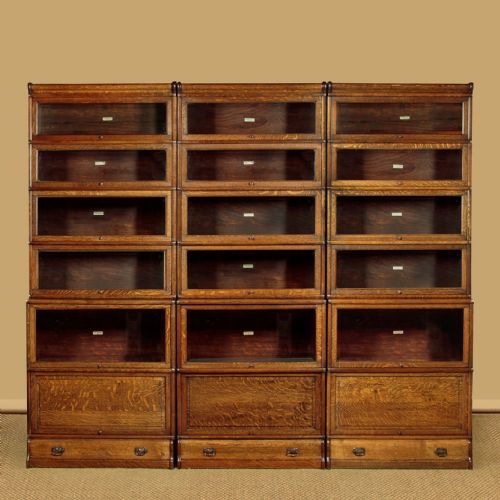
The form relies on independent tiers that stack securely upon one another, usually topped with a separate cornice and raised on a plinth base. Listings frequently present these modular office bookcases in configurations ranging from single standing units to taller multi-section arrangements.
Makers and styles span the period from nineteen hundred to nineteen thirty, showing both named workshop production and unmarked Edwardian Arts and Crafts influence. The primary object type is the bookcase, featuring horizontal glass doors that lift and slide inside the cabinet frame.
Materials and construction methods
The structural framework of these cabinets relies upon solid oak and selected wood veneers, frequently finished in golden oak tones that highlight the natural grain. Some examples incorporate subtle wood inlay work around the borders and panels for decorative effect.
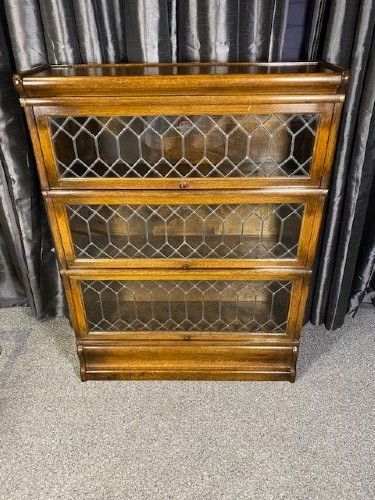
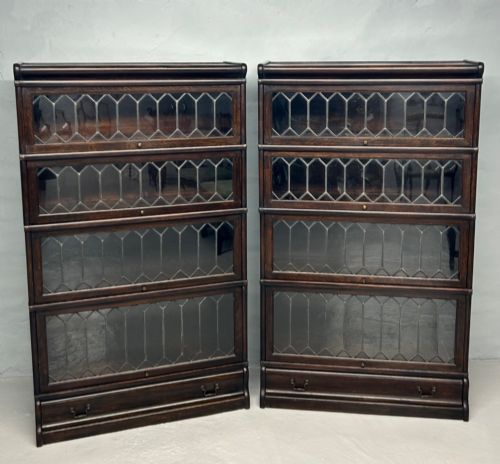
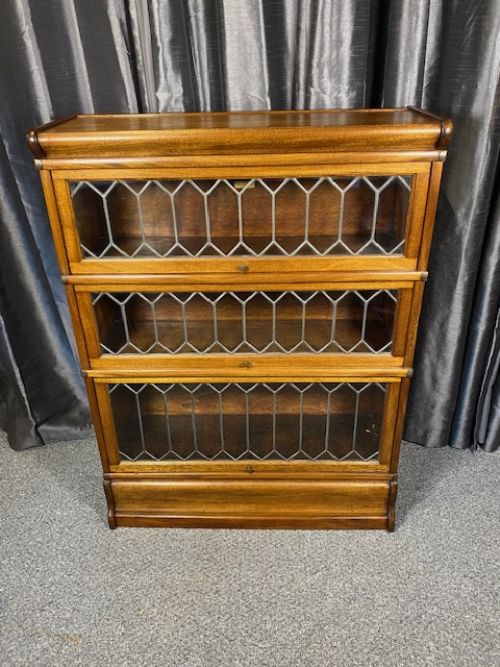
Functional hardware includes clear glass panes fitted into wooden frames, often accompanied by brass pulls and knobs. Certain specialised doors utilise leaded glass construction to divide the panes into smaller geometric sections.
Listings feature oak, glass, brass, lead, metal, and wood inlay across pieces dated from nineteen hundred to nineteen thirty.
Distinctions in craftsmanship
Quality in these sectional units reveals itself in the precision of the stacking mechanism and the smooth operation of the lifting glass doors. Finer examples maintain consistent timber selection across every tier, ensuring the grain patterns align harmoniously from the cornice down to the base.
The presence of maker attribution, such as branded stamps from workshops like Warwick, elevates the standing of a piece. Additionally, refined decorative touches like leaded glass panels or subtle wood inlay distinguish superior cabinetwork from standard utilitarian office furniture.
Globe Wernicke·Warwick
The Oak Lawyers Cabinet Glossary
- Stacking bookcase
- A tall shelving unit composed of separate, removable modular sections that fit vertically together. Each tier usually contains its own independent glazed door.
- Barrister bookcase
- An alternative name for a lawyers cabinet, traditionally used by legal professionals to transport and house portable libraries. The design allowed books to remain enclosed while stacked.
- Leaded glass
- Glass panes held together within metal cames, forming geometric patterns across the cabinet doors. This technique adds decorative weight to the Edwardian aesthetic.
- Cornice
- The decorative moulded projection that sits atop the uppermost tier of the cabinet. It finishes the vertical silhouette of the modular structure.
- Plinth base
- The sturdy horizontal wooden platform upon which the entire stacked bookcase rests. It raises the lowest tier slightly above floor level.
Oak Lawyers Cabinet: Frequently Asked Questions
What is an oak lawyers cabinet?
An oak lawyers cabinet is a modular stacking bookcase designed with individual glass-fronted tiers for storing books. The modular format allowed owners to add sections as their libraries grew.
The listings show these pieces emerging primarily from the Edwardian period through to nineteen thirty, serving both domestic studies and professional offices.
How do the glass doors work?
The glass doors on these cabinets feature a specialised mechanism that allows them to lift upwards and slide flat into the interior cavity above the books. This lets you access volumes easily without swinging doors into the room.
Most sections operate independently, meaning you can open one shelf while keeping the others securely closed against dust.
Can the sections be separated?
Yes, the defining characteristic of these stacking bookcases is their modular construction. Each tier lifts away from the section beneath it, resting on simple wooden pins or tongue-and-groove joints.
This separation makes relocation and arrangement straightforward, though the assembled units remain tall and heavy when fully stacked.
What periods do these cabinets represent?
The available pieces date from the early twentieth century, specifically spanning from nineteen hundred to nineteen thirty, alongside examples simply attributed to the Edwardian era.
Stylistic influences during this timeframe include traditional utilitarian office furniture as well as Edwardian Arts and Crafts design principles.