

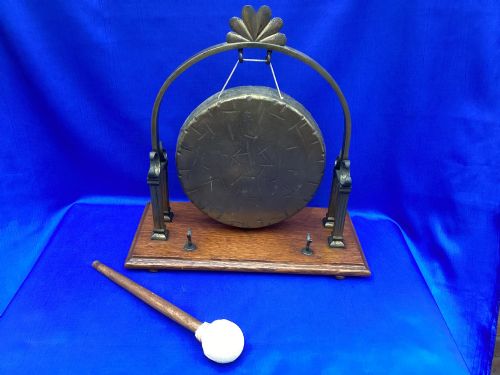
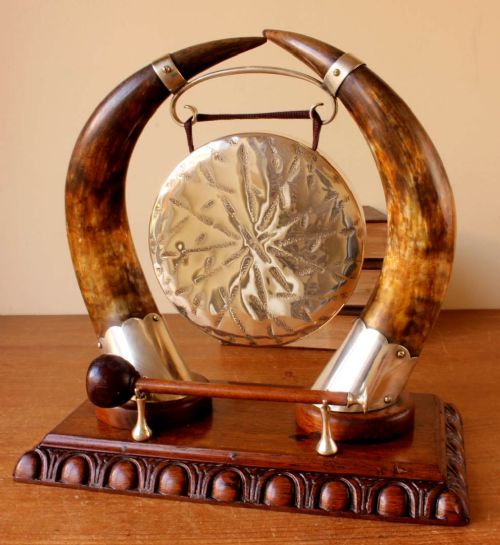
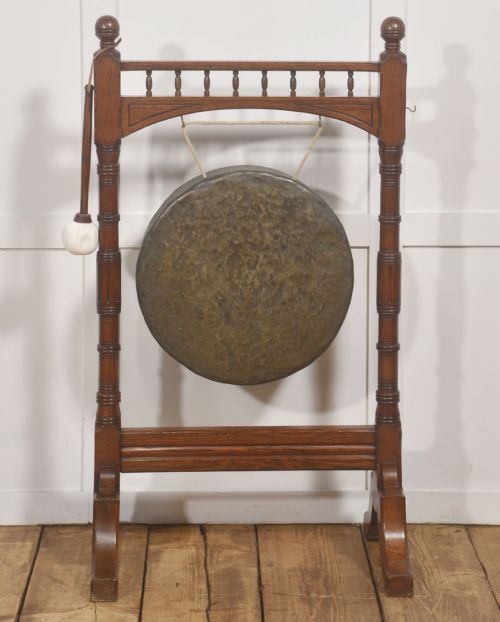
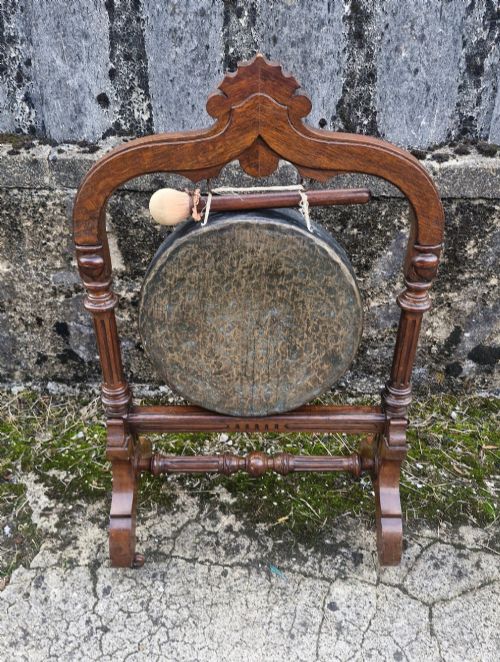
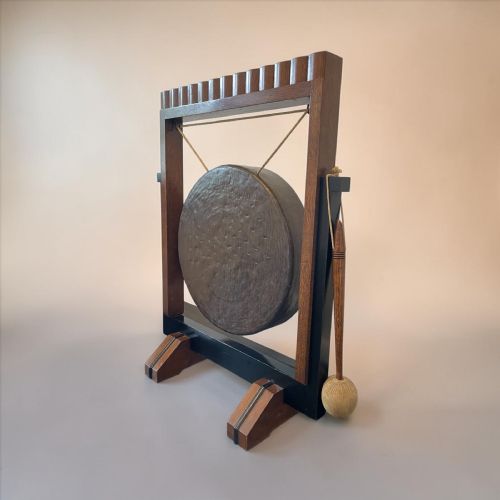


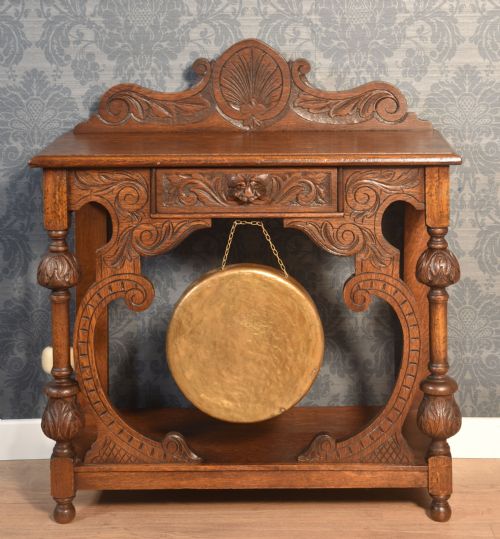

Oak Gong Stand
These oak gong stand examples bring resonant British history into your home, combining sturdy timber frames with striking metal gongs.
Oak Gong Stand
An oak gong stand supports a resonant metal disc or bell, designed to produce a deep chime for summoning guests to meals. These pieces combine robust wooden frames with hanging metal hardware, creating a striking focal point for a hall or dining room.
You are most likely to encounter Victorian and Edwardian examples on this page, often exhibiting Gothic Revival or Arts and Crafts stylistic influences. The selection ranges from compact table bells to monumental floor-standing pieces and even related hall tables.
Period variations span the nineteenth century into the nineteen-thirties, incorporating styles from ornate Victorian Gothic to clean Art Deco lines. Each piece reflects the interior design priorities of its era, balancing functional domestic utility with decorative craftsmanship.
Materials and construction
Makers utilised solid oak for the primary framework, often employing deep carving to achieve the architectural motifs favoured in Gothic Revival and Victorian designs. This dense timber provided the necessary structural stability to support suspended hanging weights without tipping.
Brass and bronze form the primary acoustic elements, shaped into gongs or bells that produce the characteristic resonant tone when struck. These metal components frequently feature engraved detailing or polished finishes to contrast against the dark wood.
Flexible elements such as cord, rope, felt, and leather were employed to suspend the metal gongs securely within their wooden frames. These materials allowed the gong to vibrate freely while preventing metal-on-wood contact that would dampen the sound.
Oak Gong Stand Retail Price Guide 2026
Typical asking prices for oak gong stand among the pieces listed under this phrase on Sellingantiques today, from the lower quarter to the upper quarter. They describe what is for sale here now, not the wider market.
Listings feature oak, brass, bronze, felt, cord, rope, and leather across pieces spanning the nineteenth century through the nineteen-thirties.
Assessing quality and design
Quality in an oak gong stand reveals itself through the depth and crispness of the timber carving, particularly on Gothic Revival and Victorian pieces. Superior examples demonstrate harmonious proportions where the heavy wooden frame properly balances the scale of the suspended metal.
The acoustic properties of the brass or bronze gong dictate the functional success of the piece, with better materials producing a purer, longer-sustained tone. Furthermore, the integration of supplementary materials like fine leather or sturdy cord shows a higher standard of original assembly.
The Oak Gong Stand Glossary
- Gothic Revival
- An architectural and decorative style popular during the nineteenth century that revived medieval forms. It is characterised in these pieces by pointed arches, heavy moulding, and intricate tracery.
- Dinner Gong
- A domestic percussion instrument used primarily in large homes to announce meals. It consists of a metal disc suspended from a dedicated wooden support frame.
- Arts and Crafts
- A design movement valuing traditional craftsmanship and simple forms over mass production. Pieces from this tradition often emphasise the natural grain of the oak.
- Glockenspiel
- A percussion instrument featuring tuned metal bars struck with mallets. An oak-cased variant appears among these listings, sharing materials with traditional gong stands.
Oak Gong Stand: Frequently Asked Questions
What is an oak gong stand?
An oak gong stand is a decorative wooden frame designed to hold a suspended metal disc or bell. These pieces were traditionally used in domestic settings to summon household members.
They combine robust carpentry with acoustic hardware, functioning as both musical instruments and striking hallway furniture.
How were dinner gongs used?
Dinner gongs were struck with a mallet to produce a loud, resonant tone that could carry across a large house. They served as a formal signal for occupants to gather for meals.
This acoustic signal was an essential part of daily household management in larger period residences.
How do I date an oak gong stand?
Dating relies on examining the stylistic clues present in the oak frame, such as Victorian Gothic carvings or cleaner Art Deco lines. Material choices like engraved brass and suspension cords also point to specific manufacturing decades.
Comparing the decorative motifs against known periods helps narrow down the era of production.
How do I care for my gong stand?
Maintenance involves dusting the carved oak frame gently and applying appropriate wax to preserve the timber. The brass or bronze gong can be polished periodically depending on the desired finish.
Ensuring the suspension cord or leather remains secure protects the structural integrity of the hanging apparatus.