







Oak Folk Art Box
An oak folk art box brings together honest timber and the patient hand of the provincial maker.
Oak Folk Art Box
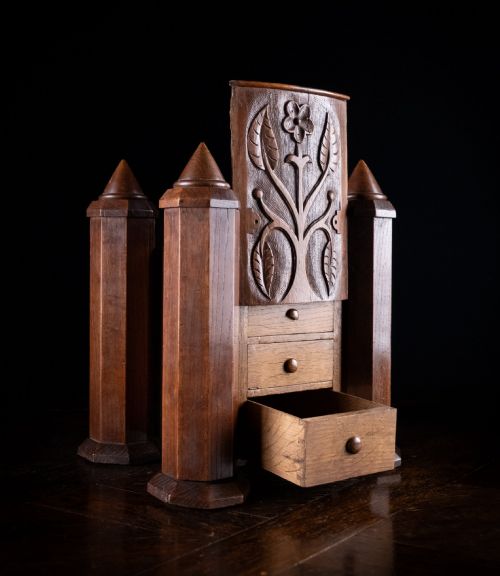
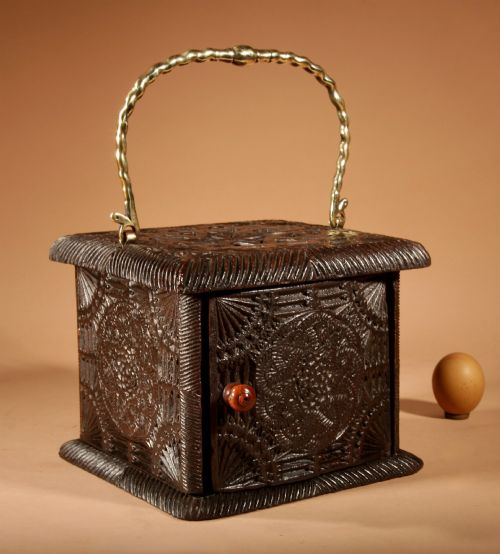
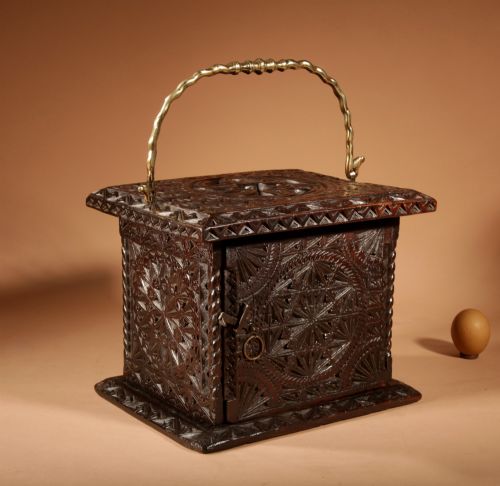
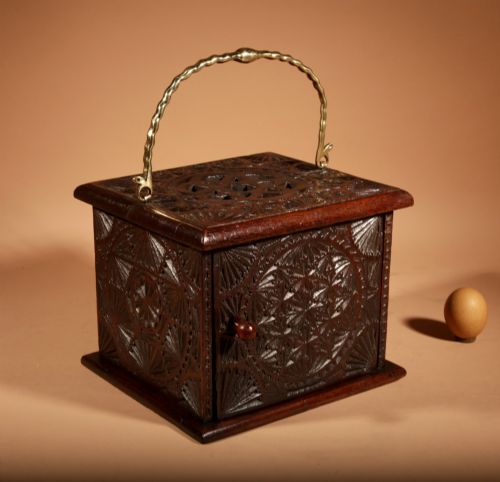
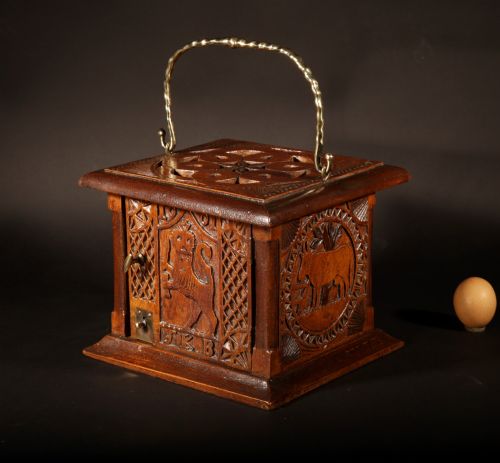
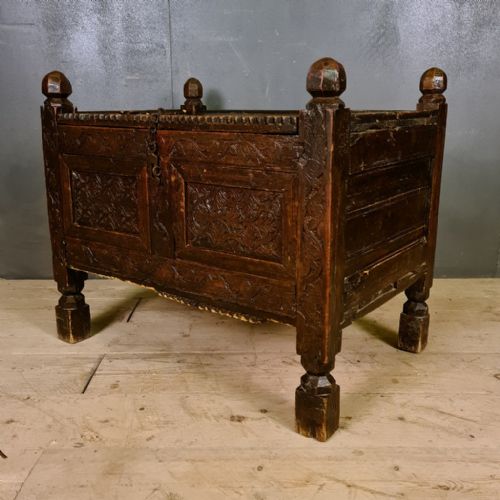
When you search for an oak folk art box, you encounter small personal containers, foot stoves, and larger coffers made across the eighteenth, nineteenth, and early twentieth centuries. These pieces reflect regional European and British traditions, ranging from Welsh chip-carved marriage chests to Scandinavian painted strong boxes.
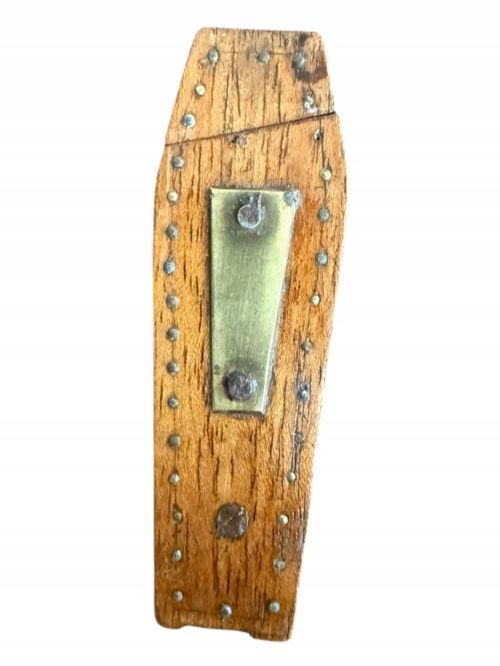
The domestic items on this page include hanging candle boxes, snuff coffins, and miniature inlaid chests designed for daily use. Their forms are straightforward and sturdy, built to hold valuables, documents, or household provisions in country homes and farmhouses.
How They Were Made
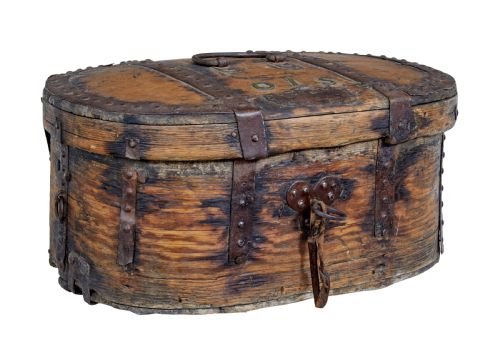
The makers relied on solid oak alongside secondary timbers like fruitwood for inlay work, shaping panels with hand tools. Iron and wrought iron hinges, straps, and corner brackets reinforced these utilitarian structures.
Decoration often involved chip carving, surface painting, and contrasting wood inlays such as hearts. These embellishments transformed plain storage into expressive regional art without losing structural function.
Oak Folk Art Box Retail Price Guide 2026
Typical asking prices for oak folk art box among the pieces listed under this phrase on Sellingantiques today, from the lower quarter to the upper quarter. They describe what is for sale here now, not the wider market.
Object forms range from miniature inlaid chests and candle boxes to painted dome-top coffers and foot stoves.
What Varies in Quality
Quality rests in the depth and control of the hand-carving and the preservation of original painted surfaces or patination. Pieces that retain their early ironwork and uncompromised structural timber stand higher in the range.
Proportion and the distinctiveness of regional motifs, such as Frisian or Welsh decorative styles, distinguish standard utilitarian containers from more accomplished expressions of folk art.
The Oak Folk Art Box Glossary
- Chip carved
- A method of removing small triangles of wood from the surface with a knife or chisel to create geometric patterns. This technique defines much of the ornamentation on nineteenth-century boxes.
- Cofer
- A large chest or strong box used for storing valuables or dry goods, typically fitted with heavy iron mounts. Many examples feature dome tops and robust timber construction.
- Foot warmer
- A perforated box or stove designed to hold hot embers, allowing people to warm their feet during cold periods. These domestic items often display intricate pierced work and painted details.
- Treen
- Small wooden household objects made by turning or carving. This category includes miniature containers and specialised boxes found in rural interiors.
Oak Folk Art Box: Frequently Asked Questions
What were oak folk art boxes used for?
These boxes served practical household functions, storing documents, personal valuables, candles, or snuff. Some specialised variants acted as foot stoves or marriage chests gifted for domestic unions.
Their everyday use meant they lived in kitchens, parlours, and farmhouses, enduring generations of handling while keeping contents secure.
How do I date an oak folk art box?
Dating relies on construction methods, timber characteristics, and regional decorative styles recorded across the eighteenth and nineteenth centuries. Hand-forged ironwork and early chip carving point to earlier periods.
Changes in hinges, nail types, and painted finishes further help place a piece within its specific century of origin.
Where did these folk art boxes originate?
The pieces originate from various European and British regions, including Wales, Scandinavia, France, and Frisia. Each area developed distinct vernacular traditions in carving and paintwork.
Local timber availability and cultural motifs heavily influenced the final appearance of these country containers.
How should I care for an antique wooden box?
Keep wooden boxes away from direct heat sources and dramatic humidity fluctuations to protect the oak and prevent timber splitting. Gentle dusting preserves the dry surface patination.
Avoid applying modern polishes or oils that can build up and alter the historic appearance of the carved or painted exterior.