



Oak Floor Standing Lamp
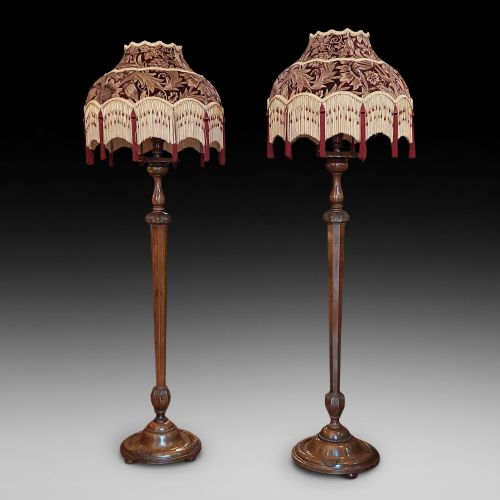
These oak floor standing lamps bring period character and height to a room, offering practical lighting alongside substantial craft.
Oak Floor Standing Lamp
An oak floor standing lamp provides vertical illumination through a tall wooden shaft resting on a sturdy base, designed to stand directly on the floor. When searching for an oak floor standing lamp, a buyer encounters pieces originating from the Edwardian period through the Art Deco and interwar years.
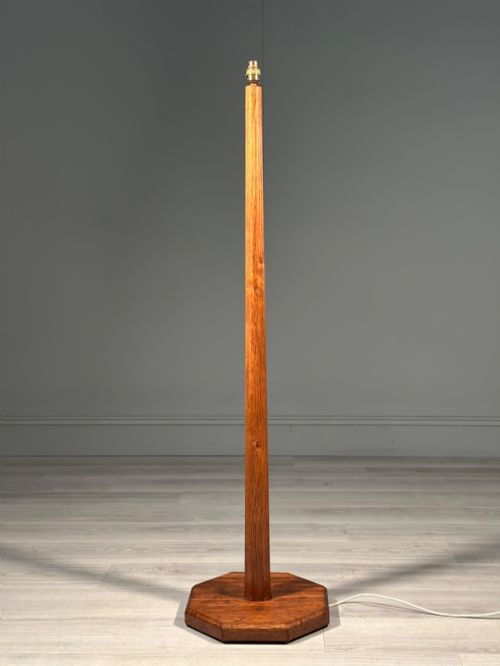
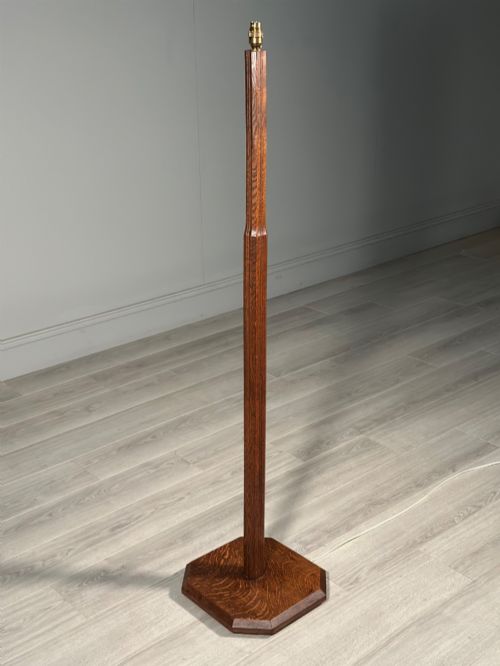
The most common versions on this page date from the 1920s and 1930s, often showcasing the geometric lines typical of Art Deco design. Alongside these, Edwardian examples appear with more traditional carved details, reflecting the diverse domestic interiors of early twentieth-century Britain.
Materials and construction methods
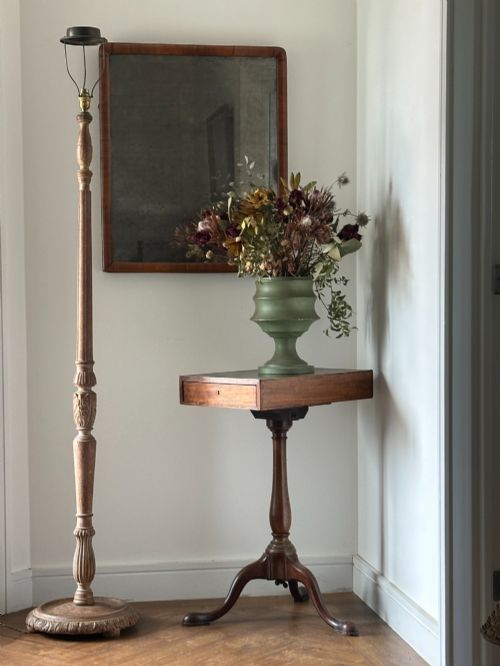
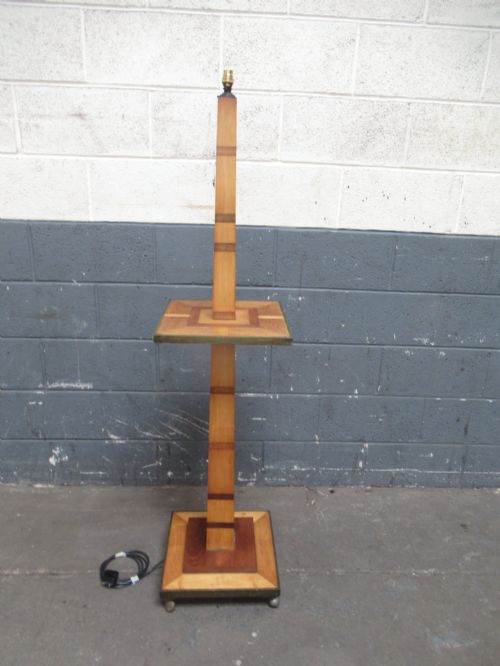
Makers constructed these standard lamps primarily from solid oak, sometimes combining the timber with contrasting materials such as brass, walnut, satinwood, or ebony for decorative effect. Carved elements appear on specific pieces, demonstrating traditional woodworking techniques applied to the central shaft or base.
Many examples incorporate fabric shades, occasionally finished with fringe trimming to soften the downward light. The underlying structure relies on sturdy joinery to support the height safely, while metal fittings accommodate the electrical components.
Oak Floor Standing Lamp Retail Price Guide 2026
Typical asking prices for oak floor standing lamp among the pieces listed under this phrase on Sellingantiques today, from the lower quarter to the upper quarter. They describe what is for sale here now, not the wider market.
Materials recorded across these standard lamps include oak, brass, walnut, fabric, fringe, satinwood, wood, and ebony.
Distinctions in standard and execution
Quality in these standard lamps rests on the crispness of the timber carving and the sophistication of the wood selection. Finer pieces demonstrate careful contrasting of timbers, such as golden oak paired with dark ebony, whereas simpler examples rely on plain turned wood.
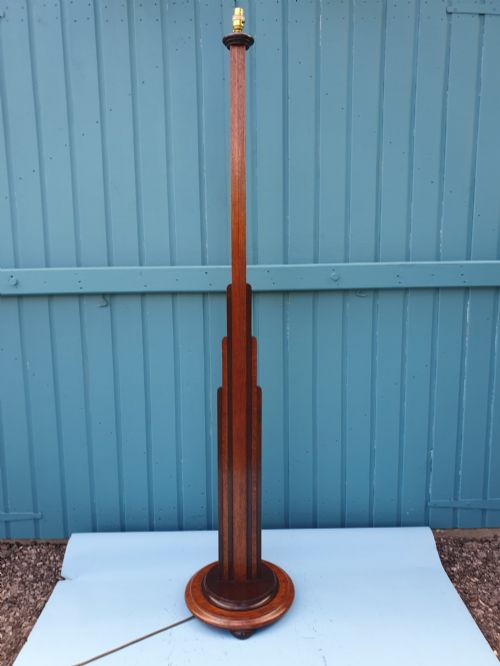
The architectural presence also dictates the tier of the piece, with stepped Art Deco bases and substantial proportions representing the upper end of the range. Simpler turned shafts from the interwar period occupy a more functional position in the hierarchy.
Whytock and Reid
The Oak Floor Standing Lamp Glossary
- Standard lamp
- A tall floor-standing lighting fixture designed to illuminate a room from a vertical position. These pieces incorporate a heavy base to maintain stability and a tall shaft holding the bulb holder and shade.
- Art Deco
- A design style spanning the 1920s and 1930s characterised by geometric shapes, streamlined forms, and stepped profiles. This aesthetic strongly influences the majority of the oak floor standing lamps seen here.
- Edwardian
- The period spanning from nineteen hundred to nineteen ten, noted for refined domestic furnishings and classical revival motifs. Pieces from this era often feature softer carved ornamentation than later interwar designs.
- Interwar
- The period between the First and Second World Wars encompassing the 1920s and 1930s. Furniture from this timeframe shifts away from heavy Victorian ornamentation toward cleaner, more geometric forms.
- Satinwood
- A pale, durable hardwood with a natural sheen used for decorative inlay and contrast. Makers utilised this timber alongside oak to highlight specific geometric or linear details.
Oak Floor Standing Lamp: Frequently Asked Questions
How do I date an oak standard lamp?
Dating relies on stylistic clues and construction methods visible in the timber and base profile. Edwardian pieces display softer carving and traditional proportions, whereas 1920s and 1930s examples often feature stepped Art Deco geometry.
Examining the use of contrasting woods like ebony or satinwood also helps place the piece within the interwar period.
Where should I place a standard lamp?
These lamps function effectively in corners or beside seating areas where ambient vertical light is required. Their height allows them to illuminate reading spaces without crowding tabletop surfaces.
Placing the lamp on a level floor ensures stability, given the substantial weight of the timber shaft.
What styles are available?
The selection encompasses Edwardian traditional designs, English country house styles, and distinct Art Deco geometric forms. Skyscraper and stepped silhouettes represent the prevalent modernist aesthetics of the 1920s and 1930s.
Arts and Crafts influences also appear, highlighting honest construction and visible wood grain.