


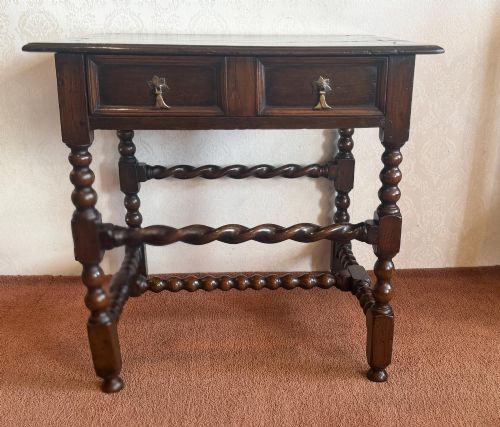


Oak End Table Drawer
An oak end table drawer offers sturdy timber construction and practical storage, making it a reliable addition to any room.
Oak End Table Drawer
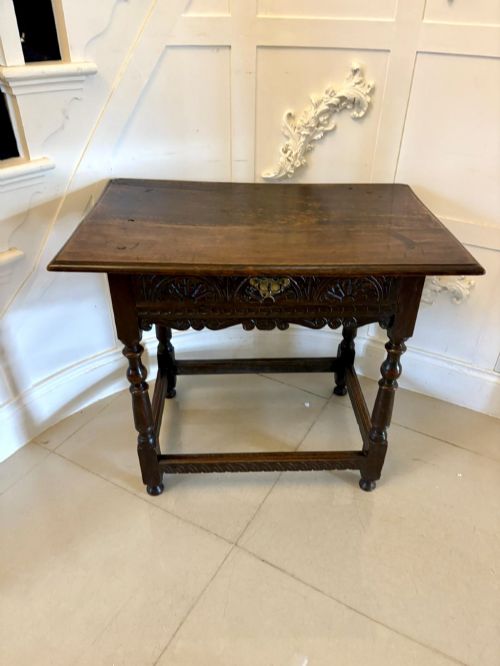
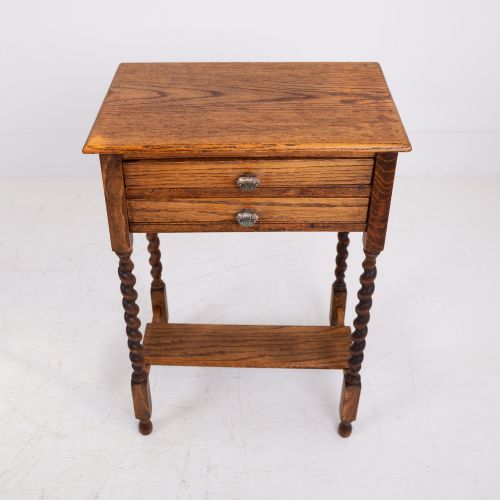
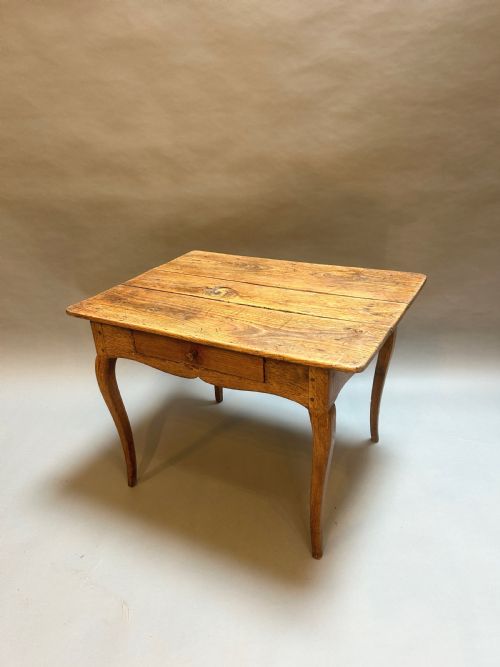
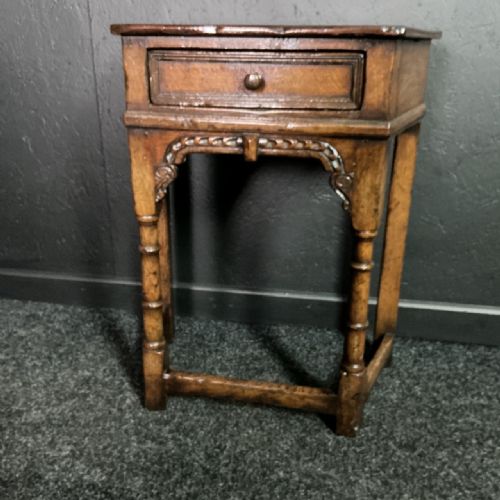
An oak end table drawer provides compact surface space and integrated storage, appearing frequently across periods from the seventeenth century through to the twentieth century. These pieces function primarily as side tables, lamp tables, and bedside cabinets within domestic spaces.
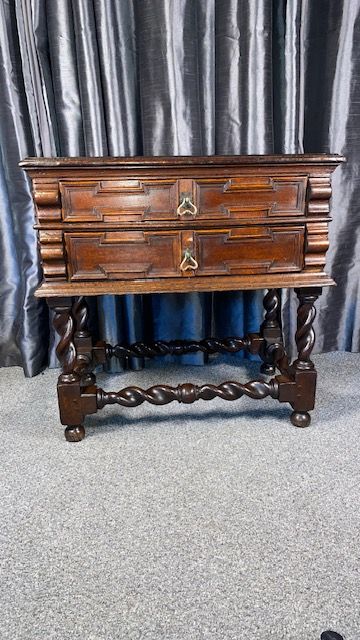
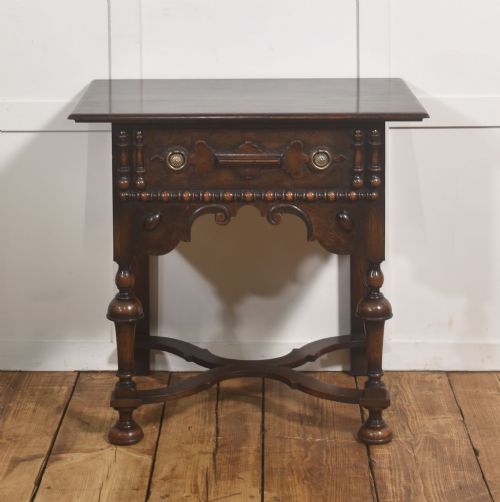
The selection ranges from early seventeenth-century examples featuring bobbin turning to eighteenth-century side tables and twentieth-century Jacobean revival designs. Buyers encounter diverse regional expressions, including English country styles, French provincial pieces, and Welsh origins.
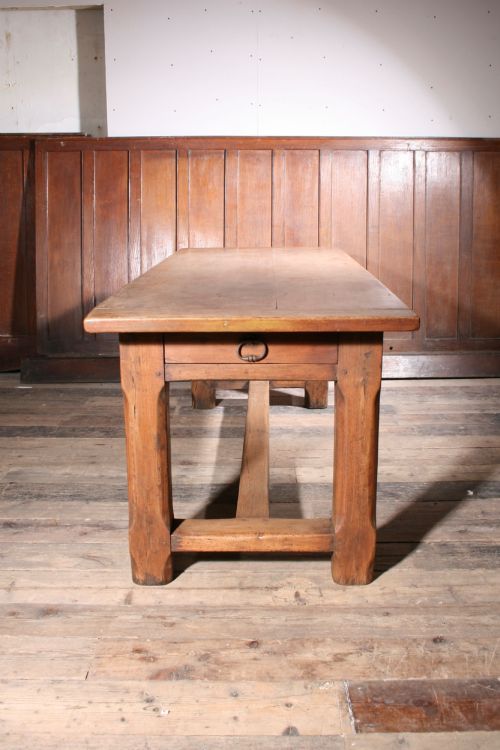
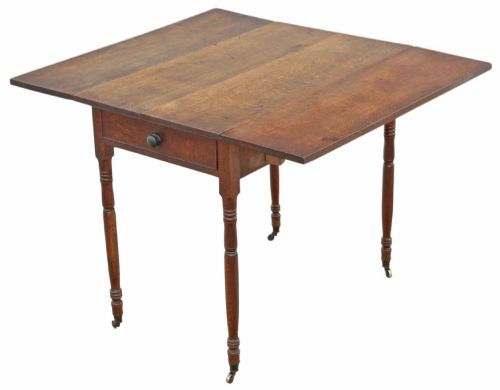
Forms extend beyond simple side tables to encompass drop-leaf Pembroke tables, work tables with end drawers, and drawer leaf dining tables. This variety allows collectors to select pieces that fit specific spatial and functional requirements.
Materials and Construction
Timbers are predominantly solid oak, sometimes accompanied by secondary woods such as pine, beech, and hornbeam, alongside occasional wood inlay. Metal fixtures frequently incorporate brass and iron for handles and structural hardware.
Joinery methods reflect traditional cabinet-making practices suited to hardwood, while decorative elements rely on carving, turning, and polishing. Surfaces are often finished to highlight the natural grain of the golden or light oak.
Oak End Table Drawer Retail Price Guide 2026
Typical asking prices for oak end table drawer among the pieces listed under this phrase on Sellingantiques today, from the lower quarter to the upper quarter. They describe what is for sale here now, not the wider market.
Object forms on this page include side tables, bedside cabinets, kitchen islands, and dining tables.
Factors of Quality
Distinction across the range rests on the crispness of carved details, the integrity of turned components like barley twists, and the preservation of original timber surfaces. Early periods exhibit hand-tooled execution that differs markedly from later revival pieces.
The condition of the drawer construction and the harmony of secondary timbers influence the overall integrity of the piece. Refinished surfaces and replacement hardware alter the character of older examples compared to those retaining an undisturbed patina.
The Oak End Table Drawer Glossary
- Bobbin turned
- A method of lathe-working timber to create a series of rounded, spool-like shapes along a table leg or stretcher. This decorative turning appears frequently on seventeenth-century pieces.
- Drawer leaf
- An extension mechanism where auxiliary leaves pull out from beneath the main surface to lengthen a table. This feature is common on refectory and dining formats.
- Pembroke table
- A small form featuring hinged side leaves supported by folding brackets. These tables often incorporate a single working drawer.
- Refectory table
- A long, narrow dining table traditionally supported by substantial legs connected with low stretchers. Surviving examples often utilise robust oak construction.
- Patina
- The surface sheen and colour developed by timber over decades of use and polishing. Collectors value this indicator of age and history.
Oak End Table Drawer: Frequently Asked Questions
What periods do these tables cover?
The available selection spans from the seventeenth century through the Georgian and Victorian eras up to early twentieth-century revivals. Pieces range from seventeenth-century productions to Edwardian and 1920s interpretations.
Earlier examples display distinct period turning and joinery, whereas later items often emulate these historical styles while serving modern domestic functions.
Where were these tables used?
These tables served various domestic roles as side tables, lamp tables, and bedside cabinets in hallways, living rooms, and bedrooms. Larger variants functioned in kitchens and dining spaces.
Their sturdy timber build made them suitable for everyday utility across different rooms of the house.
How do I identify a revival piece?
Revival pieces, such as those from the Jacobean revival of the early twentieth century, adopt seventeenth-century decorative vocabulary like barley twists and carved panels. Machine-cut elements and standardised timber dimensions often distinguish them from genuine early work.
Examining the underside, drawer construction, and tool marks helps clarify the true age of the timber.
How do I care for antique oak?
Maintain oak furniture by keeping it away from direct heat sources and sudden humidity changes that can cause timber to split. Regular dusting with a dry cloth preserves the finish.
Occasional application of appropriate wax nourishes the wood without building up heavy residues.