
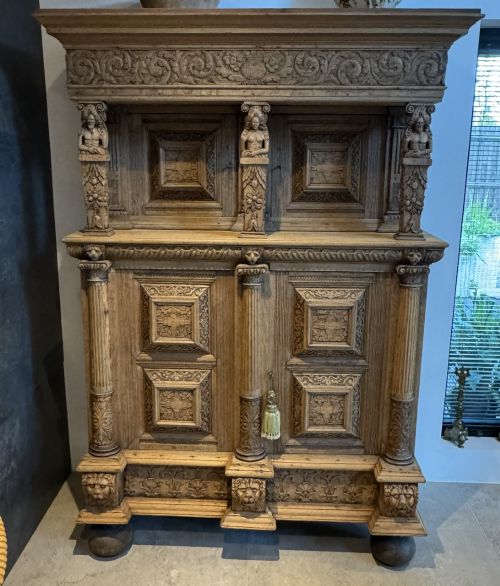


Oak Dutch Cupboard
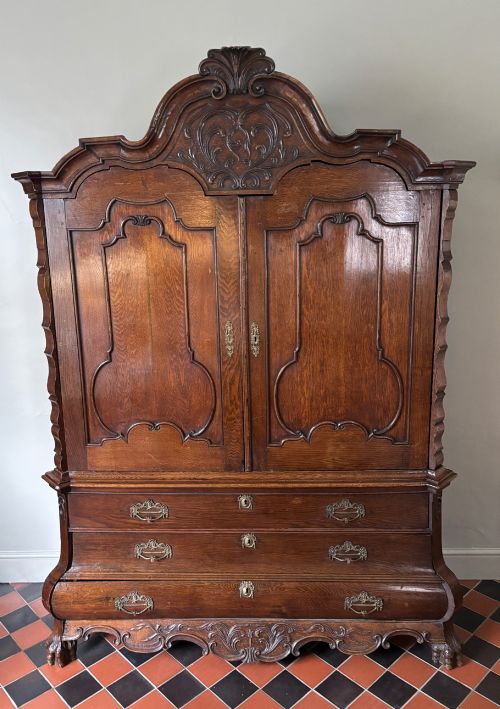
These heavy timbers and panelled doors are an oak dutch cupboard, built to store household linen and display prized possessions with traditional domestic authority.
Oak Dutch Cupboard
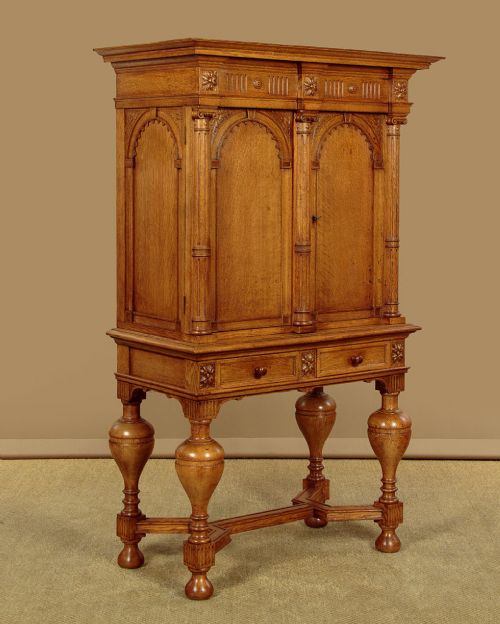
When you search for an oak dutch cupboard, you encounter substantial timber furniture originating from continental workshops, primarily taking the form of large linen presses, towering armoires, and architectural kasten. The pieces available here span several centuries, reaching from sixteenth-century examples up to twentieth-century revivals, alongside smaller diminutive forms like apprentice chests and bedside cupboards.
The most common formats on this page are generous linen cupboards and display cabinets, often featuring deep mouldings and panelled construction designed for domestic storage. Makers utilised native woods alongside exotic inlays, creating imposing silhouettes that anchor a room with period character.
How they were made
Joiners constructed these pieces predominantly from solid oak, framing panels with mortise and tenon joints to accommodate the natural movement of the timber over time. Iron and brass hardware, from sturdy hinges to decorative escutcheons, provides structural reinforcement and functional closure for heavy doors.
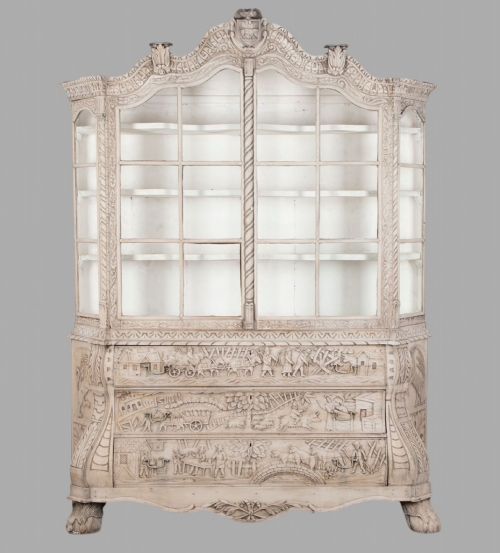
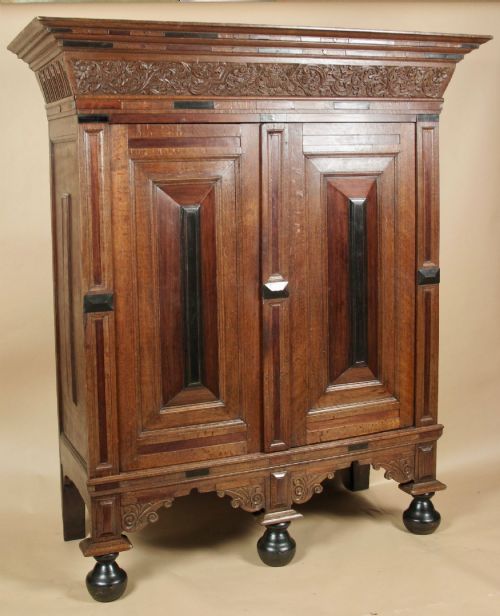
Many cabinets incorporate contrasting veneers of ebony and rosewood, particularly around framing borders and architectural cornices. Surface treatments range from traditional wax finishes to bleached oak variations, highlighting the distinct grain patterns of the primary wood.
Apprentice chests allowed young woodworkers to demonstrate their mastery of cabinet joints by scaling down massive linen presses into miniature masterpieces.
What varies in quality
The distinction between standard utility storage and exceptional cabinet-making lies in the depth of the carved ornamentation and the precision of the mitred mouldings. Elaborate bombé fronts and balanced proportions require advanced carpentry skill, separating utilitarian pieces from grander architectural statements.
The choice of secondary woods and the survival of original decorative details, such as ebony mouldings and brass fittings, dictate the overall integrity of the piece. Untouched surfaces retain a richer patina, whereas heavily restored examples show alterations to the primary timber framework.
The Oak Dutch Cupboard Glossary
- Kas
- A large, freestanding wardrobe or cupboard traditionally used in the Netherlands for storing household linen and clothing. These pieces often feature monumental cornices and panelled doors.
- Bombé
- A swelling, convex furniture shape characteristic of baroque and rococo designs, curving outward toward the base. This technique requires considerable skill to construct from solid timber or veneer.
- Linen Press
- A tall piece of furniture featuring upper doors enclosing shelves and lower drawers for textile storage. They were essential for keeping household linens flat and organised.
- Kussenkast
- A traditional Dutch cushion-style cabinet featuring prominent, raised cushion-moulded panels on the doors. This seventeenth-century form showcases contrasting ebony or rosewood highlights.
- Bleached Oak
- Timber treated to lighten its natural tone, a finish seen on certain regional cupboards to soften the visual weight of heavy oak.
Oak Dutch Cupboard: Frequently Asked Questions
What is a kussenkast?
A kussenkast is a traditional Dutch cupboard distinguished by its large, cushion-moulded door panels. These pieces date back to the seventeenth century and often incorporate contrasting ebony and rosewood details.
They served as grand storage units for family linens and valuables, reflecting the wealth and status of the household through their architectural presence.
How do I date an oak Dutch cupboard?
Dating relies on examining the construction methods, panel styles, and timber combinations used throughout the piece. Seventeenth-century examples often display bold geometric mouldings and contrasting tropical hardwoods, whereas eighteenth and nineteenth-century pieces show shifts toward carved rococo flourishes or simpler bleached finishes.
Hardware placement and the type of hinges or locks also offer reliable clues to the period of manufacture.
Where were these cupboards used?
These cupboards were built for domestic interiors in the Netherlands and Flanders, serving primarily in bedrooms and halls for storing heavy textiles. Their imposing scale made them central fixtures in wealthy merchant homes.
Today, they function well in large modern living spaces or dining rooms as statement storage pieces.