

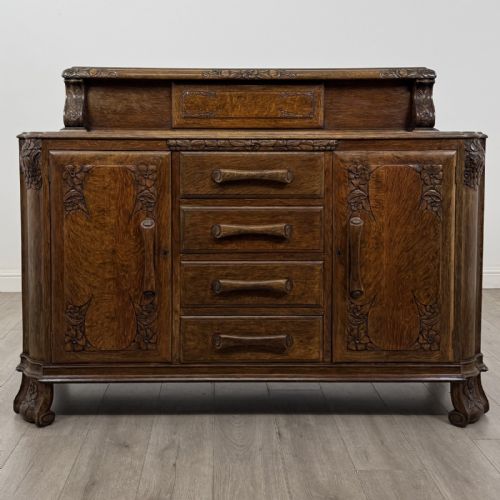
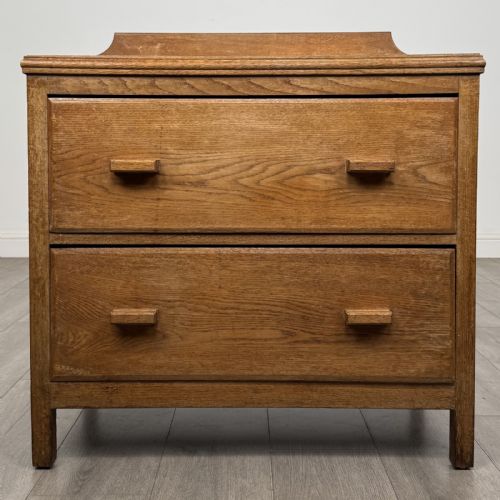
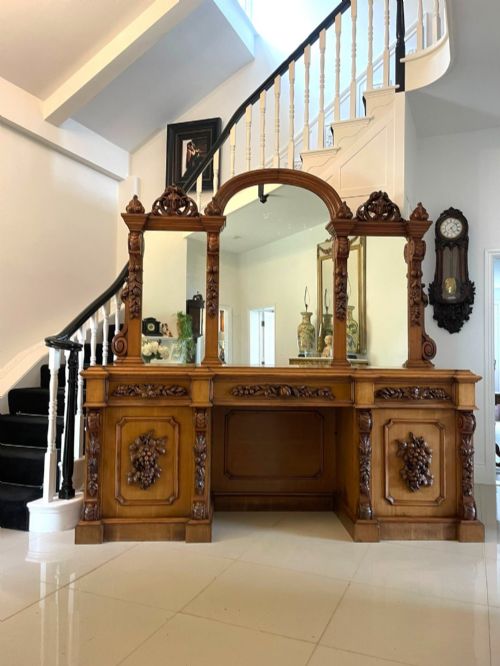
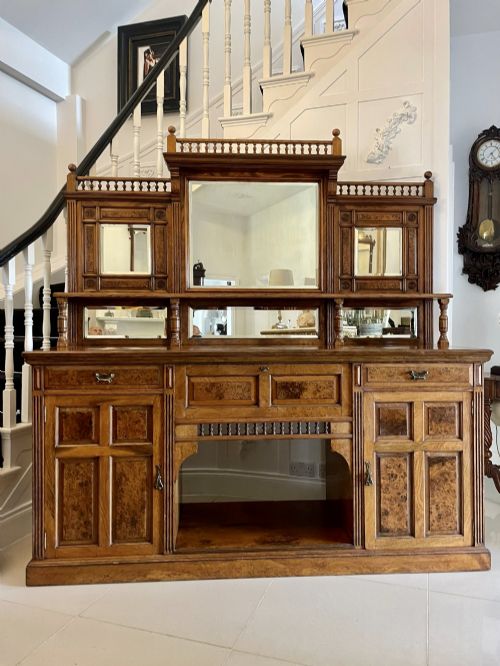




Oak Dresser Back
An oak dresser back brings architectural presence to a dining room, combining open display shelves or mirror plates with sturdy timber construction.
Oak Dresser Back
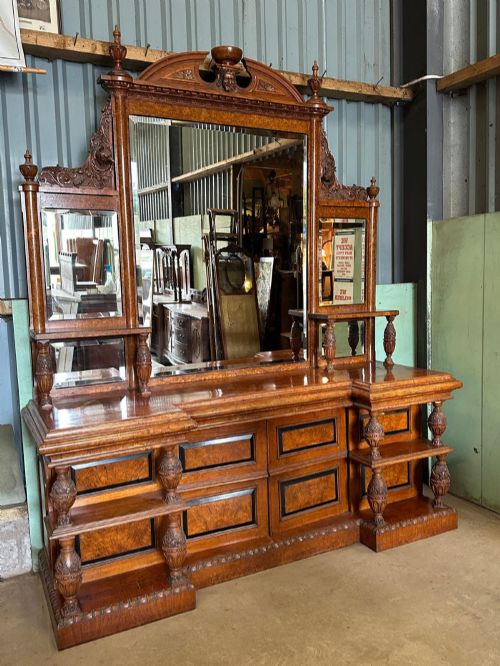
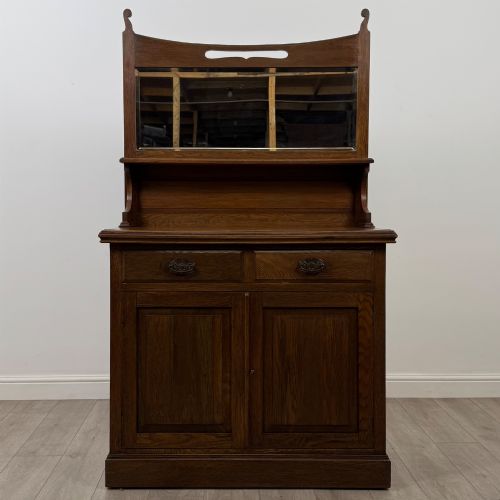
An oak dresser back provides the upper shelving tier or mirror-backed superstructure for sideboards and dressers. When you search for an oak dresser back, you encounter pieces that range from plain plate racks to elaborate mirror-backed superstructures designed to sit upon a base.
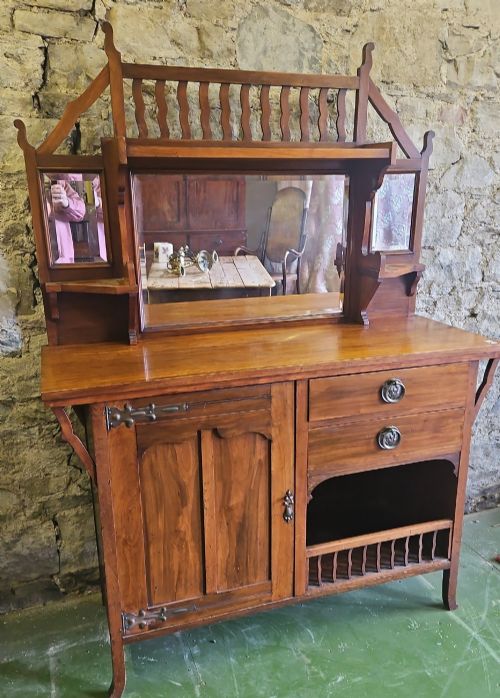
The pieces documented here emerge primarily from the Victorian and Edwardian eras, alongside Arts and Crafts and Art Nouveau interpretations. They appear alongside complete sideboards, hall stands, and side cabinets featuring integrated timber galleries.
Most examples utilise solid oak or pollard oak, sometimes paired with pine carcasses and inset glass mirror plates. Their forms vary from open-backed platerack dressers to heavily carved mirror frames meant to bolt onto lower cabinetry.
Materials and construction
Cabinetmakers built these superstructures predominantly using solid oak, occasionally selecting figured pollard oak for its distinctive burr grain patterns. Secondary timbers such as pine appear on concealed structural elements and backing boards.
Carving, bevelled mirror glass, and brass hardware define the decorative technique. Superstructures often incorporate raised galleries, open plate racks, or carved brackets supporting central mirror plates framed in the Gothic Revival, Arts and Crafts, or Renaissance Revival styles.
Oak Dresser Back Retail Price Guide 2026
Typical asking prices for oak dresser back among the pieces listed under this phrase on Sellingantiques today, from the lower quarter to the upper quarter. They describe what is for sale here now, not the wider market.
Listings feature oak, pollard oak, pine, and mahogany, spanning Victorian, Edwardian, and Arts and Crafts design movements.
Assessing quality and craftsmanship
Quality rests upon the selection of timber and the depth of the carving. Plain golden oak boards with minimal detail sit at one end, while pieces utilising figured pollard oak with intricate geometric or Green Man carving represent the height of the cabinetmaker's art.
Construction methods also separate standard production from superior workshops. The integration of solid timber mouldings, robust jointing for plate shelves, and original bevelled mirror glass distinguish finer superstructures from simpler later additions.
T Simpson and Son·Liberty of London
The Oak Dresser Back Glossary
- Pollard oak
- Oak timber taken from a tree that has been pollarded, producing tightly clustered burr patterns with high decorative value.
- Plate rack
- A set of grooved open shelves built into a dresser back specifically for displaying ceramic plates upright.
- Raised gallery
- A decorative low wooden rail or tiered upstand positioned along the top edge of a sideboard or cabinet back.
- Mirror back
- A superstructure incorporating a large glass mirror plate designed to reflect light and display decorative objects placed on the ledge below.
Oak Dresser Back: Frequently Asked Questions
What is an oak dresser back used for?
An oak dresser back serves to display ceramic plates, glassware, and decorative objects while adding architectural height to a sideboard. It provides either open shelving or a framed mirror plate that sits above the main surface of the furniture.
Historically, these superstructures allowed households to showcase fine china in dining rooms. Today, they function similarly in domestic interiors to frame wall space and organise tableware.
How do I attach a dresser back?
Most dresser backs secure directly to the rear of a matching sideboard or base cabinet using structural screw fixings and steadying brackets. Alignment requires matching the depth of the superstructure to the top surface of the lower piece.
Professional installation ensures the weight distributes safely, particularly for heavy mirror-backed frames dating from the Victorian period.
Are these pieces solid oak?
Construction typically combines solid oak and pollard oak for the visible framework, decorative mouldings, and shelves. Secondary timbers such as pine occasionally form the internal backing boards or hidden structural supports.
Examining the grain patterns and joinery reveals whether a piece relies entirely on solid timber or incorporates veneered surfaces over secondary woods.
What periods do these pieces come from?
The recorded examples span from the nineteenth century through the Edwardian era and into the early twentieth century. Victorian and Edwardian pieces dominate, alongside Arts and Crafts, Art Nouveau, and revival styles.
Design characteristics such as heavy carved ornamentation point toward Victorian production, whereas clean linear forms align with the Arts and Crafts movement.