



Oak Draw Leaf Dining Table
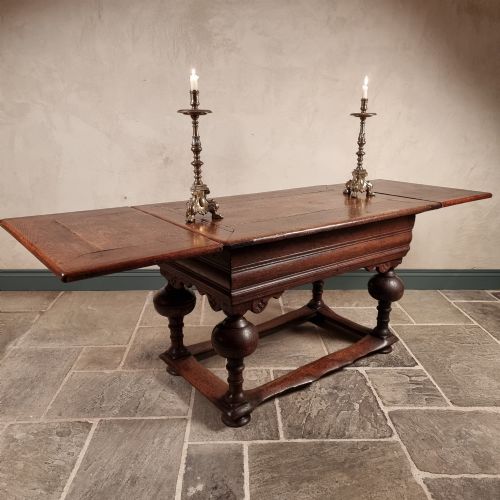
These oak draw leaf dining tables combine clever extending leaves with robust construction, offering generous surfaces for gathering.
Oak Draw Leaf Dining Table
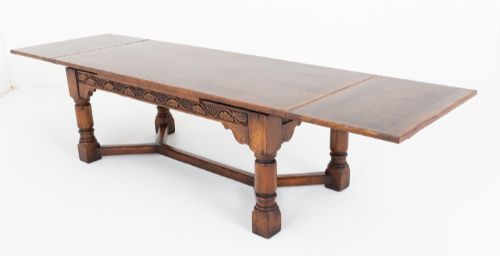
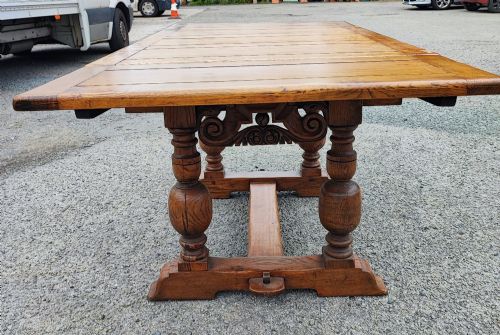
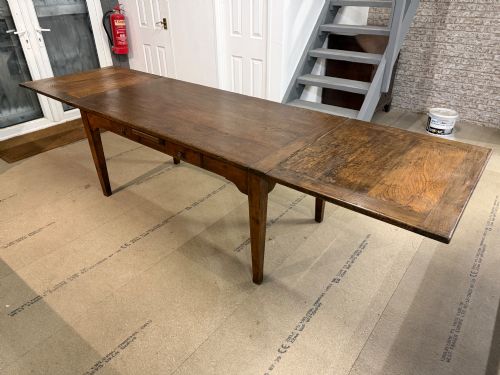
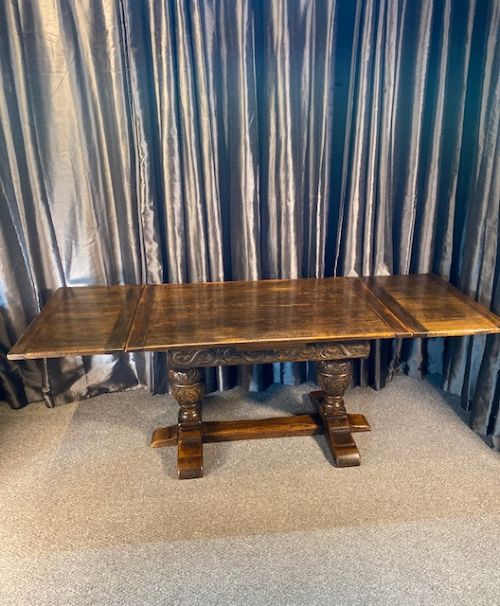
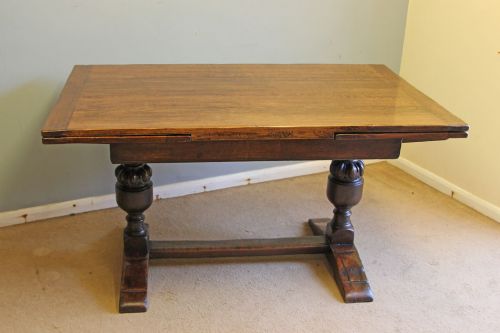
An oak draw leaf dining table provides an extendable surface via hidden underleaves that pull out from each end, altering its length to suit the occasion. This mechanism maintains a stable top whether closed for daily use or fully extended for hosting larger groups.
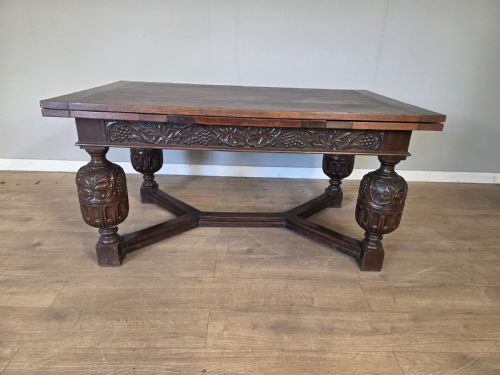
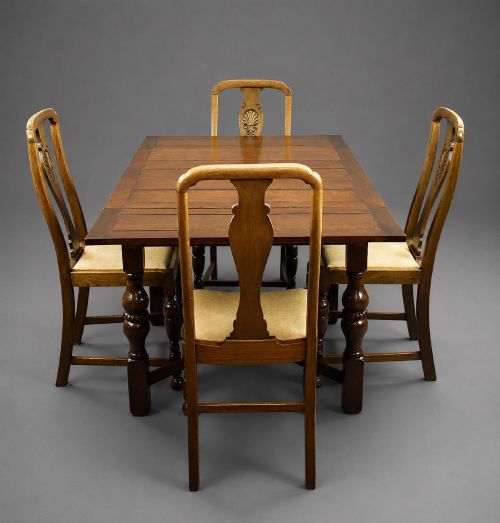
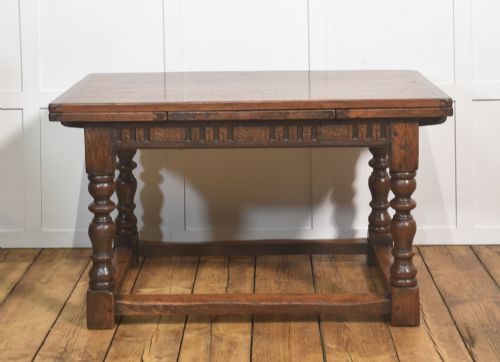
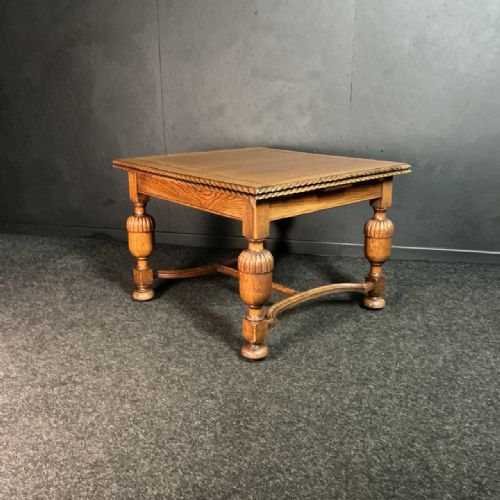
The pieces seen here span centuries of craftsmanship, ranging from seventeenth-century originals to twentieth-century revivals in Edwardian, Jacobean, and Elizabethan styles. Farmhouse, refectory, and French provincial forms appear frequently alongside more formal revival designs.
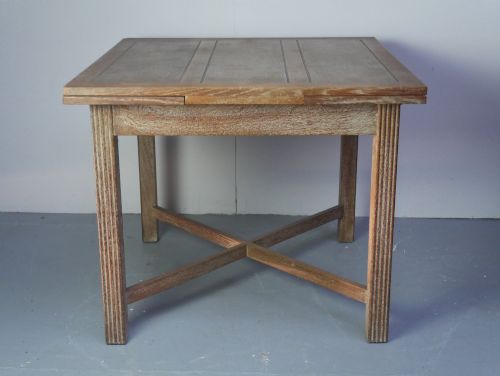
Solid oak and limed oak predominate, frequently complemented by wood inlay or parquet surfaces that display varied grain patterns. Many examples arrive paired with matching dining sets or chairs to complete the interior arrangement.
Materials and construction
Solid oak provides the structural backbone for these tables, chosen for its density and durability under regular family use. Carpenters utilised traditional joinery methods to ensure the expanding leaves glide smoothly on internal runners without sagging.
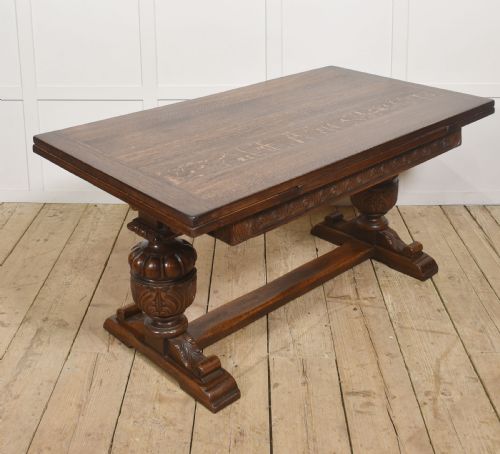
Surface treatments introduce variety through hand-carved details, smooth parquetry panels, and limed finishes that highlight the natural grain. Inlaid wood and contrasting timber sections appear across revival pieces from the early twentieth century, reflecting contemporary arts and crafts influences.
Oak Draw Leaf Dining Table Retail Price Guide 2026
Typical asking prices for oak draw leaf dining table among the pieces listed under this phrase on Sellingantiques today, from the lower quarter to the upper quarter. They describe what is for sale here now, not the wider market.
Materials range from solid oak and limed oak to decorative parquet tops and contrasting wood inlay.
Gradations in quality
The distinction between standard production items and finer examples rests upon the precision of the extending mechanism and the selection of timber. Superior tables maintain a level surface when fully drawn, with leaves that slot into place flush against the main top.
Carving depth and the integrity of the underlying joinery further separate workshops. Pieces bearing attribution to established makers display meticulous hand-finishing on legs and aprons, whereas utility models rely on simpler turned supports and machine-cut joints.
Maple and Co·Rackstraw·Heals
The Oak Draw Leaf Dining Table Glossary
- Draw leaf
- An extending table design where two leaves slide out from beneath the main central top. This clever mechanism doubles the usable surface area while remaining tucked away when not required.
- Refectory table
- A long, narrow dining table traditionally used in communal dining halls. These sturdy forms typically feature thick legs joined by low stretchers for extra stability.
- Parquetry
- Geometric patterns constructed from small pieces of wood veneer laid onto a surface. This decorative technique creates intricate mosaic designs across the table top.
- Jacobean style
- An English design aesthetic characterised by straight lines, dark oak, and geometric carvings. Pieces from this tradition often feature heavy turned legs and strapwork motifs.
- Limed oak
- A finish created by applying a white pigment to oak timber to highlight the open grain. This treatment lightens the natural tone of the wood while accentuating its texture.
Oak Draw Leaf Dining Table: Frequently Asked Questions
How do draw leaf tables work?
The mechanism relies on two sliding leaves stored underneath the main table top. When pulled, the main top lifts slightly before the leaves glide outward into place.
This clever engineering allows a compact daily dining surface to expand rapidly for guests without requiring separate loose leaves to be stored elsewhere.
What is a refectory table?
A refectory table is a long, narrow dining table historically built for large communal dining spaces. They are characterised by robust wooden construction and supportive floor stretchers.
In modern homes, these pieces serve as substantial dining surfaces that accommodate large gatherings with ease.
How do I care for solid oak furniture?
Solid oak benefits from regular dusting with a dry cloth and occasional treatment with suitable beeswax or furniture polish. Keeping the timber away from direct heat sources prevents the wood from drying out.
Using mats under hot dishes and promptly wiping up spills protects the finish from water marks and heat rings.
Are these tables suitable for everyday use?
Oak is an exceptionally hard timber capable of withstanding the rigours of daily family life. The thick construction and durable joints make these dining tables ideal for regular, heavy use.
Over time, minor marks often blend into the rich patina of the wood, adding character to the surface.