



Oak Dinner Bell
An oak dinner bell brings a rich, resonant tone to the dining room, combining warm timber with gleaming metal for an unmistakable summons.
Oak Dinner Bell
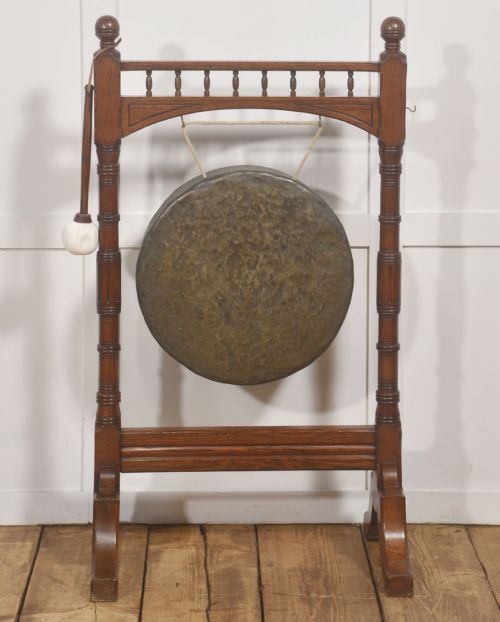
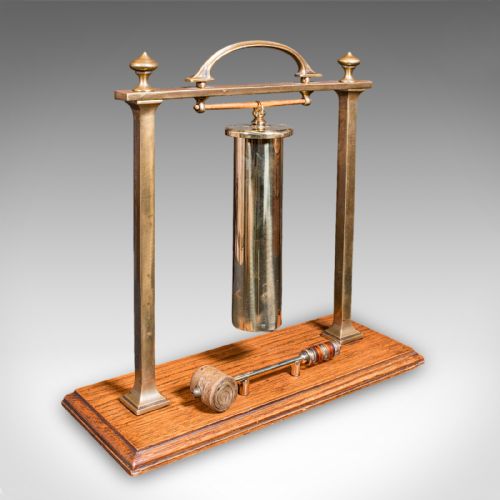
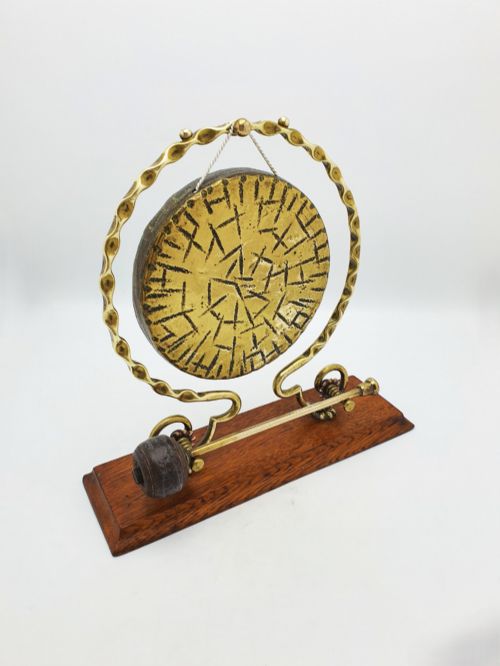
When you search for an oak dinner bell, you are looking at substantial household summons pieces designed to call household members or guests to the table. The forms range from simple table bells mounted on wooden stands to large freestanding gongs and wall-mounted chimes.
You are most likely to meet Edwardian and Victorian examples on this page, alongside pieces dating around nineteen hundred and nineteen twenty. These items frequently combine turned or carved oak bases and frames with cast brass bells, gongs, or glockenspiels.
Originating as practical country house and domestic accessories, these pieces often incorporate striking accessories such as handheld strikers, leather hangers, or cord mechanisms. The materials reflect the robust utilitarian standards of the nineteenth and early twentieth centuries.
How they were made
The construction of these pieces relies on solid oak, selected for its density and turned, carved, or framed to support swinging gongs and stationary bells. Workshops joined the timber using traditional methods to withstand the vibrations of repeated striking.
Brass provides the resonant acoustic element, shaped into bowls, plates, or multi-strike chime bars and polished to a bright finish. Leather, cord, and rope are utilised for hanging components and securing handheld strikers to their stands.
Oak Dinner Bell Retail Price Guide 2026
Typical asking prices for oak dinner bell among the pieces listed under this phrase on Sellingantiques today, from the lower quarter to the upper quarter. They describe what is for sale here now, not the wider market.
Materials recorded across the inventory feature solid oak, brass, leather, cord, rope, and felt.
What varies in quality
The quality of an oak dinner bell rests on the crispness of the timber carving and the depth of the metal casting. Superior examples feature heavier brass components that produce a sustained, clear tone rather than a dull thud.
Design ambition separates standard table pieces from exceptional ones, such as monumental carved frames or multi-strike palazzo wall chimes. The integration of auxiliary materials like felt and fine cord further distinguishes the standard of manufacture.
The Oak Dinner Bell Glossary
- Dinner gong
- A large metal disc or plate suspended in a wooden frame and struck with a mallet to produce a deep tone. These were standard summons items in larger domestic settings.
- Glockenspiel
- A set of tuned metal bars struck with handheld hammers, found encased in wood frames on certain musical dinner summons pieces. This variation offers multiple notes rather than a single ring.
- Gothic Revival
- An architectural and decorative style drawing inspiration from medieval design, visible in the pointed arches and heavy carving on Victorian pieces. This aesthetic adds dramatic presence to utility items.
- Table bell
- A smaller handheld or base-mounted bell designed for immediate service within arm reach on a dining surface. These items rely on simple manual activation.
- Striker
- The mallet, hammer, or clapper used to sound the bell or gong. Original matching strikers complete the assembly of these instruments.
Oak Dinner Bell: Frequently Asked Questions
What periods do these pieces come from?
The selection spans the nineteenth and early twentieth centuries, encompassing Victorian, Edwardian, and nineteen-twenties examples. These dates reflect the height of domestic service traditions.
Craftsmen of these eras utilised durable native timber and cast metals to build functional household accessories designed for daily use.
How were these bells used originally?
Staff or hosts struck the suspended gongs and table bells to announce meals, afternoon tea, or gatherings in larger homes. The resonant sound carried across multiple rooms.
They served as the primary auditory signal before electrical intercoms and modern buzzers replaced mechanical summoning devices in domestic architecture.
How do I maintain the oak and brass?
Keep the timber clean with a dry cloth and apply a neutral beeswax periodically to nourish the dry grain. Avoid harsh chemical polishes on the oak surfaces.
Polish the brass components gently with a soft cloth to maintain their lustre without abrading the surrounding wood or removing historic patination.
Can I date a piece by its style?
Heavily carved frames and dark finishes often indicate Victorian Gothic Revival origins, whereas simpler turned standards point toward later Edwardian tastes. Details like multi-strike mechanisms suggest specific manufacturing periods.
Comparing the joining techniques and associated hardware helps determine whether an item belongs to the nineteenth century or the subsequent Edwardian era.