



Oak Deuddarn Cupboard
An oak deuddarn cupboard is a substantial Welsh regional storage piece that anchors a room with its traditional timber presence and historic character.
Oak Deuddarn Cupboard
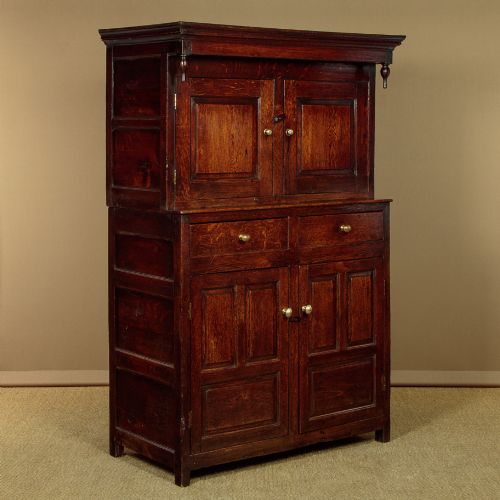
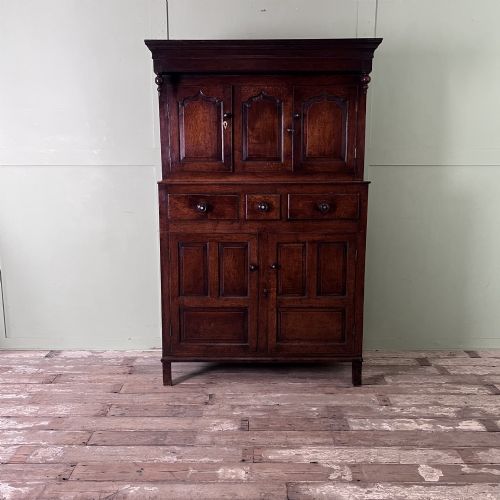
An oak deuddarn cupboard is a traditional Welsh two-part press cupboard designed for domestic storage and linen. These regional pieces present a distinctive architectural silhouette with recessed upper sections supported by posts or pendants above a larger base.
Most examples encountered on this page date from the seventeenth, eighteenth, and nineteenth centuries, spanning the late seventeenth century through the Georgian period. They reflect the vernacular woodworking traditions of rural Wales, utilising local timber and traditional construction methods.
Forms range from compact small cupboards to taller press cupboards and court cupboards. The listings demonstrate various regional interpretations within the broader Welsh country and Jacobean stylistic traditions.
How they were made
Makers built these pieces primarily from solid oak, relying on the native hardwood for structural integrity and durability. Joinery techniques included pegged frame and panel construction, which allowed the timber to move naturally with seasonal humidity changes.
Iron and brass were utilised for functional hardware such as hinges, handles, and escutcheons. These metal elements were hand-forged or cast, securing the doors and drawers while adding modest decorative detail to the plain wooden surfaces.
Oak Deuddarn Cupboard Retail Price Guide 2026
Typical asking prices for oak deuddarn cupboard among the pieces listed under this phrase on Sellingantiques today, from the lower quarter to the upper quarter. They describe what is for sale here now, not the wider market.
Every time a carpenter drove a wooden peg into a deuddarn joint, they ensured the cupboard would outlive everyone who built it.
What varies in quality
Proportion and scale dictate much of the visual success of these cupboards, with smaller examples and those retaining balanced architectural detailing holding particular appeal. The refinement of the mouldings and the turning of the supporting posts distinguish finer regional work from simpler vernacular pieces.
The condition of the timber surface, including patination and the retention of original boards, plays a major role in the character of each cupboard. Pieces that maintain their early brass or iron hardware without excessive replacement show greater integrity and historical continuity.
The Oak Deuddarn Cupboard Glossary
- Deuddarn
- A traditional Welsh two-tier cupboard featuring a recessed upper section above a lower base. The term translates from Welsh to mean a two-piece structure.
- Press Cupboard
- A large enclosed storage piece, often two-part, historically used for linens and clothing. These cupboards combine upper and lower compartments behind panelled doors.
- Court Cupboard
- An antique form of sideboard or cupboard originating in the sixteenth and seventeenth centuries, often featuring an open or recessed upper stage. They share structural similarities with the later deuddarn.
- Vernacular
- Architecture and furniture made by local craftsmen using traditional regional methods and materials rather than high-style academic designs. Welsh country furniture is a primary example of this tradition.
- Pegged construction
- A traditional joinery method where wooden dowels or pegs secure mortise and tenon joints instead of metal nails or screws. This allows timber components to expand and contract naturally.
Oak Deuddarn Cupboard: Frequently Asked Questions
What is a deuddarn cupboard?
A deuddarn is a traditional two-part Welsh cupboard featuring a recessed upper section supported by posts above a larger base. These pieces were built to store household linens and provisions.
They represent regional craftsmanship from Welsh country workshops, typically constructed from solid oak during the seventeenth and eighteenth centuries.
How do I live with an oak deuddarn?
These cupboards require a stable indoor environment away from direct heat sources and strong sunlight to protect the aged oak timber. Their substantial presence makes them ideal as focal storage pieces in dining rooms, hallways, or living spaces.
Regular dusting with a dry cloth and occasional application of appropriate beeswax help maintain the surface patination without damaging the wood.
How do I tell periods apart?
Earlier pieces from the seventeenth century often display heavier Jacobean influences with deeper panel mouldings and turned pendants. Eighteenth and nineteenth-century examples tend towards cleaner Georgian proportions and simpler framing.
Examining the internal boards, hardware types, and joinery details helps clarify the approximate date of manufacture.