



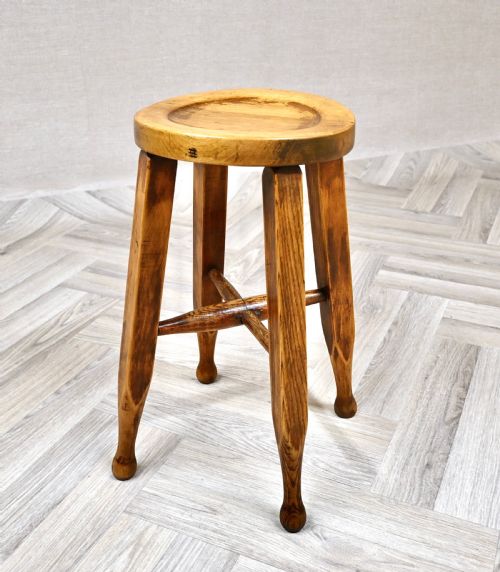


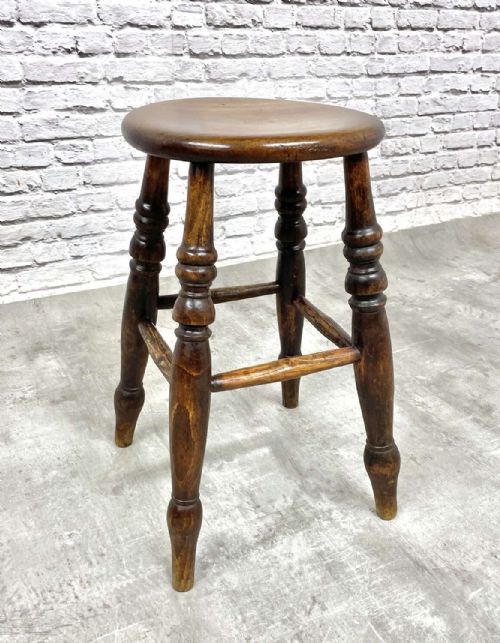


Oak Counter Stools
These oak counter stools bring sturdy historic character and practical high seating to modern kitchens, bridging centuries of utilitarian design.
Oak Counter Stools
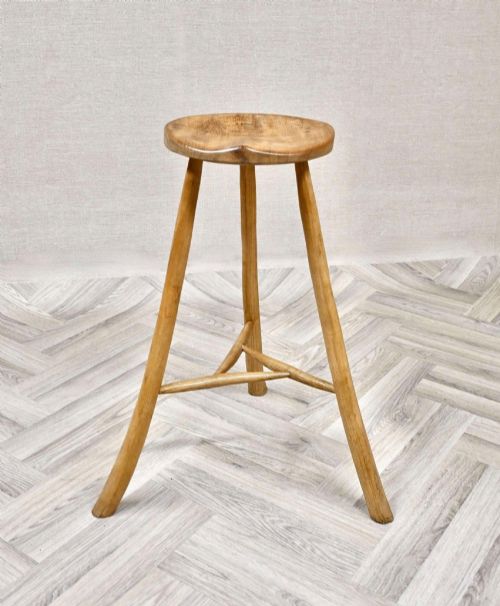
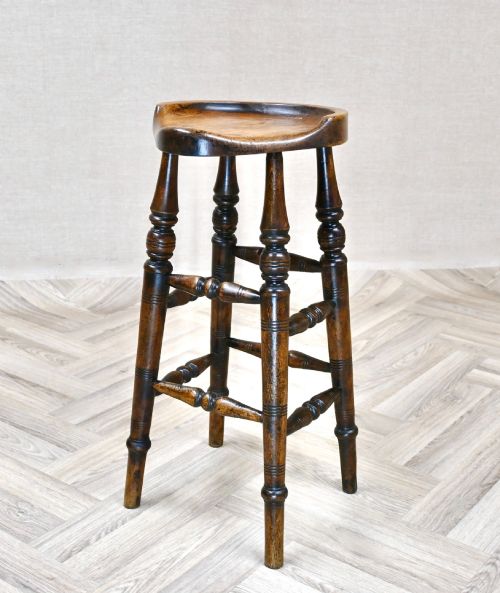
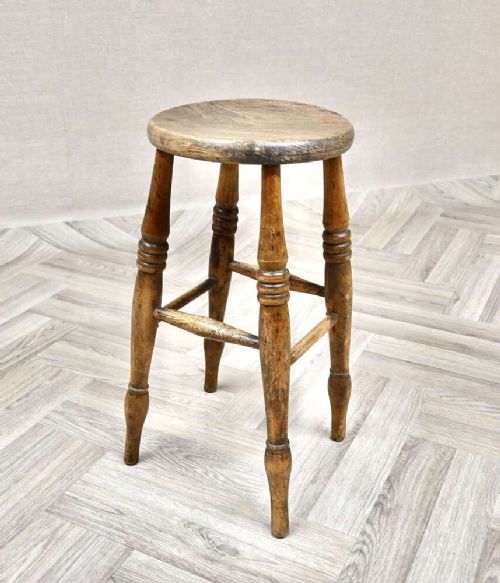
When searching for oak counter stools, buyers encounter tall utilitarian seating drawn from nineteenth and early twentieth century taverns, pubs, clerks' offices, and farmhouses. These pieces span Victorian country, rustic farmhouse, and Art Deco styles, reflecting decades of hard-wearing domestic and commercial use.
The most common versions met on this page are nineteenth century clerk's stools, tavern stools with dished tops, and tall bar stools fashioned from robust timbers. Many examples rely on sturdy elm seats paired with oak frames, or solid pine and sycamore constructions suited for high seating arrangements.
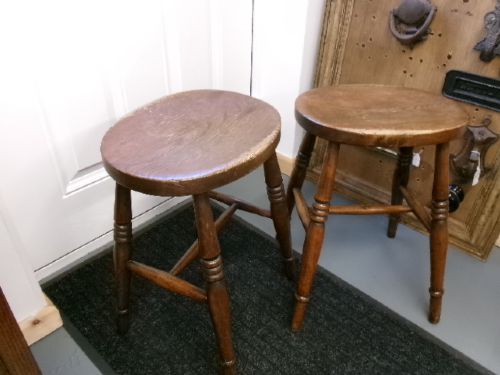
Originating primarily from British vernacular traditions, these stools showcase unpretentious forms designed for function rather than display. Buyers find single examples as well as matched pairs and larger groupings suited for modern kitchen islands and breakfast bars.
Materials and construction
These stools combine dense hardwoods like oak and wild elm for frames and seats, ensuring structural stability under frequent daily use. Carpenters utilised traditional joinery methods, fixing legs directly into thick timber seats through wedged tenons or securely pinned joints.
Many seats feature a dished or saddled surface, hollowed out by hand to provide comfort without upholstery. Sycamore, beech, and pine also appear across the inventory, selected for their reliable strength and ability to withstand heavy tavern and workshop environments.
Oak Counter Stools Retail Price Guide 2026
Typical asking prices for oak counter stools among the pieces listed under this phrase on Sellingantiques today, from the lower quarter to the upper quarter. They describe what is for sale here now, not the wider market.
Wild elm seats bring unpredictable, swirling grain patterns born from trees that fought the wind.
Assessing quality
Quality in these stools rests upon the integrity of the timber and the honesty of the construction rather than decorative flourishes. Superior pieces display substantial grain patterns, thick uncompromised seats, and original stretcher arrangements that maintain firm rigidity without excessive wobble.
Lower quality or heavily restored examples often suffer from replaced components, over-sanded surfaces that erase centuries of patination, or structural reinforcements that disrupt the clean vernacular lines intended by the original maker.
The Oak Counter Stools Glossary
- Vernacular
- Everyday objects built by local tradesmen for specific practical uses rather than high-style polite society. These pieces prioritise utility and local material availability above prevailing fashion.
- Dished top
- A seat carved with a shallow depression to improve comfort and keep the sitter centrally positioned. This ergonomic shaping is typical of nineteenth century wooden seating.
- Windsor
- A chair or stool construction method where legs and spindles are fitted directly into a solid sculpted seat rather than a frame. This technique creates immense structural resilience.
- Patina
- The deep surface sheen and colour acquired by wood through decades of handling, polishing, and environmental exposure. It serves as a visual record of an object's age and history.
Oak Counter Stools: Frequently Asked Questions
Are these antique stools comfortable for daily kitchen use?
Most historic tall stools feature dished wooden seats shaped to fit the body, offering surprising support for everyday seating without cushions.
Because they were built for working environments like taverns and offices, their ergonomic design proves remarkably practical for modern kitchen counters.
How do I determine the period of an old stool?
Dating relies on examining tool marks, timber species, joint construction, and the natural wear patterns accumulated across the wood. Nineteenth-century examples often display hand-turned legs and adze marks on the underside of elm seats.
Comparing structural details against documented vernacular styles helps narrow down whether a piece originates from the Victorian era or the early twentieth century.
Can I mix different styles of tall stools around a counter?
Combining varied country and industrial forms creates an authentic, collected aesthetic rather than a rigid matched set. Stools sharing similar timber tones and proportional heights blend naturally together.
Matching heights carefully ensures everyone sits comfortably at the same counter level despite minor stylistic differences in the legs or footrests.
How should I care for antique wooden seats?
Maintaining these pieces simply requires occasional dusting with a dry cloth and protection from sudden changes in household humidity. Avoiding direct heat sources prevents the historic timber from drying out or splitting.
Applying a traditional beeswax polish periodically helps nourish the dry grain and preserves the natural surface sheen.