

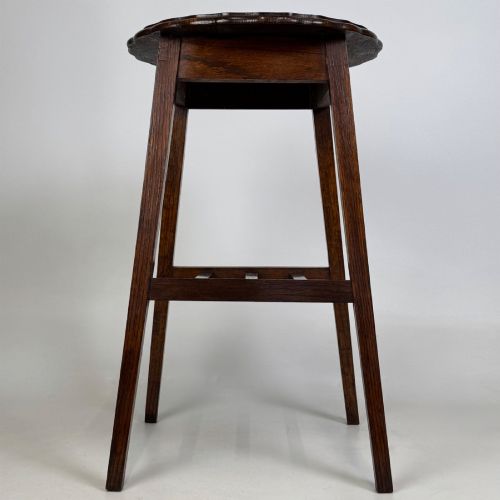
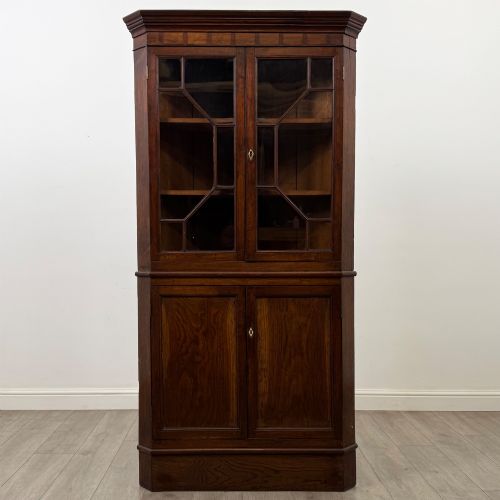
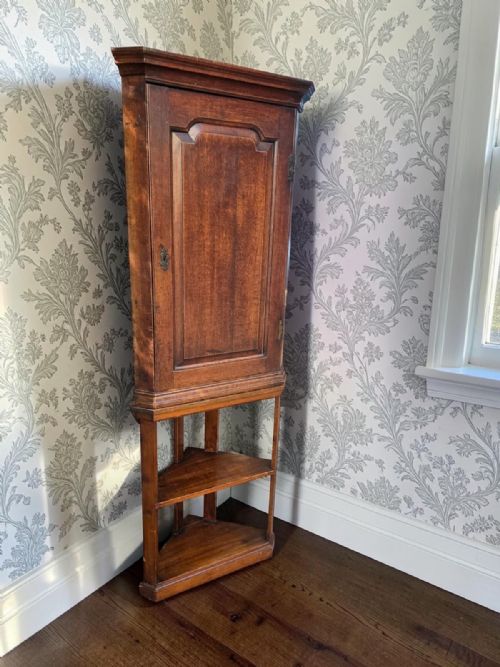
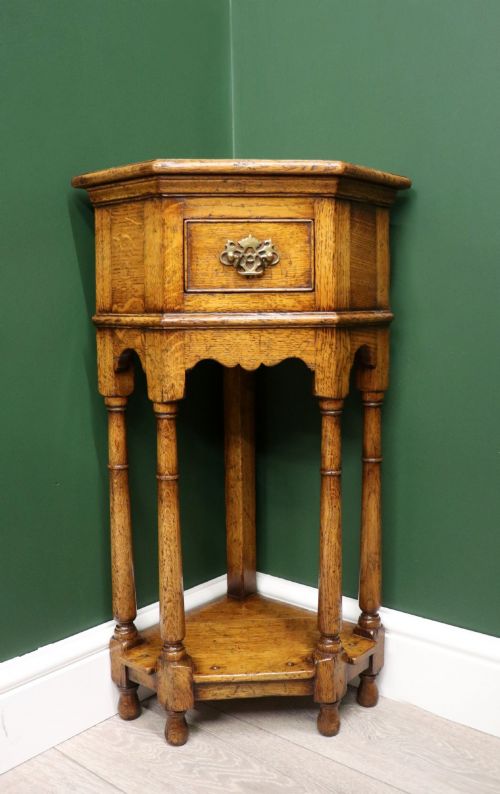


Oak Corner Display Stand
An oak corner display stand turns an awkward room junction into a showcase for your collection using dense, durable timber.
Oak Corner Display Stand
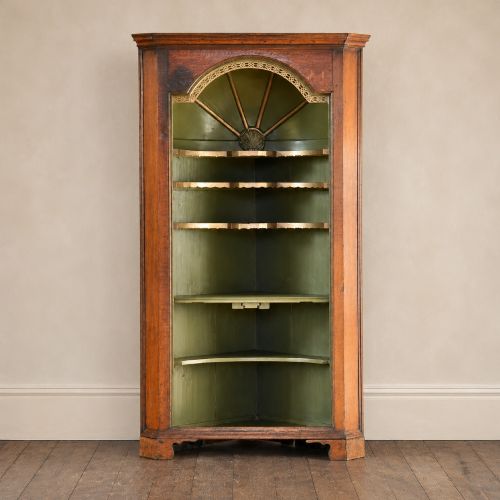
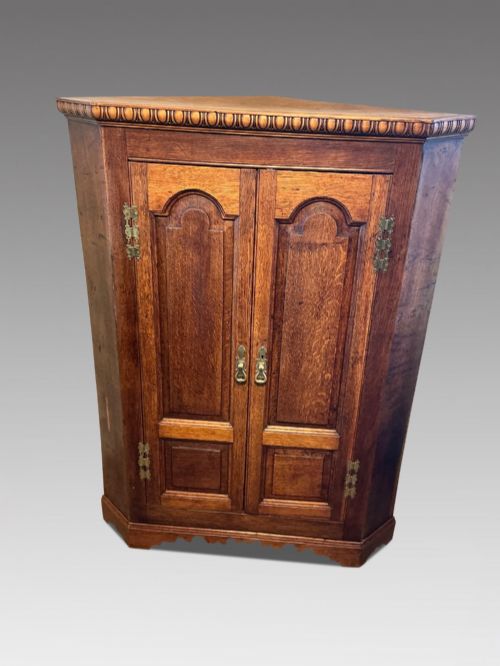
When you search for an oak corner display stand, you are looking at fitted and freestanding furniture designed to utilise unused room angles. These pieces range from early eighteenth-century hanging or standing floor models to later revival interpretations from the Victorian and Edwardian eras. The core function remains display and storage, often featuring glazed doors or open shelves to exhibit porcelain, glass, and small ornaments.
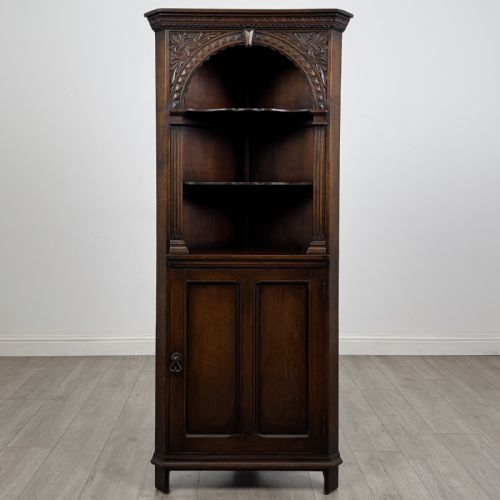
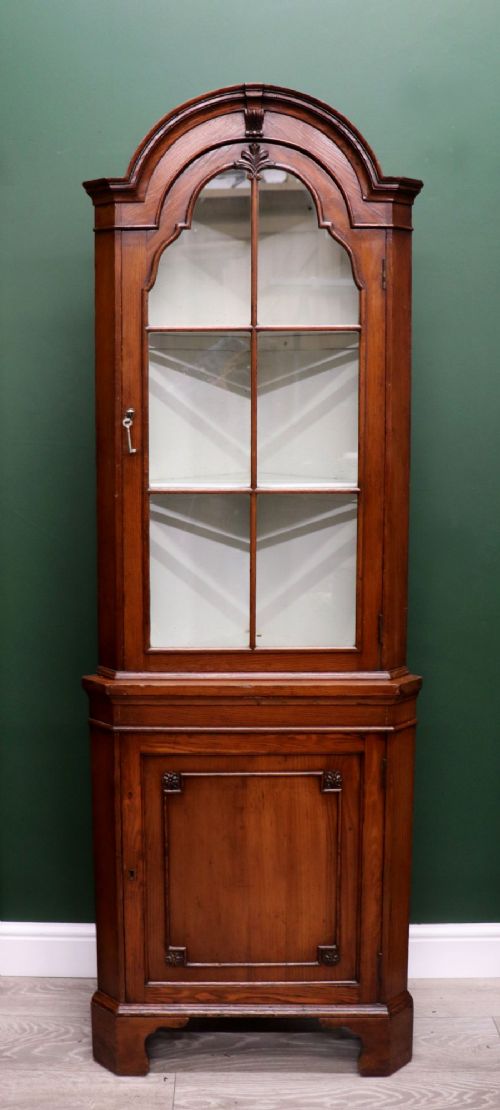
On this page, you are most likely to meet floor-standing corner cabinets and cupboards originating from the Georgian period through to the early twentieth century. Many examples employ a two-part construction, separating a glazed upper display section from a panelled lower cupboard. Formats span simple panelled doors to arched alcove designs and bow-fronted profiles.
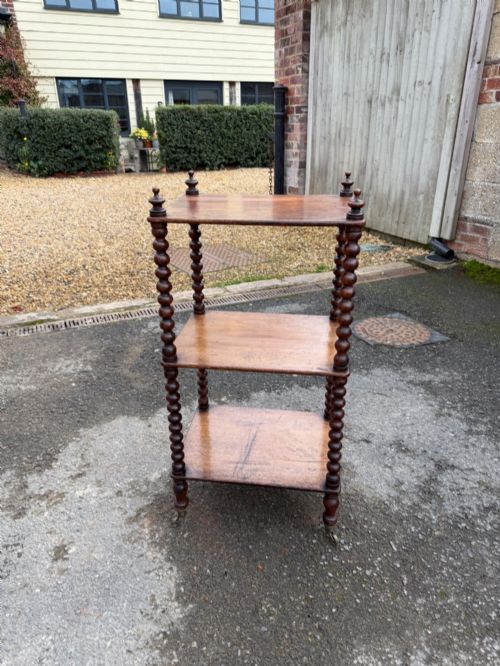
The materials reflect domestic utility alongside decorative ambition, predominantly utilising solid oak augmented by secondary timbers such as pine or mahogany. Regional variations appear in Welsh and North European pieces, while revival movements from the nineteenth and twentieth centuries introduce stylistic elements like Jacobean carving and barley twist supports.
Materials and construction
Cabinet makers built these stands primarily from solid oak, chosen for its structural strength and pronounced grain pattern. Secondary timbers such as pine frequently appear on internal shelving and backboards, while occasional pieces incorporate mahogany detailing.
Construction techniques rely heavily on traditional joinery, including pegged mortise and tenon joints for frames and panelled doors. Two-part corner cupboards required precise carpentry to ensure the upper and lower sections aligned correctly within a ninety-degree angle.
Oak Corner Display Stand Retail Price Guide 2026
Typical asking prices for oak corner display stand among the pieces listed under this phrase on Sellingantiques today, from the lower quarter to the upper quarter. They describe what is for sale here now, not the wider market.
Some upright stands feature hidden panel layouts designed to keep curious guests guessing where the secret nip of gin lived.
Factors that govern quality
The standard of an oak corner display stand depends heavily on the selection of the timber and the crispness of any carved decoration. Superior examples display carefully matched grain patterns across panels and doors, showing deliberate control by the cabinet maker.
Structural integrity also dictates quality, particularly in the alignment of doors and the stability of the corner joints. Pieces that retain their original brass hinges, working locks, and historic glass panes command greater interest from collectors.
The Oak Corner Display Stand Glossary
- Bow-fronted
- A convex curved front profile that projects outward from the corner. This shape softens the angular geometry of the room.
- Two-part
- A cabinet constructed in separate upper and lower sections stacked together. This facilitates easier transport and installation in domestic spaces.
- Arched alcove
- A recessed curved opening within the upper display area. It frames ceramics and glassware with architectural depth.
- Barley twist
- A turned column detail resembling a spiralling rope. This decorative technique appears frequently on legs and supports from later revival periods.
- Panelled
- A method of construction where a central wooden board floats within a grooved frame to accommodate wood movement. It prevents warping as humidity changes.
Oak Corner Display Stand: Frequently Asked Questions
How do I fit an oak corner display stand into a modern room?
Measure the wall depth and angle accurately before selecting a piece, as corner units require precise clearance to sit flush against both walls.
Freestanding floor models offer flexibility because they require no wall mounting and can be repositioned easily.
Were these cabinets used for food or display?
Historic corner cupboards originally served to store and display household provisions, tableware, or prized ceramics out of the main traffic flow.
Over time, the emphasis shifted from concealed storage to open display as glass-fronted doors became more common.
How do I distinguish an 18th-century piece from a 20th-century revival?
Examine the construction marks, timber characteristics, and interior backing boards for signs of hand-planing and historic tool use.
Revival pieces often feature machine-cut elements, standardised fixings, and cleaner, less variable timber surfaces.