

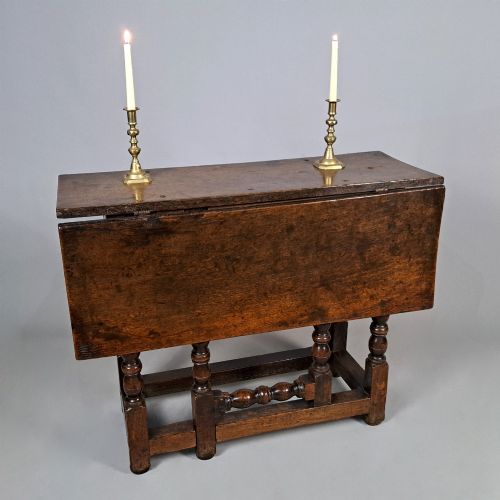
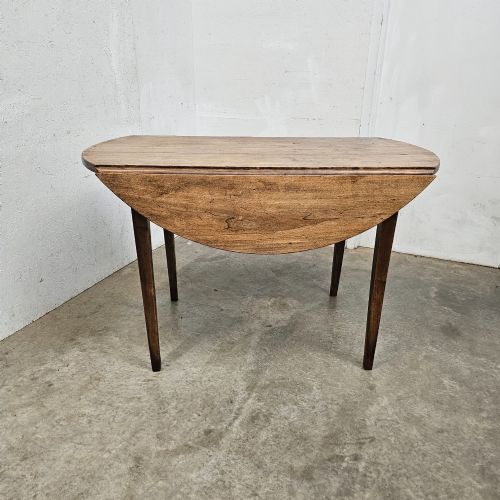
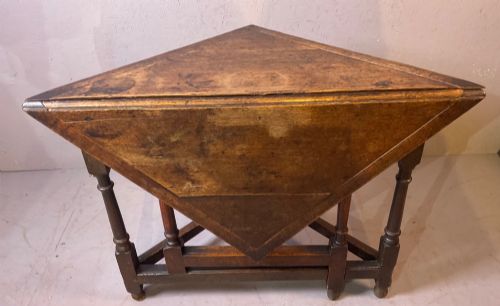
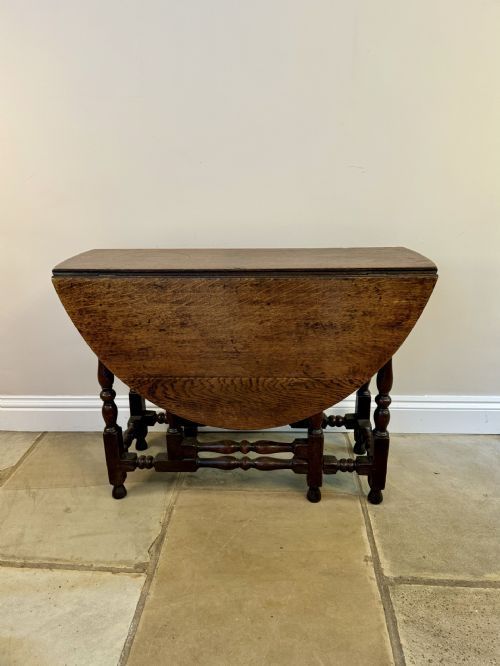


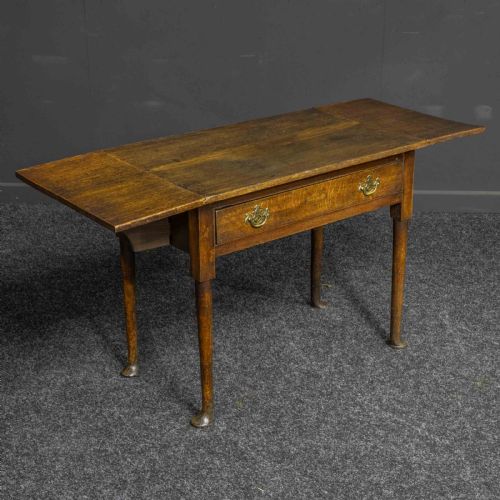


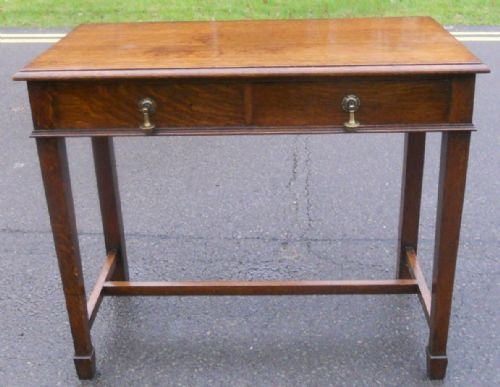

Oak Console Table Drop
These oak console table drop designs offer folding timber surfaces rooted in centuries of vernacular British and continental cabinetmaking.
Oak Console Table Drop
An oak console table drop functions as a versatile surface, adapting from a narrow wall-hugging profile to a wider dining or serving platform by means of hinged leaves or flaps. When searching for this form, buyers encounter side tables, gateleg tables, and sofa tables built to save space in compact rooms.
The material palette centres firmly on timber, ranging from 17th-century pieces to Victorian and 1920s examples. Styles span from Jacobean and Charles II eras to Georgian and Arts and Crafts interpretations, showing how makers reinterpreted the drop-leaf mechanism across generations.
How they were made
Construction relies heavily on solid oak timbers, occasionally supplemented by fruitwood or pine for secondary framing, joined with traditional framing methods. Metal fittings such as brass hinges and iron brackets support the movable flaps and drop leaves.
Surface finishing involves patination of the natural wood grain, sometimes enhanced by hand carving on structural friezes or legs. Joinery accommodates the movement of timber over centuries through pegged mortise and tenon joints.
Oak Console Table Drop Retail Price Guide 2026
Typical asking prices for oak console table drop among the pieces listed under this phrase on Sellingantiques today, from the lower quarter to the upper quarter. They describe what is for sale here now, not the wider market.
Listings span periods from the 17th century through the Victorian era to the 1920s, constructed in oak, brass, iron, fruitwood, and pine.
What varies in quality
Quality rests in the integrity of the timber and the subtlety of the timber's natural colour and grain distribution. Pieces showing deep, unforced age through their polished surfaces stand apart from heavily restored or later constructed examples.
The precision of the drop leaf mechanism and the retention of original brass or iron hardware dictate the structural standard of each table. Proportion and the crispness of any carved detailing further separate standard utility items from finer workshop pieces.
The Oak Console Table Drop Glossary
- Drop-leaf table
- A table with a fixed central section and hinged flaps that fold down when not in use. This mechanism allows the furniture to change footprint rapidly.
- Gateleg table
- A table with legs that swing outward on hinges to support the raised leaves. It provides robust wooden support beneath extended flaps.
- Credence table
- A folding or side table historically used in ecclesiastical or domestic settings for holding vessels. These early forms often feature characteristic triangular folding tops.
- Sofa table
- A narrow table traditionally placed behind a sofa or against a wall, frequently incorporating drop leaves. They offer a slender profile suited to room dividers.
- Patina
- The surface sheen and colour developed by timber over years of handling, polishing, and light exposure. It serves as a visual indicator of age and genuine wear.
Oak Console Table Drop: Frequently Asked Questions
How do I use a drop leaf table?
Raise the hinged leaves on either side of the central fixed top and swing out the supporting legs or brackets to lock them in place. Lower the leaves flat against the sides when you need to reclaim floor space in a narrow hallway or small dining room.
Ensure weight is distributed evenly across the extended flaps to protect the historical hinges and wooden joints. Avoid placing hot items directly onto the polished timber surface to preserve the finish.
Where should I place a console table?
Position these versatile tables against a flat wall in an entryway, hallway, or living area where a narrow profile is required. They serve well as landing surfaces for lamps, books, or decorative objects without obstructing pathways.
When fitted with folding leaves, the table can pull away from the wall and expand into the room to accommodate guests for dining or writing.
How do I care for old oak furniture?
Maintain the timber by dusting regularly with a soft, dry cloth and applying natural beeswax sparingly to nourish the dry grain. Keep the furniture away from direct heat sources and strong sunlight to prevent the timber from warping or splitting.
Check the stability of hinges and joints periodically, tightening fixings gently if movement occurs through seasonal changes in household humidity.
How do I tell an older table from a later one?
Examine the construction methods visible underneath the top and around the frame, looking for hand-cut joints, pegged tenons, and signs of tool marks left by early cabinetmakers. The depth of the patina and the oxidation of the timber provide strong visual clues regarding the age of the piece.
Compare the hardware, such as iron or brass fittings, against period examples to ensure consistency with the stated era of manufacture.