





Oak Childrens Chair
An oak childrens chair is a scaled-down piece of historic seating designed for younger family members, combining sturdy vernacular construction with domestic utility.
Oak Childrens Chair
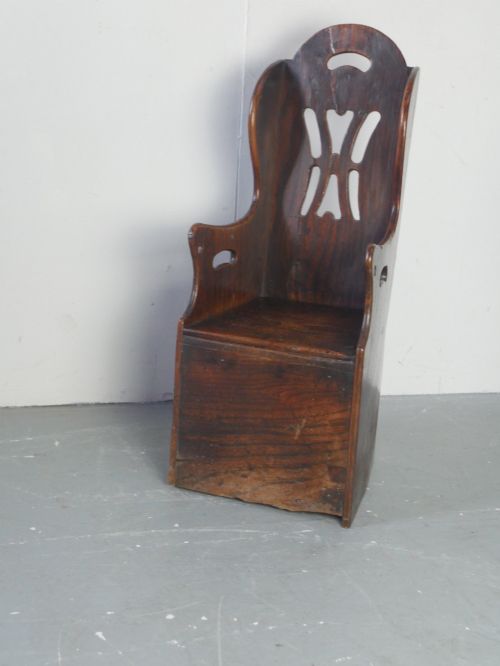
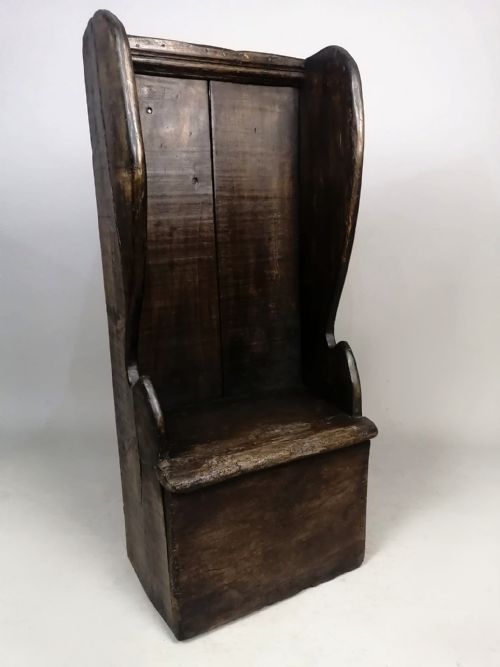
When you search for an oak childrens chair, you encounter small-scale seating spanning several centuries of domestic English craftsmanship. These pieces mirror the evolution of adult vernacular furniture, adapting full-sized forms for a younger household member.
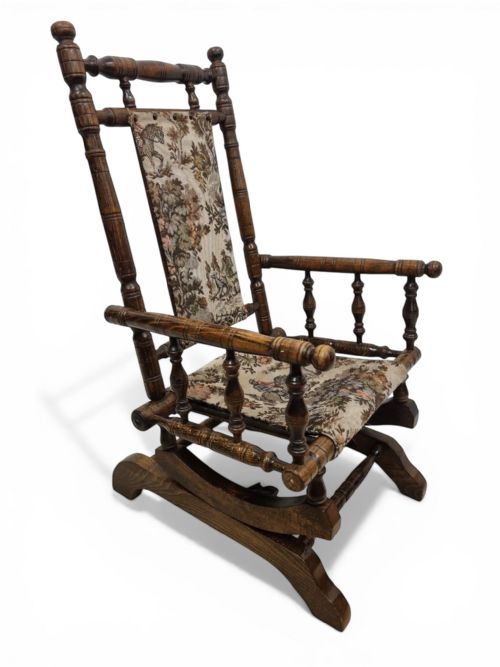
The selections on this page range from early vernacular examples with rush and solid wood seats to later Edwardian and Arts and Crafts interpretations. Forms include armchairs, high chairs, rocking chairs, and stickback windsors.
Earlier centuries yield primitive country styles with fruitwood and elm components alongside oak, while later periods introduce folding mechanisms and upholstered elements. Each piece demonstrates how makers scaled joinery and turning down for children without losing structural integrity.
How they were made
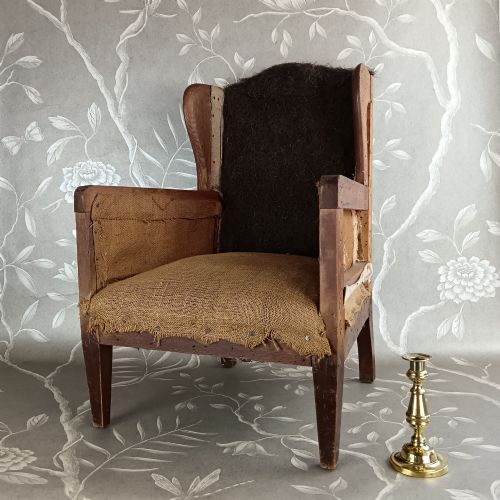
Makers constructed these chairs primarily using solid oak, often combining it with secondary native timbers such as fruitwood, elm, and timber for specific components like spindles or seats. Rush seating, tapestry fabric, hessian, and woven materials provide the supporting surfaces on seated examples.
Joinery methods rely on traditional pegged mortise and tenon joints, stickback construction, and Windsor framing techniques. Turnings, ladderbacks, and carved details emerge from hand tools applied to dense hardwoods.
Oak Childrens Chair Retail Price Guide 2026
Typical asking prices for oak childrens chair among the pieces listed under this phrase on Sellingantiques today, from the lower quarter to the upper quarter. They describe what is for sale here now, not the wider market.
Some miniature armchairs feature diminutive footrests, proving that historic toddlers also insisted on dangling legs being kept off the cold floor.
What varies in quality
The distinction between standard examples and superior pieces rests upon the integrity of the original construction and the proportion of the scaling. Master craftsmen maintained rigorous joinery standards even on miniature items, ensuring that spindles, arm supports, and leg structures remained balanced.
Surface patination and the survival of original components dictate the standing of a piece. Examples retaining untouched timber surfaces, early rush seats, and uncompromised structural frames command greater interest than those subjected to heavy later intervention.
The Oak Childrens Chair Glossary
- Vernacular furniture
- Domestic objects made by local tradesmen rather than metropolitan cabinetmakers. These pieces prioritize utility and local materials over high-style court fashions.
- Stickback
- A chair construction method where turned spindles or sticks are inserted directly into a solid wooden seat. This technique provides lightweight strength.
- Windsor chair
- A form characterised by a solid wooden seat into which the legs and back sticks are raked and wedged. Country workshops adapted this design extensively for smaller chairs.
- Rush seat
- A seating surface woven from dried marsh grasses twisted into cords. It offers a resilient and traditional foundation for country chairs.
- Ladderback
- A chair back featuring multiple horizontal wooden slats between two upright posts. This style appears frequently in vernacular seating traditions.
Oak Childrens Chair: Frequently Asked Questions
Were these chairs used by children?
These small chairs served practical domestic purposes in historic households, providing dedicated seating for youngsters at table or by the hearth. Their robust construction reflects daily family life rather than purely decorative intent.
Over generations, many such pieces survived as cherished nursery furnishings or diminutive display items within family homes.
How do I spot an earlier chair?
Earlier examples display characteristic tool marks, hand-turned components, and pegged construction methods typical of 17th and 18th-century vernacular joinery. The patination of the timber and the integration of native woods like fruitwood or elm often point toward earlier periods.
Later Victorian and Edwardian pieces frequently incorporate machine-sawn elements, standardised turnings, or different upholstery materials such as tapestry fabric and hessian.
Can I use these chairs daily?
Historic small chairs possess solid timber frames, but their antique status and scaled-down dimensions mean they require careful placement and gentle handling. Many collectors prefer to position them as decorative accents or stable display pieces rather than active seating.
Evaluating the stability of the joints and the condition of rush or upholstered seats helps determine appropriate daily interaction.
What styles are common here?
English country vernacular styles dominate the selection, encompassing stickbacks, ladderbacks, and low Windsor armchairs. Pieces range from austere 17th-century forms to later Arts and Crafts interpretations.
Occasional variations include rocking formats, high chairs for infants, and folding configurations suited to domestic convenience.