



Oak Book Trough
An oak book trough keeps volumes close at hand on a desk or fireside, combining sturdy utility with honest movement.
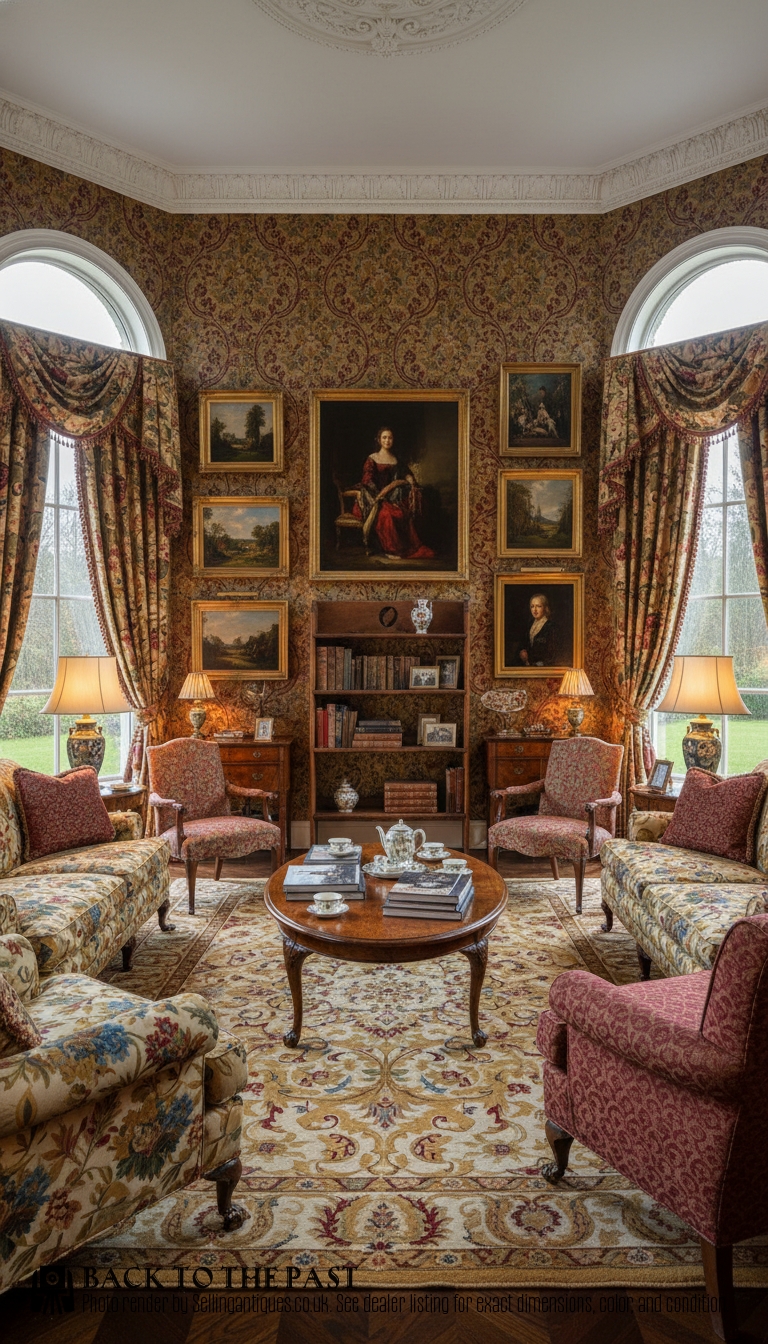
Oak Book Trough
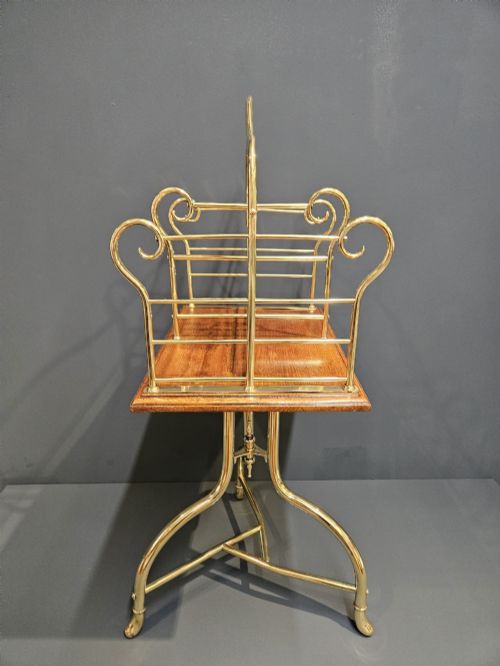
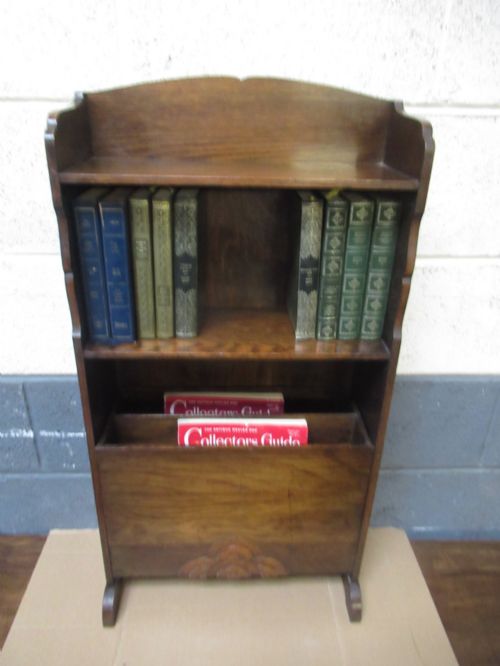
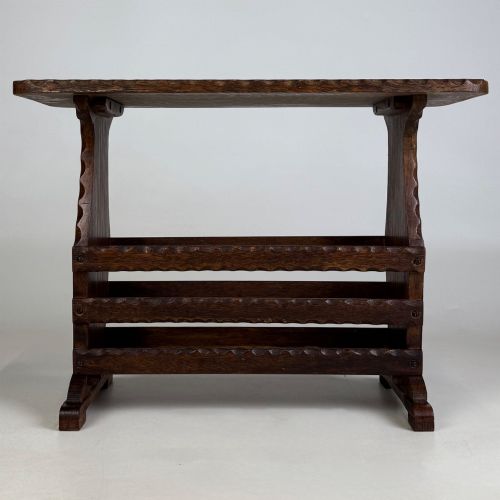
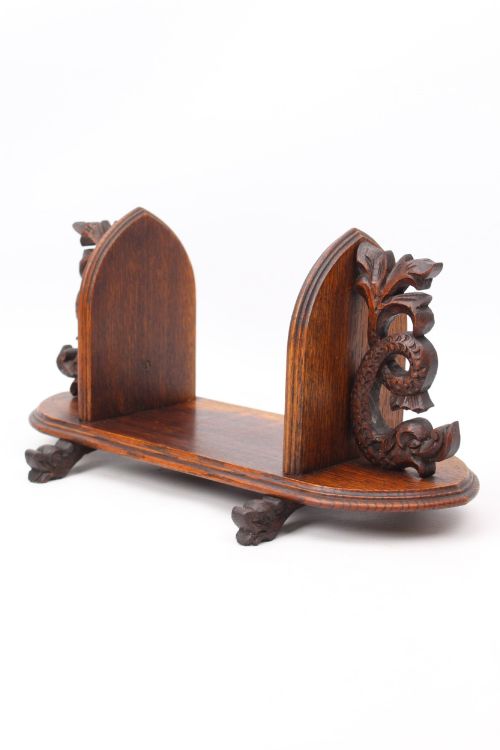
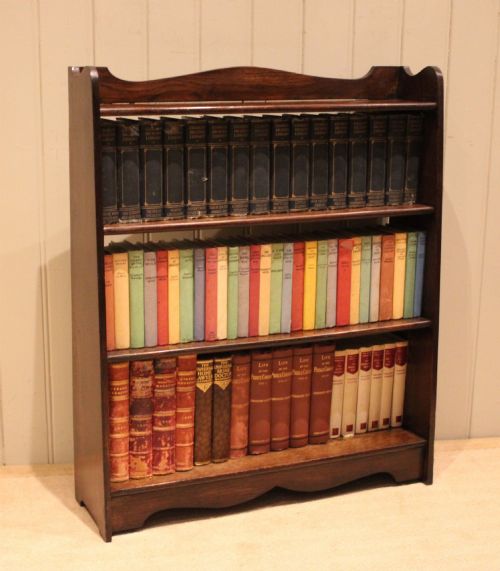
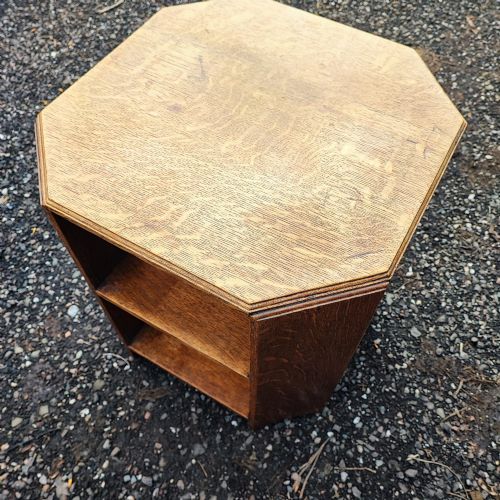
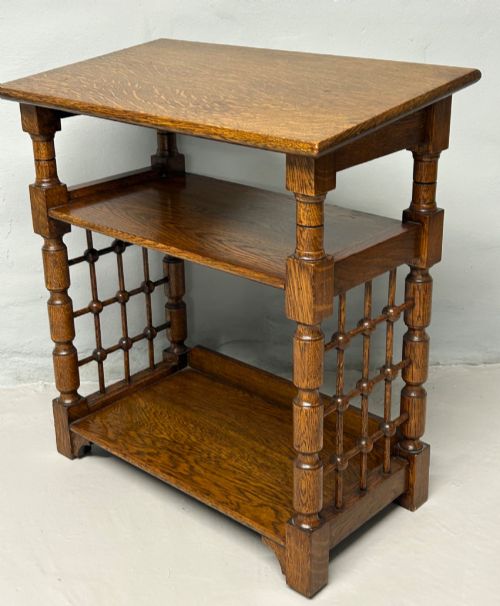
An oak book trough provides open shelving for everyday reading, appearing as desk-top stands, fireside slopes, and two-tier cases. The pieces gathered here span the Victorian, Edwardian, and Art Deco periods, with a strong leaning towards the Arts and Crafts movement.
Makers shaped these utilitarian items for libraries, offices, and parlours, often incorporating handles, extending slides, or magazine racks. Common forms range from simple trough bodies to complex stands featuring carved panels and brass fittings.

How they were made
Joiners built these items primarily from solid oak, sometimes utilising golden oak or dark stained varieties to achieve specific tones. Construction relies on traditional woodworking joints, occasionally paired with functional brass hinges and brackets.
Makers embellished the timber using hand carving, repousse copper mounts, and stamped registration numbers. Finish methods emphasise the natural grain of the wood rather than heavy surface lacquers.
Oak Book Trough Retail Price Guide 2026
Typical asking prices for oak book trough among the pieces listed under this phrase on Sellingantiques today, from the lower quarter to the upper quarter. They describe what is for sale here now, not the wider market.
What varies in quality
Construction methods dictate durability, distinguishing heavy solid timber builds from lighter decorative pieces. The presence of integrated handles, sliding mechanisms, and metal accents elevates a standard trough into a more substantial accessory.
Design ambition separates basic tabletop items from pieces with distinct stylistic ambitions, such as Gothic carved details or Arts and Crafts copper work. Better examples retain crisp carving and stable, heavy bases.
Shapland and Petter·Liberty·Heals of London·J.C. Vickery
The Oak Book Trough Glossary
- Arts and Crafts
- A design movement valuing handcraft and honest construction over industrial output. It appears frequently in these listings through exposed joinery and simple lines.
- Book slide
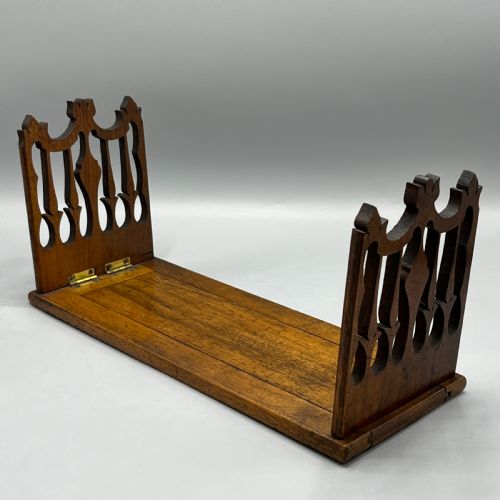
- An extending desk accessory designed to hold varying numbers of volumes upright. These incorporate sliding ends to adjust the shelf length as required.
- Repousse
- A metalworking technique where the artisan hammers designs from the reverse side. This adorns copper panels on select book troughs.
- Gothic
- A revival style drawing on medieval architectural motifs. Pieces in this vein feature pointed arches and heavy timber carving.
- Trough
- An open-topped container designed to hold books vertically or at a slight slope. The form allows quick selection of volumes.
Oak Book Trough: Frequently Asked Questions
Where should I put an oak book trough?
These pieces sit comfortably on top of large desks, library tables, or low by a fireside where daily reading materials collect. Their open structure allows quick access to volumes while keeping work surfaces tidy.
Larger two-tier versions and stands function well as independent side pieces or low bookcases in studies and sitting rooms. Avoid placing them in direct sunlight or damp areas to protect the solid oak timber.
How do I date an oak book trough?
Dating relies on stylistic clues, construction methods, and materials such as brass fittings or copper mounts. Victorian pieces often lean towards heavy Gothic carving, while Edwardian items frequently show restrained Arts and Crafts influence.
Stamped registration numbers, maker marks, or patent brass slides also help narrow down the decade of manufacture. Simpler geometric forms generally point towards later Art Deco or 1930s production.
How do I care for antique oak furniture?
Maintain the timber by applying a traditional beeswax polish occasionally to nourish the grain and protect the surface. Avoid using silicone sprays or modern wet cleaners that damage aged finishes.
Keep the pieces away from direct heat sources and drastic temperature changes to prevent the solid oak from splitting or warping. Gentle dusting with a dry cloth is sufficient for regular upkeep.