






Oak Book Holder
These oak book holder examples unite timber, brass and iron across the nineteenth and twentieth centuries to serve your library.
Oak Book Holder
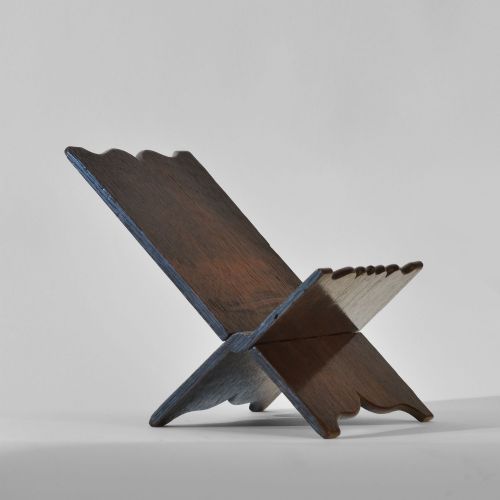
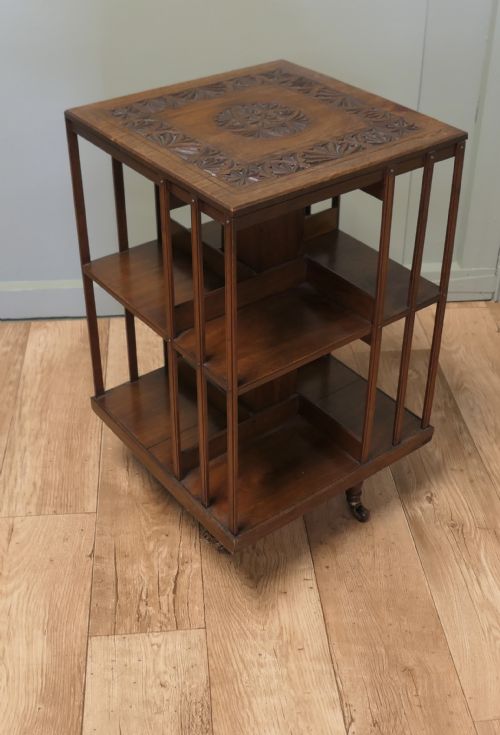
An oak book holder gathers works in resting troughs, extending slides, revolving cases and sloping ledges. These pieces range from compact desk accessories to large ecclesiastical lecterns and floor-standing revolving bookcases.
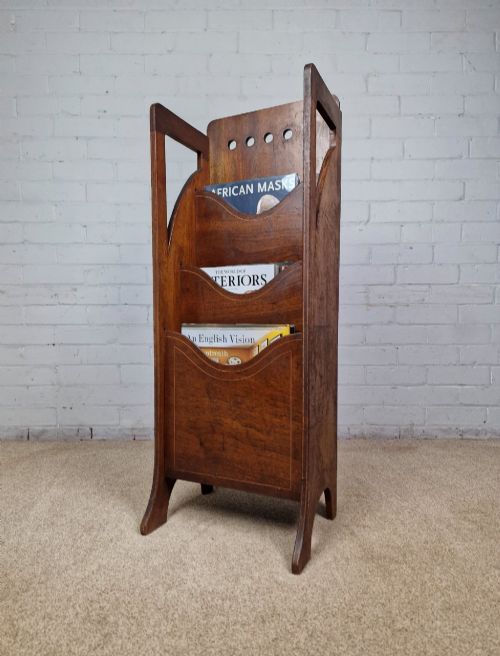
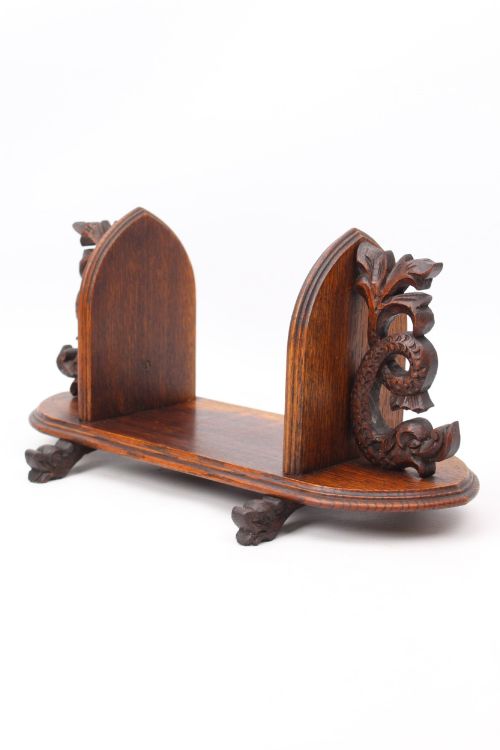
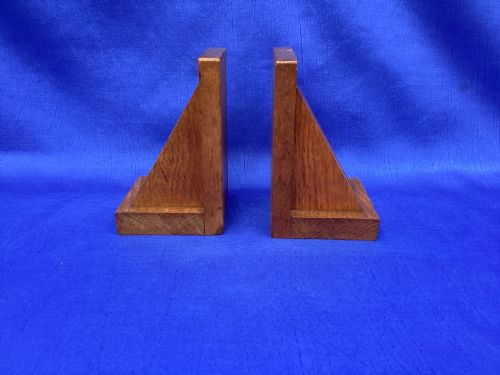
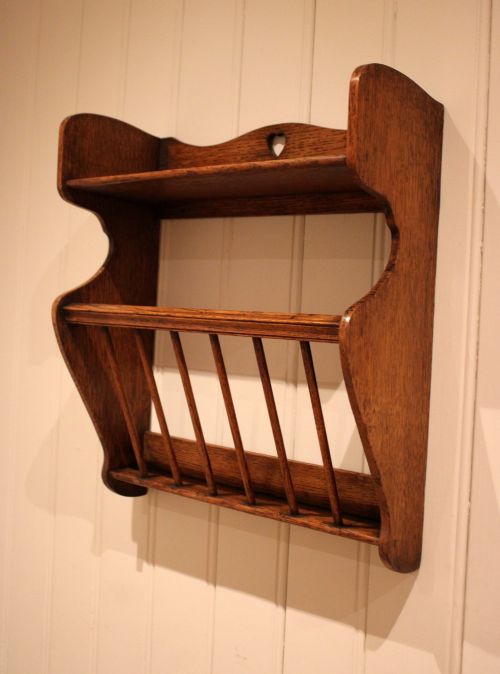
You will most commonly encounter Edwardian and Arts and Crafts examples on this page, alongside Gothic Revival designs and pieces from the 1930s. Forms vary from simple extending slides to metamorphic Canterbury stands and wall-mounted magazine racks.
The objects stem from domestic libraries, studies and churches, using solid timbers to support heavy volumes. Domestic items focus on portability and desktop organisation, while church pieces provide elevated reading surfaces.
Materials and construction
Makers built these pieces primarily from solid oak, sometimes combining pine for internal or secondary structures. Boxwood inlay adds decorative contrast to timber surfaces, while brass and iron provide operational hinges, expanding mechanisms and structural bracing.
Joinery methods include carved decoration, sloping shelf construction and revolving pivots that allow multi-directional access. Metal elements support moving parts such as extending slides and adjustable lectern rests.
Oak Book Holder Retail Price Guide 2026
Typical asking prices for oak book holder among the pieces listed under this phrase on Sellingantiques today, from the lower quarter to the upper quarter. They describe what is for sale here now, not the wider market.
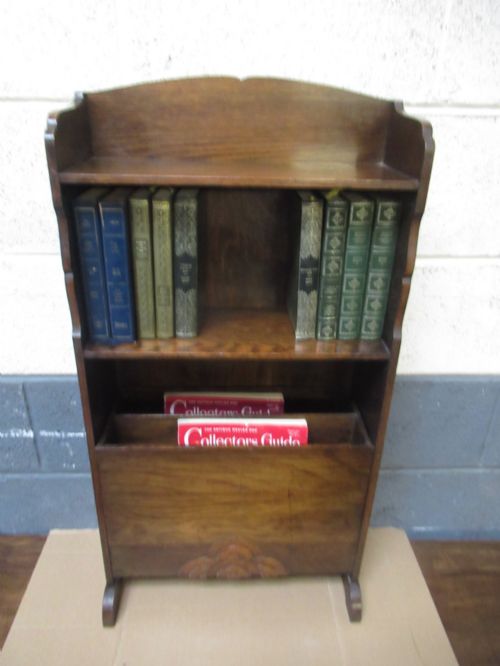
One unexpected 1930s shelf incorporates Art Deco horses alongside standard oak book storage.
Grading quality and execution
Quality rests upon the crispness of carved detail, the smoothness of revolving mechanisms and the integrity of extending slides. Finer pieces display deliberate proportion and careful integration of brass or iron hardware alongside boxwood inlay.
Execution ranges from straightforward utility items to ecclesiastical church lecterns featuring complex carved figures like eagles. Better examples maintain tight joints and substantial timber thickness without unnecessary structural bulk.
Finnigans·Gordon Russell
The Oak Book Holder Glossary
- Book slide
- An extending desktop accessory fitted with ends to hold volumes upright. These items often feature folding or sliding mechanisms.
- Canterbury
- A stand designed for holding sheet music, magazines or books. Metamorphic versions transform to serve different storage functions.
- Lectern
- A slanted reading stand used to support books for a standing reader. These objects often appear in church or ecclesiastical contexts.
- Book trough
- An open-front receptacle designed to sit on a desk or fireside. The sloping shelf design keeps titles visible and accessible.
- Revolving bookcase
- A multi-tiered case mounted on a pivoting base. This construction allows access to volumes from all sides.
Oak Book Holder: Frequently Asked Questions
How do extending book slides work?
Extending book slides use a central sliding track that pulls outward to accommodate varying quantities of volumes. Metal fittings secure the expanding sections at the desired length.
End brackets remain upright to keep the row steady on a desk or table surface.
Where were revolving bookcases used?
Revolving bookcases served in studies, libraries and offices where space was at a premium. Their pivoting bases allowed users to browse multiple reference books from a single seated position.
Smaller tabletop versions sat on desks while larger tall variants stood directly on the floor.
What distinguishes Gothic Revival oak pieces?
Gothic Revival items draw upon medieval architectural motifs, featuring pointed arches, heavy mouldings and ecclesiastical joinery. These pieces often include carved detailing executed in solid oak.
They frequently appear in church or home library settings from the Victorian and Edwardian eras.
How should I care for oak book furniture?
Maintain oak furniture by keeping it away from direct heat sources and drastic humidity changes to prevent timber splitting. Regular dusting with a dry cloth protects the polished surface.
Avoid applying modern silicone polishes that can build up on the grain over time.