




Oak Bobbin Turned Desk
An oak bobbin turned desk brings distinctive turned woodwork and solid timber into a study, offering both character and a functional writing surface.
Oak Bobbin Turned Desk
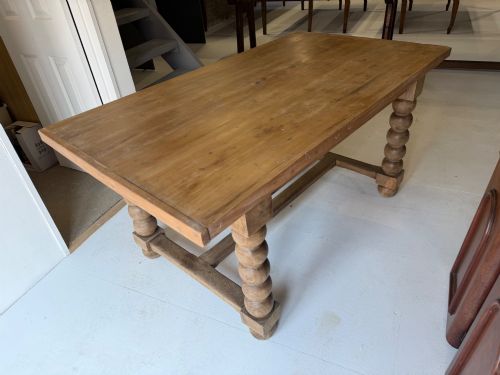
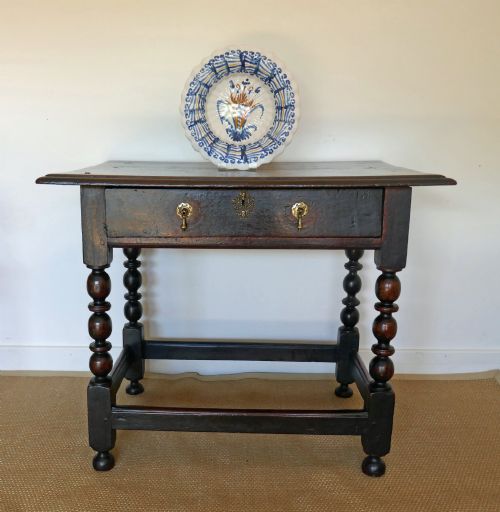
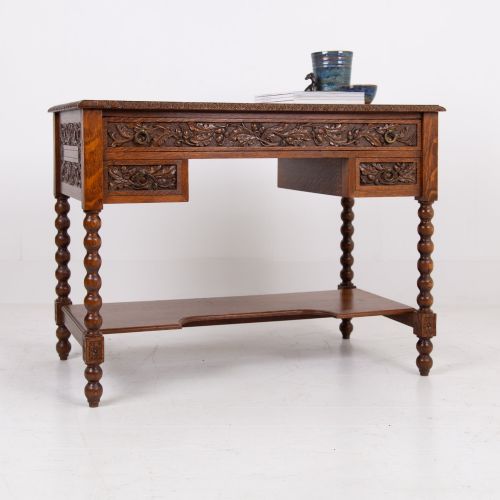
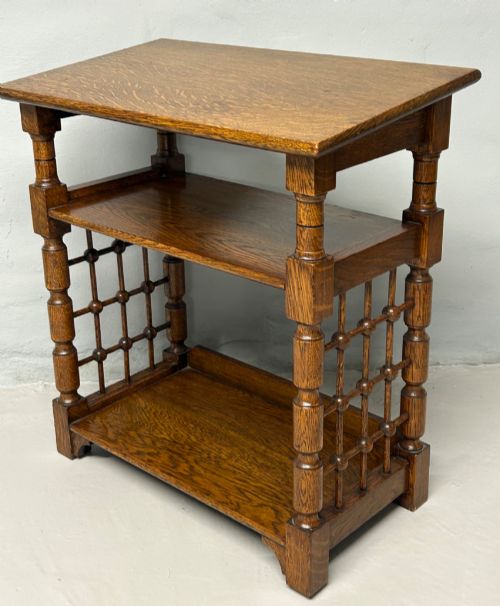
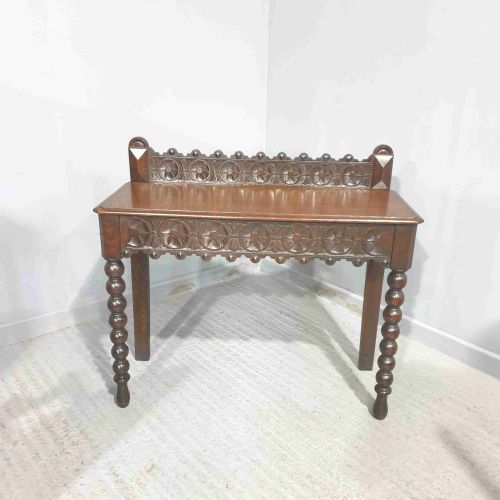
When you search for an oak bobbin turned desk, you are looking at furniture defined by its characteristic spool-shaped turnery along the legs and supports. These pieces combine robust timber construction with decorative turning that draws on seventeenth-century traditions.
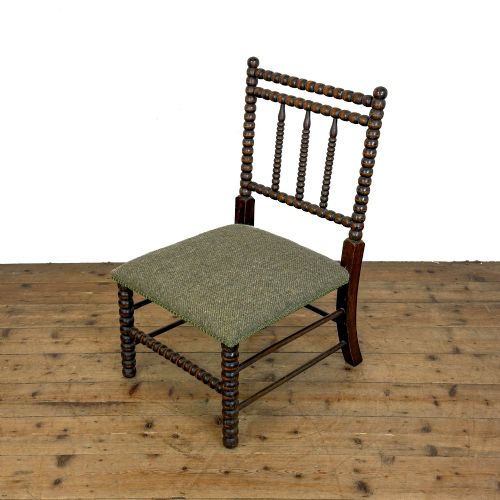
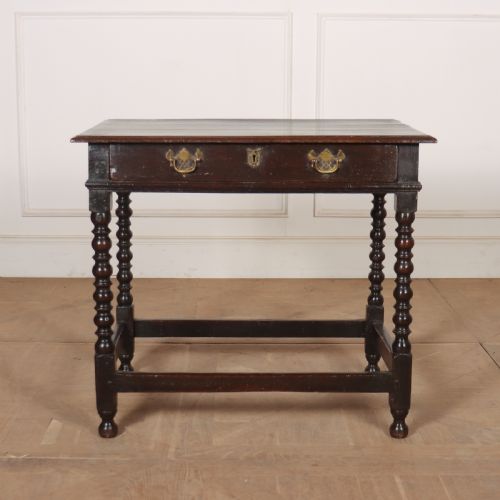
The versions most commonly met on this page span several centuries, including nineteenth-century interpretations, Victorian examples, and pieces from around nineteen-hundred. They appear in forms such as single-drawer writing tables and swivel chairs designed for practical use.
Originating in English provincial and Jacobean revival styles, these desks and tables frequently incorporate oak alongside beech and elm. Buyers find them used as compact writing surfaces or hallway consoles that anchor a room with period texture.
How they were made
Craftsmen built these items primarily using solid oak, often pairing it with beech and elm for turned components and structural framing. Woodworkers shaped the distinctive bobbin profiles on a lathe, repeating spool or bobbin motifs along legs and stretchers.
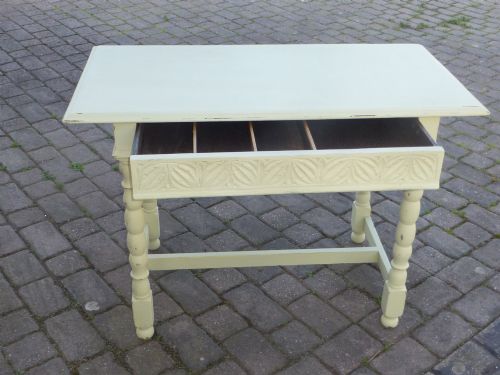
Joinery relied on traditional pegging and mortise and tenon methods to ensure stability in heavy hardwood frames. Surfaces received simple finishes, paint, or natural wax to protect the timber while highlighting the grain and the rhythmic turnery.
Listings feature items spanning the seventeenth to the twentieth centuries, utilising oak, beech, elm, and brass.
What varies in quality
The distinction between ordinary and superior pieces rests on the crispness and depth of the turnery along the legs and stretchers. Sharply defined bobbin shapes demonstrate greater skill in the woodturner than soft, worn profiles.
Proportion and timber selection equally determine the standing of a desk. Heavy, well-figured oak boards with balanced proportions command attention, whereas mismatched secondary woods or clumsy scaling alter the visual harmony of the piece.
The Oak Bobbin Turned Desk Glossary
- Bobbin turning
- A form of woodturning consisting of a sequence of cylindrical or spool-shaped segments carved on a lathe. This decorative technique creates a rhythmic, textured profile often seen on seventeenth-century and revival furniture legs.
- Jacobean Revival
- A nineteenth-century style that emulates the heavy, dark oak furniture of the early seventeenth century. Pieces in this manner frequently employ bold turnings, paneling, and robust construction.
- Side table
- A small table designed to stand against a wall or beside other furniture, often featuring one or more drawers. These versatile items served various domestic functions in hallways, parlours, and bedrooms.
- Turnery
- Articles or components shaped on a woodturning lathe using chisels and gouges. In antique furniture, turned elements include legs, stretchers, and spindles.
- Elm
- A tough, interlocking hardwood frequently used in traditional English furniture for secondary framing and seats. Its resistance to splitting made it ideal for structural components.
Oak Bobbin Turned Desk: Frequently Asked Questions
What is bobbin turning?
Bobbin turning is a woodworking technique where a lathe shapes timber into a series of rounded, spool-like segments. This style creates a decorative, textured column popular in seventeenth-century English design.
Makers used this method on table legs, chair stretchers, and framing to add visual interest and tactile detail to solid wood furniture.
How do I date an oak desk?
Dating an oak desk involves examining the construction methods, tool marks, and overall proportions of the timber. Seventeenth-century pieces typically show hand-split boards and pegged joints, while later revivals from the nineteenth century display machine-sawn consistency.
Secondary woods, finish types, and hardware styles also provide vital clues for establishing the correct period of manufacture.
Where should I place a bobbin table?
A bobbin turned table suits hallways, studies, or living rooms where the distinct turned legs can be easily seen. Their compact proportions make them effective as writing desks or side tables against plain walls.
Keeping them away from direct heat sources helps protect the historic oak timber from drying out and splitting over time.
What woods were used?
These pieces primarily feature solid oak for main surfaces, tabletops, and structural framing. Cabinetmakers frequently paired oak with beech and elm for turned legs and internal components.
Occasionally, painted finishes or secondary fabrics appear, but natural hardwood remains the dominant material across these historical periods.
Are these desks good for daily use?
Solid oak construction provides the sturdiness needed for regular writing and daily tasks. Their durable hardwood frames stand up well to everyday working environments.
Using proper desk pads and maintaining gentle furniture wax preserves the historic wood surfaces while accommodating modern use.