
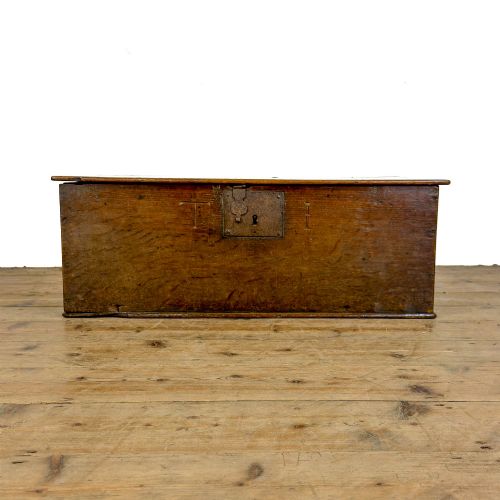
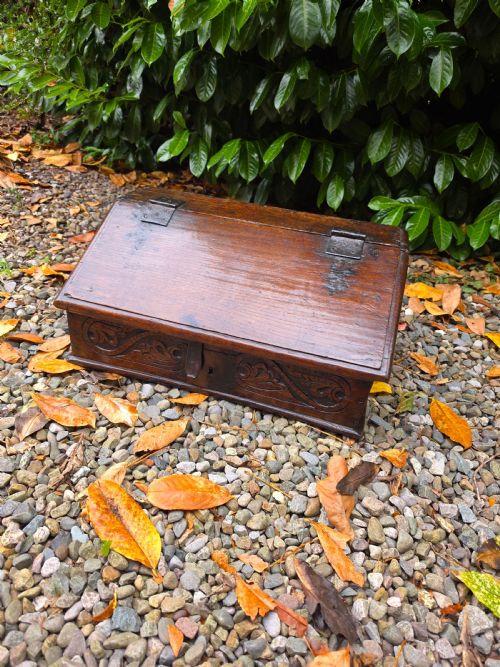
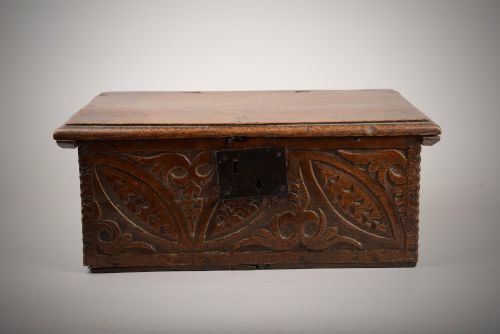
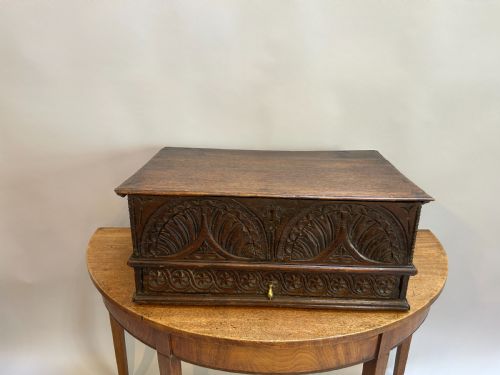

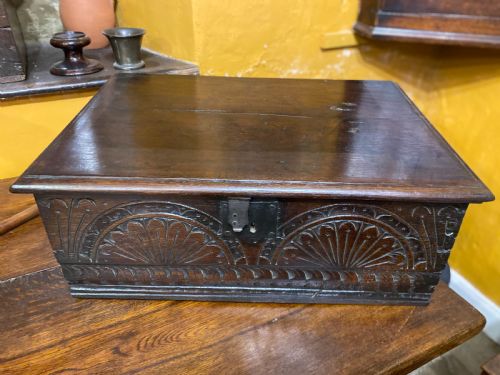


Oak Bible Box Table
An oak bible box table combines sturdy seventeenth and eighteenth-century joinery with a portable desk surface, giving you a tangible piece of early domestic history.
Oak Bible Box Table
When you search for an oak bible box table, you encounter compact wooden receptacles designed to store sacred texts and writing materials securely upon a table or a dedicated stand. These pieces span the seventeenth and eighteenth centuries, including examples from the Jacobean and Georgian vernacular traditions.
The most common forms on this page include simple slant front bible boxes, table boxes with internal drawers, and variants featuring carved friezes or demi-lune front panels. Certain items incorporate owner initials and dates, reflecting their original domestic or ecclesiastical purpose.
Originating primarily from English and Welsh workshops, these forms range from simple desk boxes to complex writing slopes and boxes on stands. They serve today as desktop storage or distinct accent tables with deep historical resonance.
Materials and construction
Construction relies heavily on solid oak timbers, chosen for durability and local availability during the seventeenth and eighteenth centuries. Makers joined panels using traditional methods, often incorporating pegged joints and solid floorboards.
Hardware consists of forged iron and cast brass elements, including hinges, latches, and occasional escutcheons that secure the lids. Surface decoration frequently involves hand-carved friezes or geometric mouldings rather than applied veneers.
Listings feature oak as the primary material, accented with iron and brass hardware across seventeenth and eighteenth-century periods.
Assessing quality and character
Quality rests in the crispness of the hand-carved panels, the integrity of the original oak boards, and the retention of internal components such as small drawers and till compartments. Pieces that retain their early brass or iron hardware command greater interest.
The presence of period owner initials, precise dating, or regional vernacular traits like demi-lune front panels elevates an example above plain utility boxes. Patina built through centuries of use distinguishes authentic early surfaces from later alterations.
The Oak Bible Box Table Glossary
- Bible box
- A portable wooden chest specifically sized to hold a family bible and writing materials safely. These boxes usually feature sloping lids that double as writing surfaces.
- Table box
- A low wooden box designed to sit on a desk or table, providing secure storage for documents and valuables. They often contain internal drawers or small compartments.
- Jacobean
- A design style spanning the late sixteenth and seventeenth centuries, characterised by robust oak construction and shallow geometric or strapwork carving. It represents the early aesthetic of these boxes.
- Vernacular
- Everyday furniture made by local craftsmen for regional use, prioritising utility and local materials over high court fashions. Welsh and English provincial pieces demonstrate this tradition.
- Frieze
- A horizontal decorative band on the front panel of a box, frequently embellished with carved scrolling foliage or initials. It forms the primary visual focal point of the piece.
Oak Bible Box Table: Frequently Asked Questions
What is a bible box table?
A bible box table is a traditional wooden chest, often featuring a slanted lid, designed to hold sacred texts and writing equipment. They were built to sit upon tables or stands for safe storage.
Over time, many of these boxes were paired with dedicated stands to function as small writing desks within the home.
How old are these oak boxes?
The pieces available here generally date from the seventeenth and eighteenth centuries, spanning periods from Jacobean through to Georgian vernacular. Their ages are often indicated by construction methods and occasional carved dates.
Construction details such as hand-cut peg joints and original iron hinges help confirm their early origins.
Were these used only for bibles?
While originally intended to protect heavy family bibles from damage and moisture, they also stored important documents, letters, and personal valuables. The internal drawers and compartments accommodated inkwells and quills.
Their secure lids and locks made them practical desktop repositories for any precious household papers.
How do I place one in a modern room?
These boxes sit comfortably on top of sideboards, desks, or low tables where their carved oak panels and patinated surfaces can be appreciated. Versions on stands function well as standalone accent pieces.
They provide useful concealed storage while adding historic character to both traditional and contemporary interiors.