



Oak Barrel Container
An oak barrel container brings honest timber and sturdy cooperage into a room, offering both practical storage and undeniable presence.
Oak Barrel Container
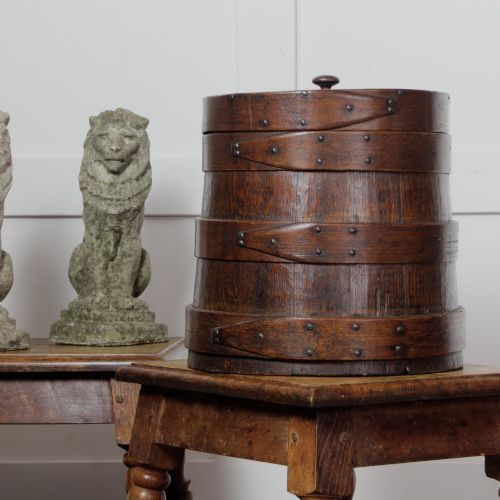
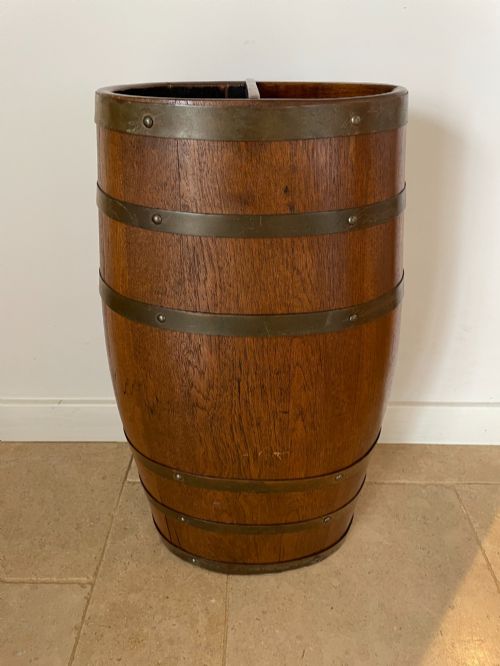
An oak barrel container represents a robust category of coopered vessels spanning periods from the Georgian era through the Victorian period, Edwardian years, and into the 1930s. Buyers searching for an oak barrel container will frequently encounter umbrella and stick stands, alongside flour or grain bins, coal hods, jardinieres, planters, and rum barrels.
The forms range from circular casks to oval umbrella stands shaped by traditional stave construction. These pieces bridge utilitarian origins in merchant navy service and domestic storage with rustic country and maritime aesthetic traditions.
Most examples rely on solid oak construction reinforced with metal hardware, primarily brass bands, copper hoops, and iron fixtures. The survival of these vessels reflects durable craftsmanship designed for daily household or maritime service.
How they were made
Makers constructed these vessels using traditional cooperage techniques, shaping individual wooden staves of oak to form curved bodies without modern adhesives. The staves fit tightly together along bevelled edges to create watertight or structurally sound enclosures.
Metal bands forged from brass, copper, or iron were driven tightly around the oak staves to bind the container securely. Rivets and mounting brackets often completed the assembly for handles or interior liners.
Oak Barrel Container Retail Price Guide 2026
Typical asking prices for oak barrel container among the pieces listed under this phrase on Sellingantiques today, from the lower quarter to the upper quarter. They describe what is for sale here now, not the wider market.
Sailors on merchant navy ships once gathered around a coopered grog tub for their daily rum ration.
What varies in quality
The distinction between ordinary and exceptional pieces lies in the crispness of the cooperage work and the harmony of the materials. Tighter joints between staves and well-fitted metal bindings indicate superior workshop execution.
The character of the oak grain and the original warmth of the brass or copper bands elevate certain items above standard utility pieces. Proportion also dictates quality, particularly in oval umbrella stands where maintaining an elegant silhouette requires skilled handling.
The Oak Barrel Container Glossary
- Coopered
- Constructed from curved wooden staves bound together with metal hoops. This technique forms the structural basis of barrels, casks, and tubs.
- Stave
- One of the narrow vertical strips of oak that form the sides of a barrel or container. The precise bevelling of each stave ensures the vessel holds its shape under tension.
- Jardiniere
- An ornamental pot or stand for holding plants or flowers. In these listings, such vessels share the coopered oak and metal construction of utilitarian barrels.
- Coal hod
- A container designed to hold household coal near a fireplace. These domestic pieces often feature hinged lids and sturdy metal carrying handles.
- Grog tub
- A low, wide wooden barrel historically used on merchant navy ships for mixing and serving rum rations. They are characterised by robust oak staves and secure metal banding.
Oak Barrel Container: Frequently Asked Questions
What were oak barrel containers used for?
These vessels served diverse practical purposes ranging from storing grain and flour to holding coal, umbrellas, walking sticks, and shipboard rum rations. Their sturdy construction made them reliable for heavy daily tasks in homes and maritime environments.
Over time, many utilitarian containers transitioned into decorative domestic furnishings, particularly umbrella stands and planters placed in hallways and reception rooms.
How do I care for an oak barrel container?
Keep the timber conditioned by avoiding extreme temperature fluctuations and direct heat sources that can dry out the oak staves. Dust the surface regularly and polish the metal bands lightly when needed to maintain their appearance.
If using a coopered container as a planter or umbrella stand, ensure an appropriate interior liner protects the wood from standing moisture.
How can I tell the period of an oak barrel?
Dating relies on examining the construction methods, the type of metal used for the bands, and the overall form and style. Georgian and early nineteenth-century pieces often display hand-forged iron or early brass bindings with distinct patination.
Later Victorian, Edwardian, and 1930s examples introduce standardised hardware and specific aesthetic styles such as Art Deco or rustic country designs.
Are these containers waterproof?
While original cooperage was designed to hold liquids or damp goods like rum and grain, antique wooden vessels often develop slight gaps between staves as the timber ages and responds to modern indoor climates.
Using them for wet umbrellas or live plants generally requires a modern watertight insert to protect the historic wood from persistent moisture.