
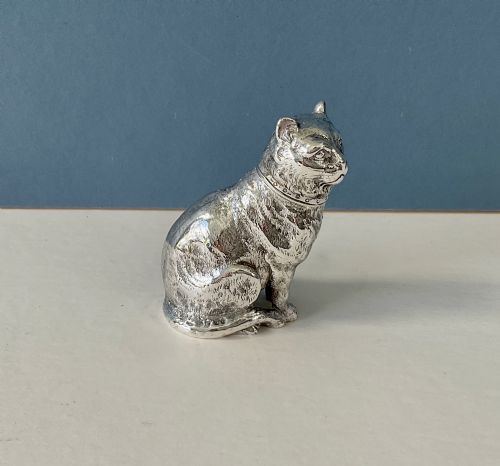
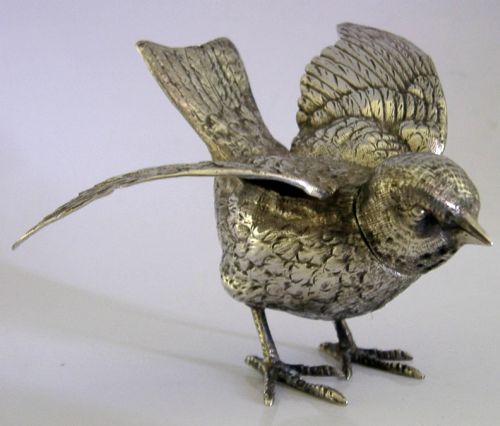
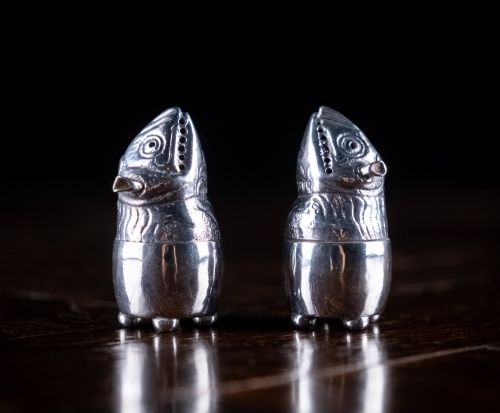
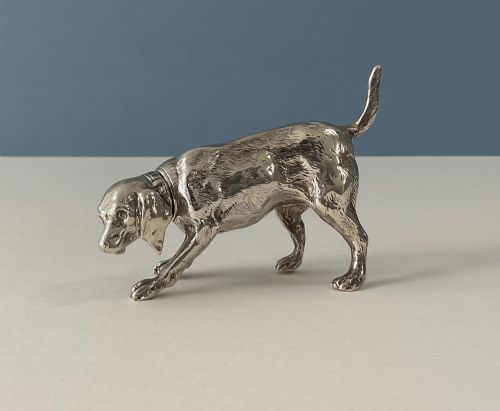


Novelty Silver Pepper Pots
These novelty silver pepper pots turn dining tables into miniature menageries and cabinets of curiosity.
How they were made
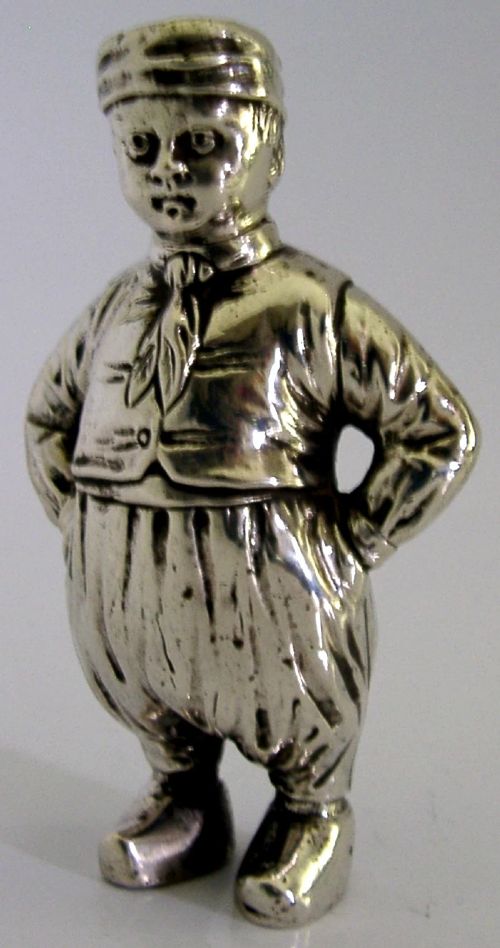
Silversmiths employed casting and sheet metal techniques to shape sterling silver and silver plate into complex animal and figural forms. Details such as feathers, fur and facial expressions were achieved through meticulous hand chasing and engraving.
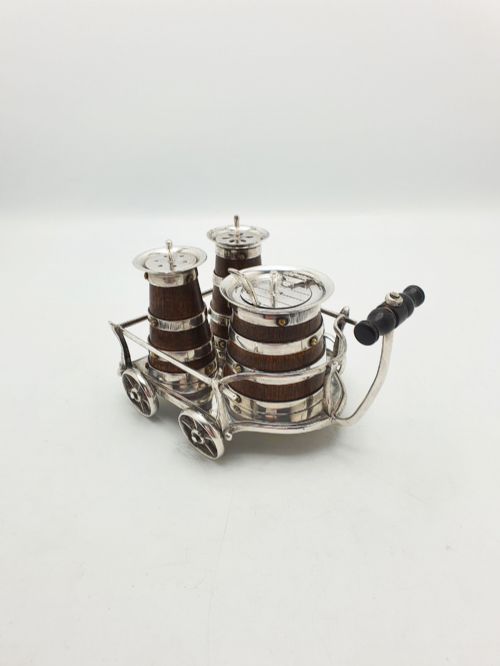
Many hollow-bodied pieces feature a removable base or head fitted with perforations to dispense the pepper. Combinations of materials appear alongside the metal, including cut glass inserts, oak barrels and wooden trays.
What varies in quality
The distinction between ordinary and superior pieces rests upon the crispness of the casting and the depth of the hand-chased detail. A finely modelled owl or chick retains sharp feather texture and anatomical proportion, whereas lesser examples blur into smooth, unarticulated surfaces.
Maker attribution and London or continental hallmarks elevate certain pieces, particularly those bearing the marks of renowned silversmiths. The preservation of original silver plating on base metal or oak components also marks the difference between a tired survivor and a pristine cabinet piece.
Listings on this page encompass solid sterling silver, silver plate, pewter and oak, spanning the Victorian and Edwardian eras up to the mid-twentieth century.
Frederick Brasted·Sampson Mordan·Berthold Muller·Mappin & Webb
The Novelty Silver Pepper Pots Glossary
- Pepperette
- A small individual container for ground pepper, usually featuring a perforated top and a removable base. These often form part of a larger cruet set.
- Cruet set
- A matched assemblage of condiment containers holding salt, pepper and mustard, sometimes mounted on a shared stand or tray. They frequently incorporate silver plate and wood.
- Chasing
- A metalsmithing technique of indenting silver with a hammer and punch to create surface texture and relief decoration without removing metal. This method defines the plumage on bird peppers.
- Sterling silver
- An alloy containing a high proportion of pure silver combined with other metals to ensure durability. British pieces typically carry hallmark stamps guaranteeing this standard.
- Silver plate
- A manufacturing method where a thin layer of silver is fused onto a base metal core such as copper or pewter. This allowed makers to produce large figural forms more economically.
Novelty Silver Pepper Pots: Frequently Asked Questions
How do you fill a novelty pepper pot?
Most figural pepper pots feature a removable head, a threaded screw plug or a snug-fitting base stopper on the underside. Removing this closure allows you to pour ground peppercorns into the hollow interior.
Care must be taken with antique threaded mechanisms to avoid stripping the silver. Once filled, the stopper is secured back in place before use on the table.
How can I date an antique silver pepper pot?
British silver items typically carry hallmarks that include a date letter, a lion passant indicating sterling standard, and a leopard head or anchor denoting the assay office. Cross-referencing these stamped symbols with silversmith directories provides the exact year of manufacture.
Unmarked continental pieces or silver-plated examples rely on stylistic evidence, such as the naturalistic Victorian animal forms or the geometric lines of later periods.
Why are owl pepper pots so common?
Victorian and Edwardian table culture embraced the humorous personification of animals, and the natural posture of an owl lent itself perfectly to a standing pepper pot. Their round bodies and prominent eyes appealed directly to the Victorian appetite for whimsical dining accessories.
This enduring popularity meant that silversmiths reproduced the form across several decades in varying sizes and metals.