


Norwegian Guilloche Enamel
Norwegian guilloche enamel pieces combine sterling silver, silver gilt, and vitreous enamel in brooches, spoons, and cocktail shakers that collectors prize for their intricate engine-turned patterns.
Norwegian Guilloche Enamel
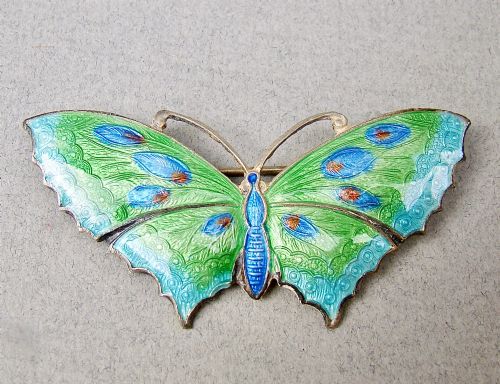
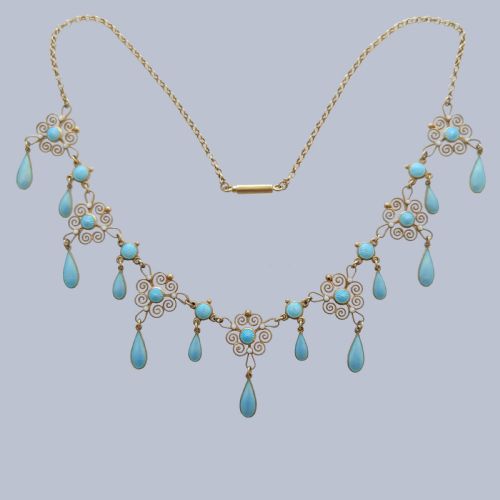
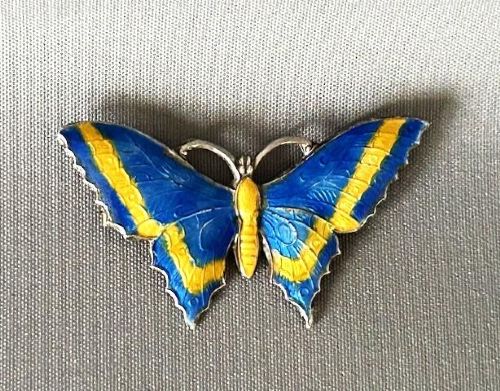
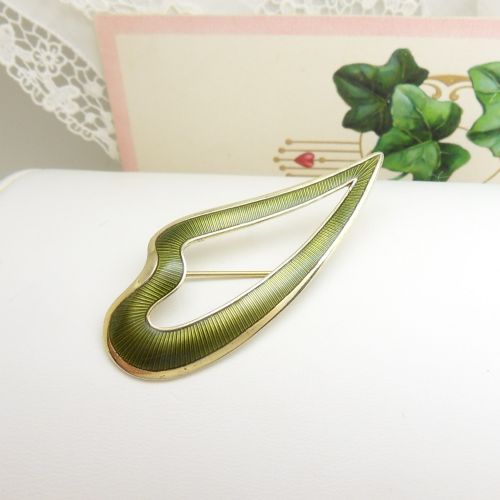
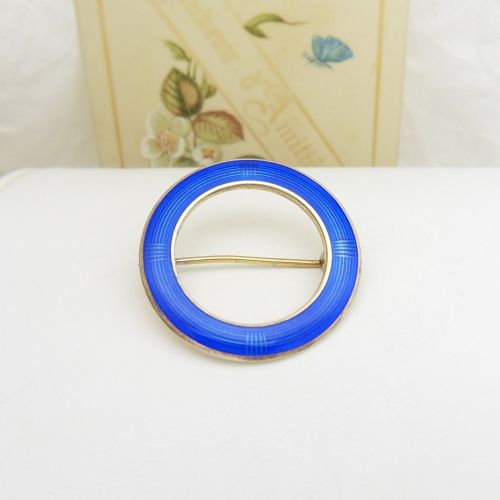
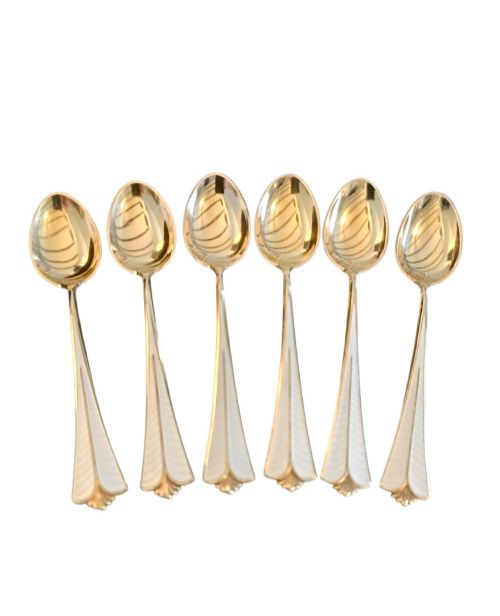
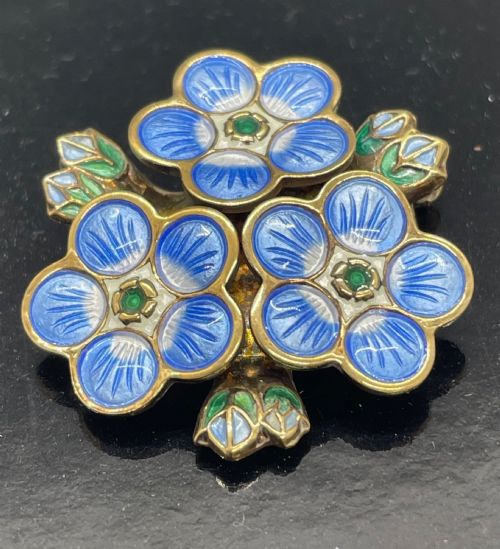
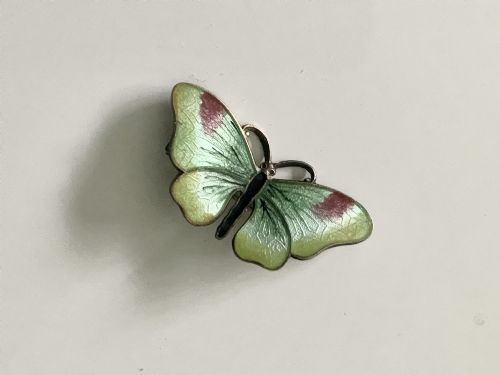
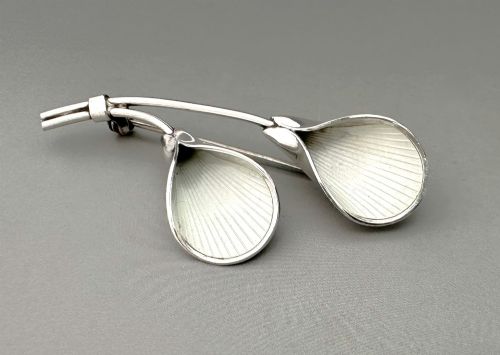
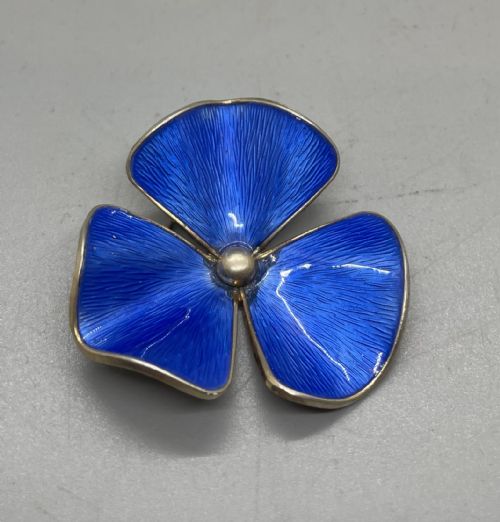
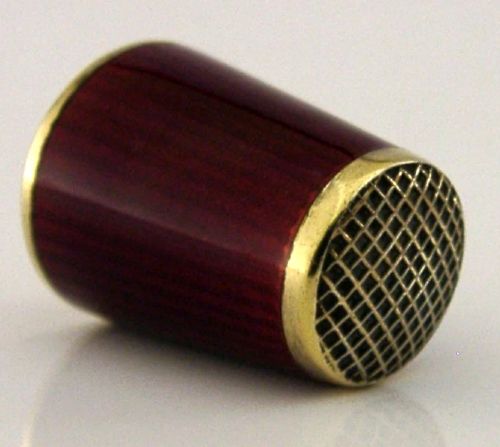
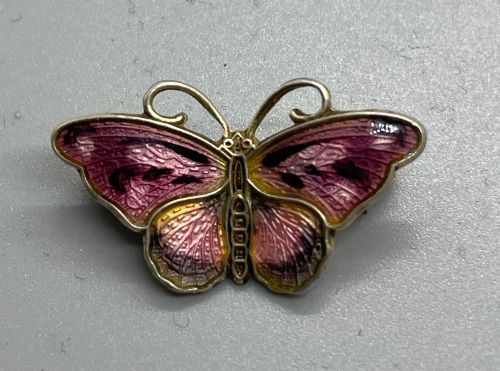
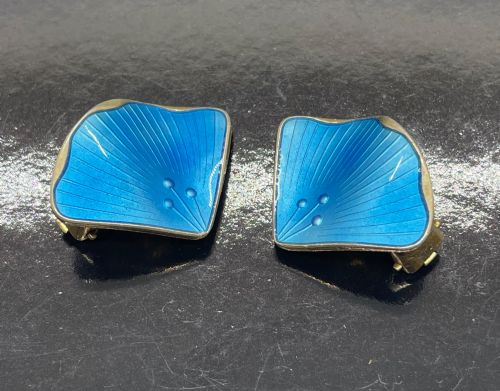
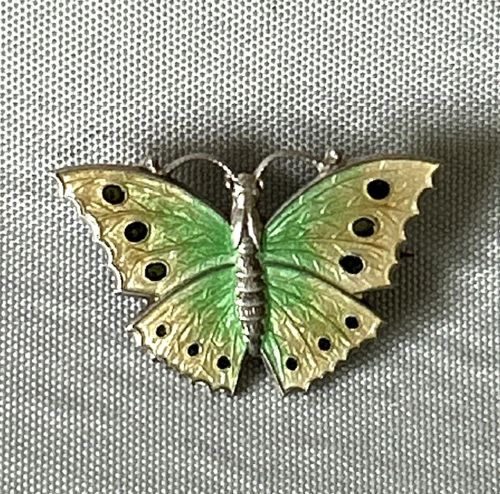
Norwegian guilloche enamel spans personal adornment and table wares, emerging in forms such as brooches, necklaces, pendants, earrings, bracelets, napkin rings, coffee spoons, caddy spoons, salts, pin dishes, sewing thimbles, and cocktail shakers. The selection relies heavily on brooches, often shaped as butterflies or floral motifs, alongside sets of tableware.
The objects cross several decades and periods, documented from Victorian times through the 1900s, 1910s, 1920s, 1930s, 1940s, 1950s, and 1960s. Stylistically, the inventory moves through Art Nouveau, Art Deco, and Scandinavian Modern or Mid-Century Modern designs, reflecting shifting aesthetic choices across twentieth-century workshops.
Materials and technique
Craftsmen built these items using sterling silver, 930 silver, and silver gilt, frequently applying gold gilt or gold vermeil to the metal base. The underlying metal received machine-engraved geometric patterns known as guilloche before translucent or opaque vitreous enamel was fused to the surface.
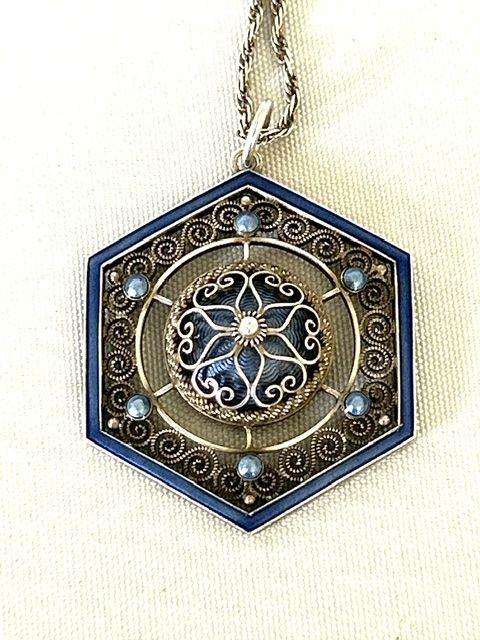
Techniques combined precise metalworking with enamel firing, allowing the underlying engraved texture to show through the coloured glass layer. Silver filigree also appears in specific bracelets, adding intricate wirework alongside the flat enamelled panels.
Norwegian Guilloche Enamel Retail Price Guide 2026
Typical asking prices for norwegian guilloche enamel among the pieces listed under this phrase on Sellingantiques today, from the lower quarter to the upper quarter. They describe what is for sale here now, not the wider market.
Listings feature items spanning the Victorian era through the 1960s, encompassing Art Nouveau, Art Deco, and Scandinavian Modern styles.
Qualities of distinction
Differentiation across pieces rests on the complexity of the engine-turned engraving beneath the glass and the depth of the translucent vitreous enamel layer. Items featuring detailed figural forms, such as butterflies or Viking ships, display higher sculptural ambition than simple geometric circles or bars.
The choice of base metal and gilding application further separates standard production from finer workshop output, particularly where heavy silver gilt or gold vermeil enhances the coloured enamel fields.
Marius Hammer·David Andersen·Aksel Holmsen·Hroar Prydz·Gustav Gaudernack
The Norwegian Guilloche Enamel Glossary
- Guilloche enamel
- Glass powder fused over a metal surface that has been mechanically engraved with precise, repetitive geometric patterns. The technique creates a shimmering wave or sunburst effect visible beneath the translucent colour.
- Silver gilt
- Sterling silver that has been coated with a thin layer of gold. This treatment provides a warm golden tone while retaining the structural properties of silver.
- Vitreous enamel
- Glass fused to metal at high temperatures through kiln firing. It forms a durable, glossy coloured coating that resists tarnishing.
- Silver filigree
- Fine silver wire twisted and soldered into openwork lace patterns. It frequently surrounds or integrates with enamelled sections in bracelets and brooches.
- Festoon necklace
- A decorative necklace featuring draped chains, swags, or suspended elements falling across the collarbone. Examples in this category pair silver gilt with coloured enamel panels.
Norwegian Guilloche Enamel: Frequently Asked Questions
How do I clean silver gilt enamel?
Clean these items gently using a soft, dry cloth to remove surface dust without abrasive polishes. Avoid submerging vintage enamel in liquid cleaning solutions, as moisture can seep behind settings.
Store pieces individually in soft pouches to prevent scratching the vitreous enamel surface against other metal items.
What periods do these pieces span?
The inventory encompasses Victorian works alongside twentieth-century designs from the 1900s to the 1960s. Early pieces often align with Art Nouveau aesthetics, while items from the interwar years display Art Deco geometry.
Post-war output shifts towards Scandinavian Modern and Mid-Century Modernist styles, particularly in tableware and barware.
How were enamel cocktail shakers used?
Enamel cocktail shakers served functional roles in mid-century home entertaining for mixing and pouring drinks. Their decorative guilloche panels elevated barware into display pieces for modern interiors.
Matching sets of coffee spoons, salts, and napkin rings similarly fulfilled dining room duties during formal gatherings.
How do I identify a butterfly brooch?
Butterfly brooches utilise shaped silver outlines filled with translucent red, blue, green, or multicoloured enamel over guilloche engraving. Their wings often display the engine-turned patterns characteristic of Scandinavian metalwork.
Sizes range from petite pins to large statement brooches produced across multiple decades.