



Northern English Landscape
These northern english landscape works capture industrial towns and sweeping dales through the eyes of regional painters.
Northern English Landscape
A northern english landscape records the distinct topography, industrial towns, and rural dales of the north of England through painting. These works document recognizable locations such as Wensleydale, Whitby, and Durham from the early to mid-twentieth century.
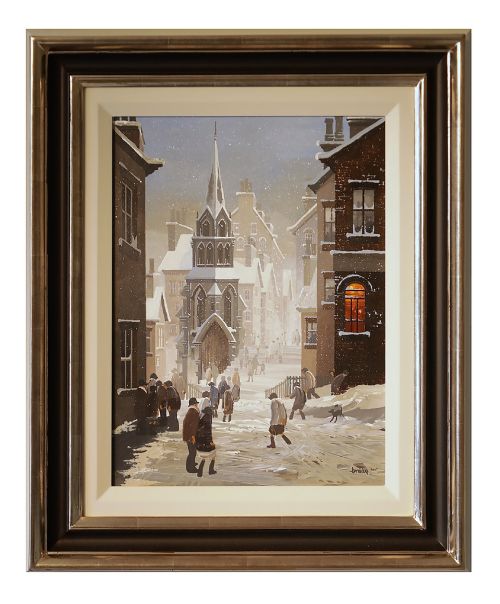
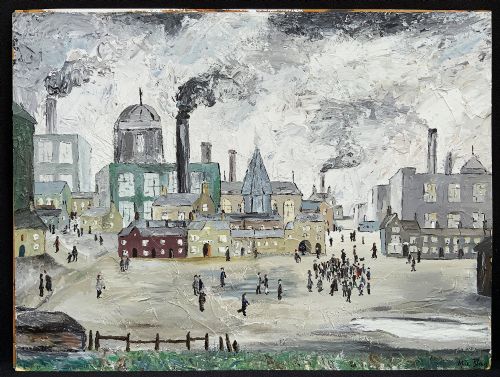
The most common form on this page is the watercolour painting on paper, frequently capturing open country scenes with soft washes. Alongside these, oil paintings on canvas or board record northern towns and industrial sites with heavier pigment.
Makers associated with this genre include Fred Lawson, Rowland Henry Hill, Robert Lesley Howey, Frank Shenton, Donald Wood, and Brian Shields 'Braaq'. Their output spans Edwardian views through to the later twentieth century.
How northern english landscape works were made
Artists utilised watercolour pigment on paper to render atmospheric skies and rolling valleys with translucent layers. These watercolours were typically set behind glass within wood frames to protect the delicate paper surface.
Oil paint applied to canvas or board allowed painters to build heavier textures for urban townscapes and architectural subjects like cathedrals and industrial mills. These oil works often relied on dark, rich palettes suited to northern light.
Northern English Landscape Retail Price Guide 2026
Typical asking prices for northern english landscape among the pieces listed under this phrase on Sellingantiques today, from the lower quarter to the upper quarter. They describe what is for sale here now, not the wider market.
The selection includes both delicate watercolour sketches and substantial oil paintings on canvas.
What varies in quality
The strength of a composition lies in how effectively the painter translates the specific atmosphere of Yorkshire or County Durham onto the surface. Top examples demonstrate confident brushwork and a clear sense of place rather than generalized scenery.
Materials and framing also indicate quality, with original wood frames and well-preserved paper or canvas surfaces holding greater visual integrity. Pieces that retain strong, unfaded pigment reflect careful preservation over the decades.
Brian Shields Braaq·Fred Lawson·Rowland Henry Hill·Robert Lesley Howey·Frank Shenton·Donald Wood
The Northern English Landscape Glossary
- Watercolour
- A paint method using water-soluble pigments that produce transparent washes on paper. This technique allows light from the paper to reflect back through the colour.
- Oil paint
- A slow-drying paint made by mixing pigments with a drying oil, typically linseed. It offers deep colour saturation and heavy texture on canvas or board.
- Board
- A rigid flat panel used as a painting support instead of stretched canvas. It provides a firm foundation for oil applications.
- British Impressionism
- A style of painting that focuses on light and ordinary subject matter with loose brushstrokes. Artists in this tradition capture fleeting atmospheric conditions outdoors.
Northern English Landscape: Frequently Asked Questions
Where were these northern scenes painted?
These works depict specific locations across the north of England, including Yorkshire dales, coastal towns like Whitby, and industrial centres.
Artists frequently returned to familiar regional spots to record local architecture and topography.
How do I care for a watercolour?
Watercolours on paper require protection from direct sunlight to prevent the pigments from fading over time.
Displaying them away from moisture and keeping them behind glass helps preserve the paper and medium.
What is the northern school?
The northern school refers to artists who lived and worked in the north of England, focusing on industrial towns and local landscapes.
Their style often reflects the distinct atmosphere and working-class heritage of the region.
Are these works painted outdoors?
Many watercolours were executed plein air to capture immediate light and weather conditions in the dales.
Larger oil paintings were frequently developed in the studio using initial sketches made on location.