

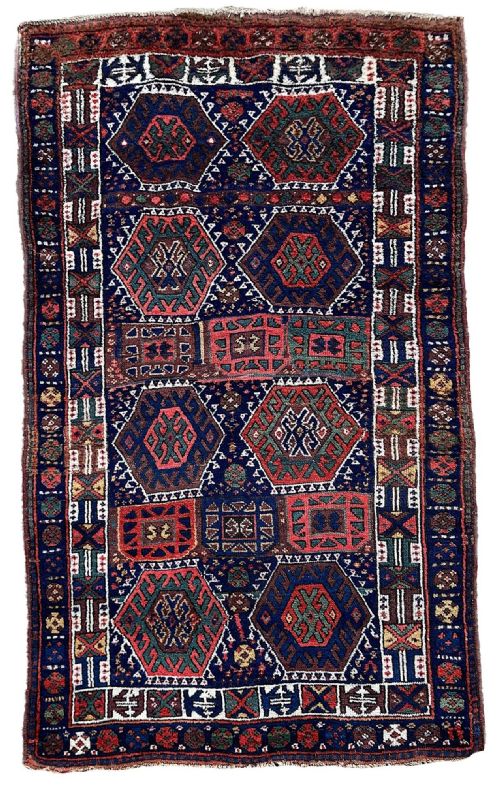


Nomadic Village Carpet
These nomadic village carpet pieces bring genuine tribal character and enduring craft into a room through rich woolwork and time-honoured regional designs.
Nomadic Village Carpet
A nomadic village carpet represents the weaving traditions of tribal groups across Persia, Afghanistan, the Caucasus, and Anatolia, created for daily domestic use rather than urban workshops. When you search for a nomadic village carpet, you encounter floor coverings that display distinct regional patterns handed down through generations.
The selection on this page centres on pieces originating from the nineteenth and early twentieth centuries, spanning periods from the 1880s through to the 1930s. Rugs and area rugs dominate the forms available, often carrying tribal styles associated with Kurdish, Afghan, Baluch, Qashqai, Bakhtiari, and Caucasian weavers.
Prayer rugs and traditional format village rugs appear frequently, occasionally featuring practical additions such as long kilim ends. Each piece reflects the specific weaving identity of its origin, whether that points to an Anatolian workshop or an Afghan tribal settlement.
Materials and construction
The construction of these textiles relies primarily on wool, utilised for both the pile and the foundation structure in many traditional nomadic pieces, alongside cotton foundations seen in specific regional examples. Weavers sourced local fleece and employed natural dyes to achieve the warm colours and varied palettes characteristic of these tribal works.
The physical build ranges from sturdy pile carpets designed for heavy floor use to lighter prayer formats with flat-woven kilim ends. Hand-knotting techniques executed on upright or horizontal looms allowed makers to incorporate complex geometric medallions and traditional tribal motifs directly into the weave.
Nomadic Village Carpet Retail Price Guide 2026
Typical asking prices for nomadic village carpet among the pieces listed under this phrase on Sellingantiques today, from the lower quarter to the upper quarter. They describe what is for sale here now, not the wider market.
Listings feature periods from the nineteenth century through the 1930s, using wool, cotton, and natural dyes across tribal styles.
Judging quality and character
Quality in these textiles rests upon the density of the knotting, the stability of the wool foundation, and the clarity of the design motifs. Pieces that retain strong structural integrity and crisp execution of patterns stand apart from more heavily worn examples.
The depth and consistency of the natural dyes also dictate standard, where harmonious colour palettes and well-preserved hues elevate a piece. The fidelity of the tribal style - whether Kurdish, Afghan, or Caucasian - reflects the maker's mastery of traditional regional iconography.
The Nomadic Village Carpet Glossary
- Prayer rug
- A small rug featuring a mihrab or arch design used traditionally for daily prayers. These formats often display specific regional iconography associated with Afghan or Anatolian weaving groups.
- Kilim end
- The flat-woven extension at the top or bottom of a rug formed by warp and weft threads without pile. This technique protects the main knotted body from fraying.
- Natural dye
- Colouring matter derived from plants, insects, or minerals rather than synthetic compounds. These dyes age gracefully and produce the nuanced, warm colours found in nineteenth-century village weaving.
- Medallion
- A central ornamental design motif placed in the field of a rug. Hooked variations appear frequently in Caucasian and Persian tribal styles.
- Pile
- The vertical or slanted yarn tufts that form the soft surface of a carpet. The height and density of the pile influence both the texture and durability of the piece.
Nomadic Village Carpet: Frequently Asked Questions
What is a nomadic village carpet?
A nomadic village carpet is a hand-knotted textile produced by tribal or village weavers in regions such as Persia, Anatolia, and the Caucasus. These pieces utilise traditional geometric and symbolic designs rooted in the culture of the maker.
Unlike city-made carpets produced in fixed urban workshops, village carpets often reflect spontaneous local designs and natural materials gathered directly from the surrounding environment.
How were these carpets used?
Tribal groups utilised these carpets primarily as floor coverings, bedding, and prayer mats within tents and village homes. Their robust wool construction provided necessary insulation against cold earth floors.
Smaller formats functioned as prayer rugs for daily devotion, while larger carpets defined central living spaces within nomadic or semi-nomadic encampments.
How do I live with a village rug?
Living with these textiles involves placing them in areas with moderate foot traffic to let the wool settle naturally. Using a quality underlay protects the vintage foundation from premature wear against hard floors.
Keep them out of direct, harsh sunlight to preserve the integrity of the natural dyes, and rotate the rug periodically to ensure even exposure and wear.
How do I tell different tribal styles apart?
Distinguishing between styles relies on observing specific colour palettes, structural materials, and characteristic motifs. For instance, Caucasian rugs frequently display sharp geometric medallions, while Kurdish and Bakhtiari pieces often present heavier tribal field patterns.
Examining the edge finishes, such as kilim ends or side cord bindings, also provides clues regarding the specific regional workshop or tribe of origin.