






Nomadic Kilim Bag
A nomadic kilim bag is a functional woven textile created by tribal makers for carrying grain, salt, or personal items during seasonal migrations.
Nomadic Kilim Bag
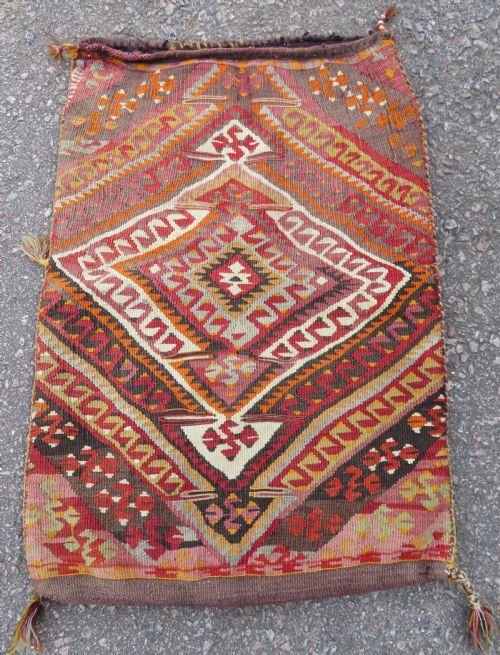
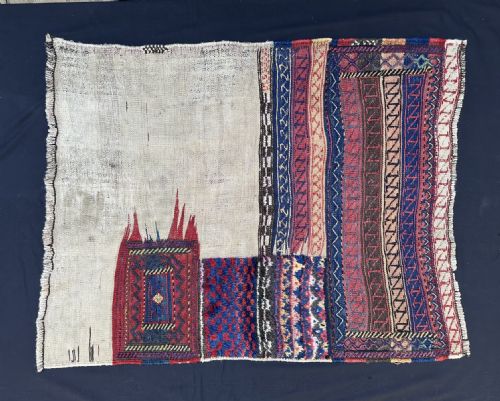
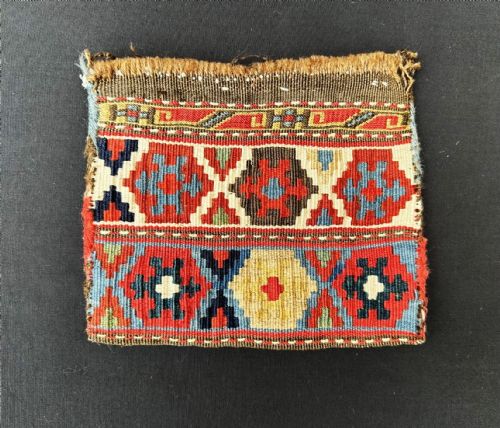
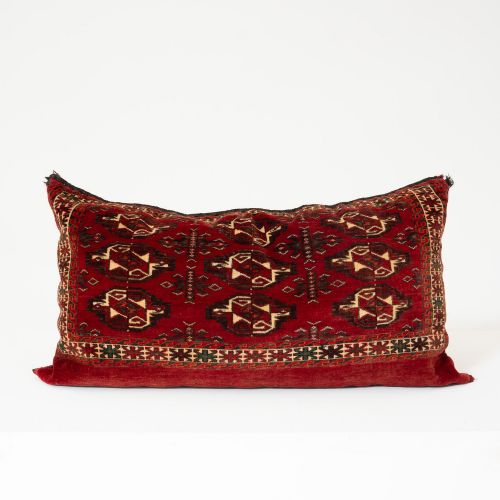
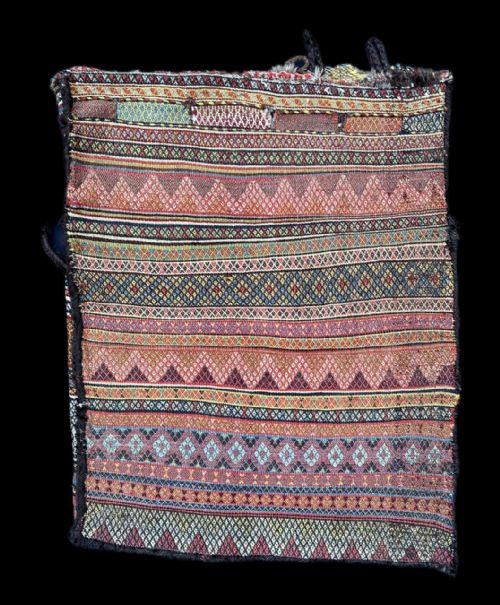
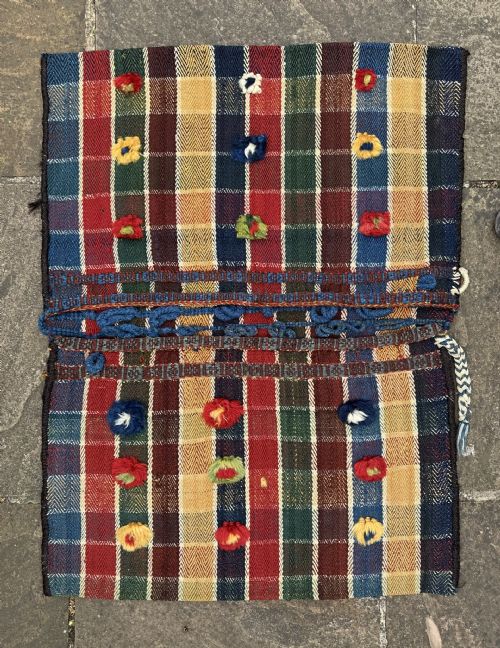
A nomadic kilim bag encompasses utilitarian storage containers, grain sacks, salt bags, and saddle bags produced across Persia, Anatolia, and Central Asia during the nineteenth and early twentieth centuries. Pieces originating from tribal groups such as the Qashqa'i, Shahsavan, Yomut, and Bakhtiari appear frequently in flatweave or pile-woven structures. Buyers encounter complete pairs, single bag faces adapted as cushions, and intact storage containers with original backs.
The regional variety spans from the Chahar Mahal valley in western Persia to the Moghan steppe in Azerbaijan and the tribal territories of Anatolia. These items served practical functions within nomadic households, doubling as portable furniture, camel bags, and storage for dry goods. Surviving examples reflect the specific weaving traditions and geometric design repertoires of distinct tribal confederacies.
Materials and Technique
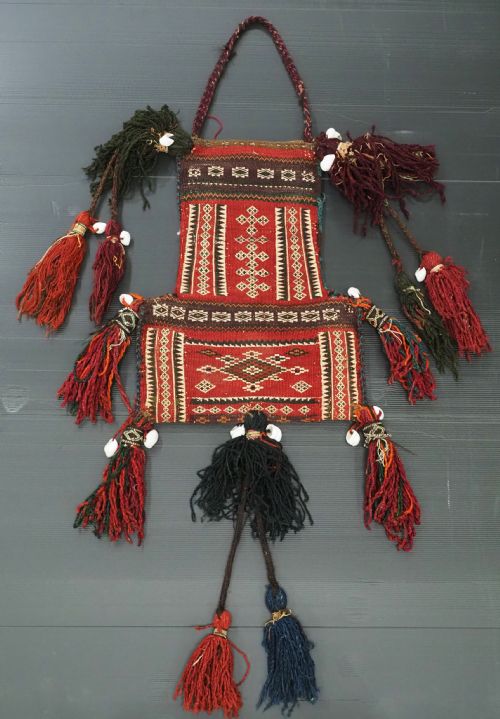
Weavers utilised hand-spun wool and natural dyes, occasionally combining goat hair and leather for structural reinforcement in high-wear areas like borders and carrying loops. Cowrie shells appear on certain items for ornamentation and protection.
The construction relies primarily on slit-tapestry flatweave techniques, supplemented by weft-work banding, soumak wrapping, or occasional pile faces. Natural dyestuffs yield deep reds, indigos, and golds that interact with hand-spun wool to create varied surface textures.
Nomadic Kilim Bag Retail Price Guide 2026
Typical asking prices for nomadic kilim bag among the pieces listed under this phrase on Sellingantiques today, from the lower quarter to the upper quarter. They describe what is for sale here now, not the wider market.
Occasional items still retain rows of white cowrie shells, stitched on by nomadic weavers to ward off the evil eye during travel.
Judging Quality
Quality rests on the integrity of the weave, the saturation and clarity of natural dyes, and the preservation of original backs, closures, and structural elements. Finely spun wool and tight structural tension distinguish the most accomplished tribal weaving.
Proportion, precision in geometric tribal motifs, and the complexity of banded flatweave designs separate standard utilitarian sacks from masterworks of nomadic textile art. The survival of complete pairs or intact salt and grain bags enhances the historical weight of a piece.
The Nomadic Kilim Bag Glossary
- Kilim
- A flatweave textile produced by tightly interweaving warp and weft strands without creating a pile. This technique produces a lightweight, durable fabric utilised for covers, bags, and floor coverings.
- Tacheh
- A traditional tribal grain or wheat sack, frequently woven by Luri and Bakhtiari communities in western Persia. These large containers were designed for agricultural transport and storage.
- Chuval
- A large Turkmen storage bag used within yurt tents for bedding and household goods. They typically feature guls and geometric repeat patterns across the face.
- Mafrash
- A rectangular storage chest or bedding bag constructed from flatweave panels. Pairs of these containers were loaded onto pack animals during seasonal tribal migrations.
Nomadic Kilim Bag: Frequently Asked Questions
What is a nomadic kilim bag used for?
These textiles functioned as transport containers for grain, salt, clothing, and household goods during seasonal migrations across Persia, Anatolia, and Central Asia.
Nomads slung them over pack animals or stored them inside tents as organised compartments for daily provisions and bedding.
How do I care for an antique tribal bag?
Keep flatweave textiles away from direct sunlight to protect natural dye colours, and vacuum them gently using low suction without a rotating brush.
Support the structure fully if mounted or keep them flat to prevent strain on the historical wool and goat hair fibres.
How can I tell a salt bag from a grain sack?
Salt bags feature a distinctive bottleneck shape designed to retain coarse rock salt and prevent spills during transport on animal back.
Grain sacks and wheat sacks, known as tacheh, take a larger rectangular or square format suited for bulk agricultural storage.
What are tribal bag faces?
Bag faces are the decorative front panels of storage containers that survived after the plain utility backs deteriorated or were removed.
Collectors and makers often mounted or cushioned these remaining flatweave sections to preserve the intricate geometric patterns and natural dyes.