

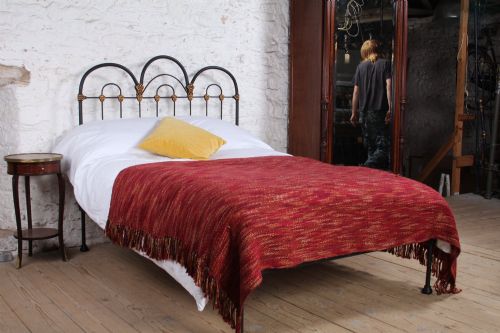


No End Bed Frame
These no end bed frame pieces are open-ended iron and brass bedsteads that offer uninterrupted legroom and classic period charm.
No End Bed Frame
When you search for a no end bed frame, you are looking at open-ended bedsteads designed without a high footboard to give an unobstructed view of the room and extra legroom. The pieces seen here span the Victorian era, 1890, 1900, 1910, and 1920, predominantly taking the form of double beds, king size models, and pairs of single beds that can be joined.
The styles range from robust Victorian and French Country to Rustic European and Louis XVI Style. You will most frequently meet iron and brass combinations or all-iron constructions, alongside specific regional finds such as Irish king size versions and Portuguese single beds.
How They Were Made
Construction relies heavily on cast iron, wrought iron, and forged iron frameworks, often paired with polished brass components such as finials and spindles. Metal elements are shaped through classic casting and forging techniques, sometimes finished with painted surfaces or paired with carved wood and fabric.
Detailing is achieved through ribbon reed motifs, arched rails, classic straight rails, and attractive castings. Single beds are engineered to allow two frames to be joined together securely to form a wider sleeping platform.
No End Bed Frame Retail Price Guide 2026
Typical asking prices for no end bed frame among the pieces listed under this phrase on Sellingantiques today, from the lower quarter to the upper quarter. They describe what is for sale here now, not the wider market.
Several single beds here come in friendly pairs that can be joined together when company calls for a wider arrangement.
What Varies in Quality
The distinction between standard examples and finer pieces lies in the crispness of the iron shaping and the intricacy of the brass ornamentation. Superior frames display well-defined ribbon reed patterns, substantial brass finials, and balanced proportions.
Quality also rests in the integrity of the metalwork, where clean casting and robust forged iron joints ensure structural longevity. Simpler straight rail designs contrast with elaborately arched and panelled variants, each commanding a different visual weight.
The No End Bed Frame Glossary
- No End
- A bedstead design featuring a low footboard or none at all, allowing for uninterrupted length and an open appearance. This configuration suits rooms where space is at a premium.
- Ribbon Reed
- A decorative moulding or casting detail resembling bound reeds or ribbons. It adds textural interest to the metal framework.
- Finial
- A decorative terminal ornament positioned at the top of bed posts or corners. Brass finials are common on Victorian iron frames.
- Straight Rail
- A simple linear headboard or footboard bar design without arches or curves. It provides a clean, understated aesthetic.
- French Hospital Style
- A vernacular bed design featuring clean metal lines and utilitarian grace. These pieces often incorporate brass and iron elements.
No End Bed Frame: Frequently Asked Questions
What is a no end bed frame?
A no end bed frame is a bedstead designed without a high footboard, leaving the foot of the bed completely open. This style provides extra legroom and creates an unobstructed line of sight across a bedroom.
Most examples in this category combine iron and brass materials, originating from the Victorian period through to the early twentieth century.
How do single no end beds join?
Certain pairs of single no end beds are constructed with compatible frame fixings that allow them to be placed side by side and locked together. This creates a larger sleeping platform while retaining the flexibility of two individual beds.
Originating from regions like Portugal and Britain, these pairs share matching heights and stylistic details for a uniform appearance when united.
How do I style a metal bed frame?
Metal bed frames pair naturally with traditional crisp linens, simple coverlets, and textured throws to soften the industrial nature of iron and brass. Their neutral metallic finishes allow them to sit comfortably in both period rooms and contemporary interiors.
Keeping the foot of the bed open visually expands smaller spaces and highlights floor coverings beneath the frame.
How do I date a Victorian iron bed?
Dating these iron and brass beds involves examining the complexity of the castings, the use of applied brass spindles, and the specific rail profiles. Pieces from the late nineteenth and early twentieth centuries often feature distinct combinations of forged ironwork and decorative brass finials.
Stylistic cues such as Louis XVI influences or French country styling help narrow the period of manufacture alongside structural construction methods.