






Nineteenth Century Stationery
Nineteenth century stationery comprises portable writing boxes, heavy pedestals, and desk accessories designed to organise correspondence during the era of handwritten letters.
Nineteenth Century Stationery
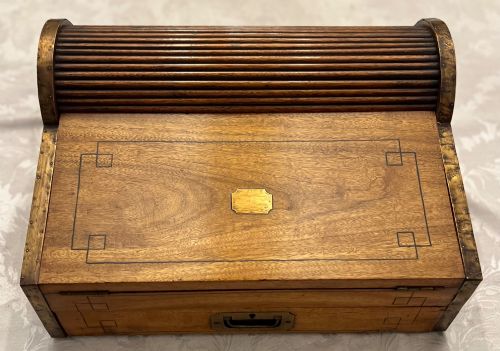
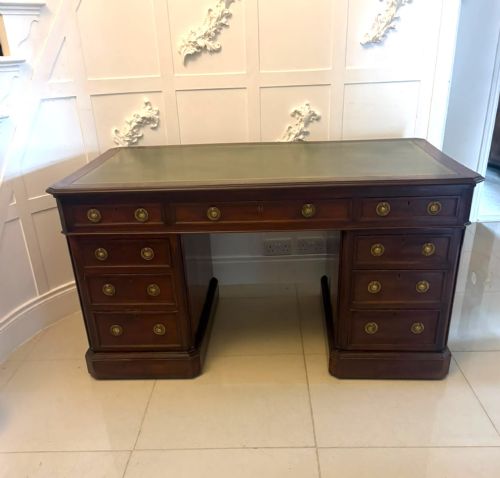
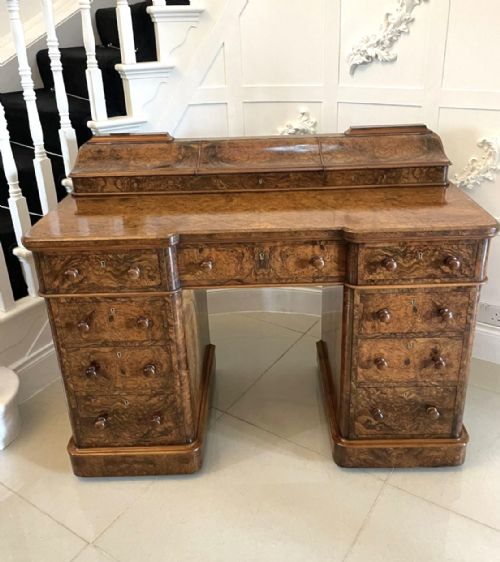
Nineteenth century stationery encompasses portable writing slopes, lap desks, correspondence boxes, and large library tables utilised in domestic and administrative settings. The most common forms met on this page are Victorian and Regency writing boxes, alongside freestanding kneehole desks and desktop cartonniers.
Pieces originate from English workshops, Anglo Indian centres, and French cabinet makers working across the nineteenth century, including specific decades such as eighteen fifty and eighteen eighty. Writing boxes often feature hinged lids that open to reveal fitted interiors for paper, pens, and inkwells.
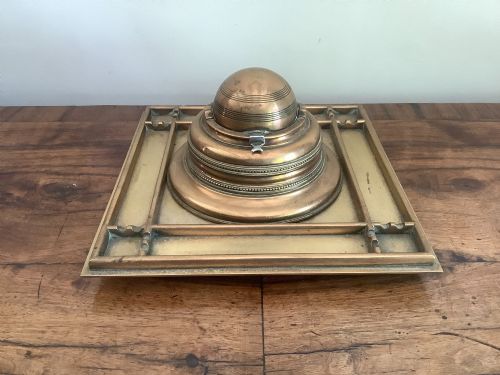
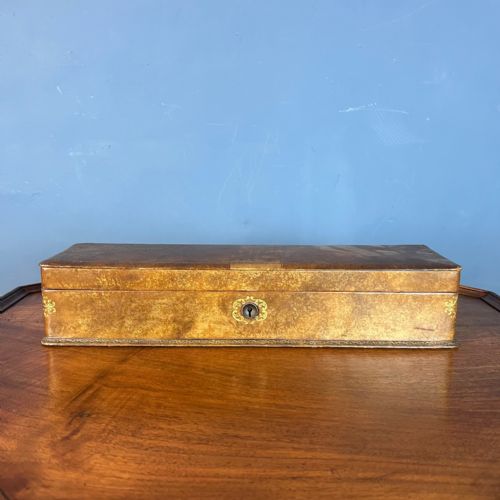
Desk accessories range from simple tooled leather pen boxes and inkstands to elaborate ormolu mounts and hand-painted porcelain desk sets. Larger items include pedestal kneehole desks equipped with fitted stationery drawers and pull-out writing slides.
Materials and Construction
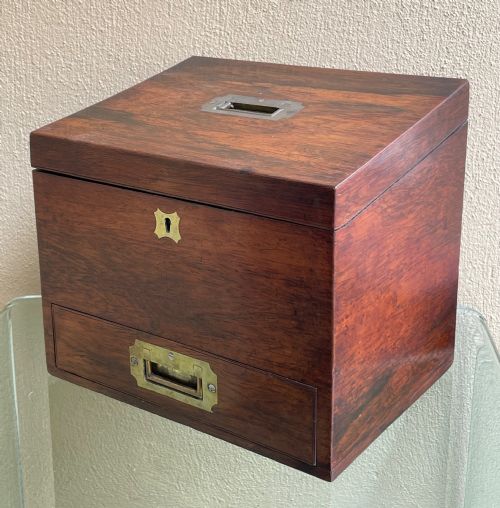
Cabinet makers constructed these pieces from dense hardwoods including mahogany, rosewood, walnut, burr walnut, coromandel, and satinwood, frequently applying decorative veneers or Tunbridge ware inlays. Secondary construction utilised solid woods to house internal stationery compartments and folding writing surfaces.
Mounts, corners, and campaign bindings relied upon cast brass and gilded ormolu, fixed with flush screws for travel durability. Writing surfaces incorporated tooled leather panels with gilt borders, glued directly to wooden folding flaps.
Fitted interiors required precise joinery for removable trays, secret compartments, and inkwell recesses. Correspondence boxes and cartonniers utilised structured wooden carcasses lined with paper or fabric to hold papers upright.
Nineteenth Century Stationery Retail Price Guide 2026
Typical asking prices for nineteenth century stationery among the pieces listed under this phrase on Sellingantiques today, from the lower quarter to the upper quarter. They describe what is for sale here now, not the wider market.
Craftsmanship and Proportion
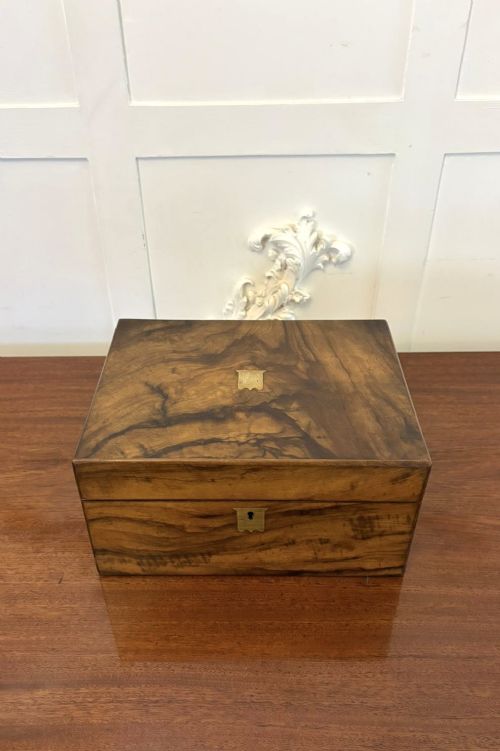
Quality rests in the selection of timber veneers, such as figured walnut or richly grained rosewood, matched symmetrically across box lids and desk drawers. Superior examples display tight grain patterns and careful book-matching rather than plain surfaces.
The precision of hardware integration separates standard items from the finest work, seen in flush-fitting brass campaign corners, robust lock mechanisms, and well-fitted secret drawers. Internal stationery dividers and pen trays that slide smoothly indicate superior cabinet making.
Decorative elaboration also defines the hierarchy, ranging from simple mahogany boxes to French Second Empire desk sets featuring hand-painted porcelain plaques, heavy cast ormolu mounts, and intricate Tunbridge ware mosaics.
Maple & Co.
The Nineteenth Century Stationery Glossary
- Writing slope
- A portable box with a hinged, slanted lid that folds down to create a writing surface. Inside compartments store paper, envelopes, and ink.
- Cartonnier
- A desktop or freestanding filing cabinet designed with multiple horizontal compartments for sorting papers and correspondence. These pieces often feature leather-bound document boxes.
- Davenport desk
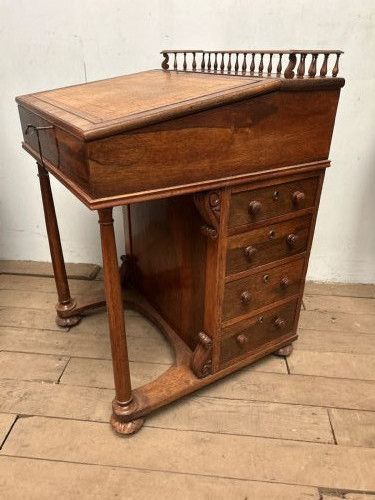
- A compact nineteenth-century writing desk featuring a sloping desktop above a pedestal of side drawers. Early versions often incorporate sliding tops and pivoting inkwells.
- Campaign box
- A sturdy wooden box reinforced with brass corners and recessed handles, built for transport by military officers. These boxes typically open to reveal folding writing slopes and stationery slots.
- Tunbridge ware
- Woodwork decorated with mosaic patterns created from tiny tinted wood prisms arranged to form geometric or pictorial designs. This technique frequently embellished nineteenth-century stationery boxes.
Nineteenth Century Stationery: Frequently Asked Questions
What is a nineteenth century writing slope?
A writing slope is a portable wooden box designed to hold paper, pens, and ink while providing an angled surface for handwriting.
When opened, the hinged lid folds flat to create a stable writing desk for travel or home use.
How do you use a Victorian stationery box?
These tabletop cabinets house folded letters, envelopes, and writing paper in vertical slots or open compartments.
Lids and doors lift or open outward to keep writing materials organised and accessible on a desk.
What is a Davenport desk?
A Davenport is a compact desk featuring a sloped, hinged writing surface mounted over a pedestal of drawers.
Nineteenth-century versions often include hidden compartments, side drawers, and small stationary galleries on top.
What is a cartonnier used for?
A cartonnier is a desktop cabinet or filing unit housing a series of stacked compartments or drawers for sorting documents.
Originating in France, these pieces kept correspondence and administrative papers neatly categorised.
How do campaign writing boxes differ?
Campaign boxes were built for military officers on the move, featuring reinforced brass corners, flush-fitting handles, and sturdy locks.
Their robust construction protected sensitive stationery and writing implements during rough transport.