
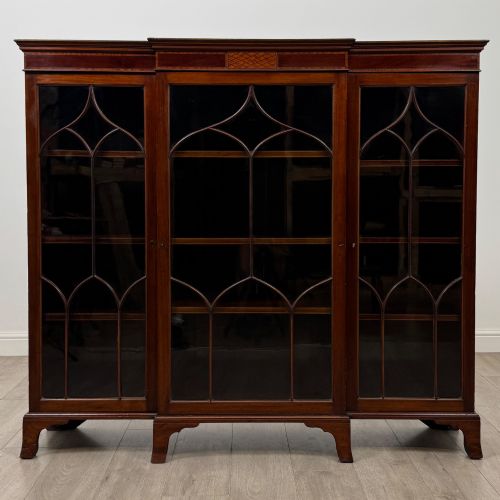
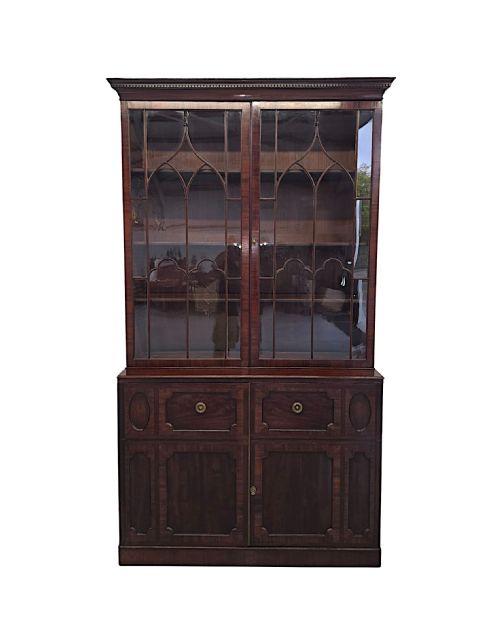
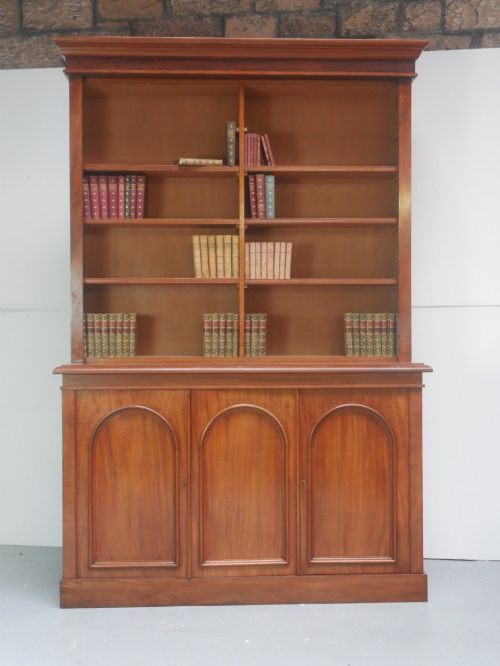
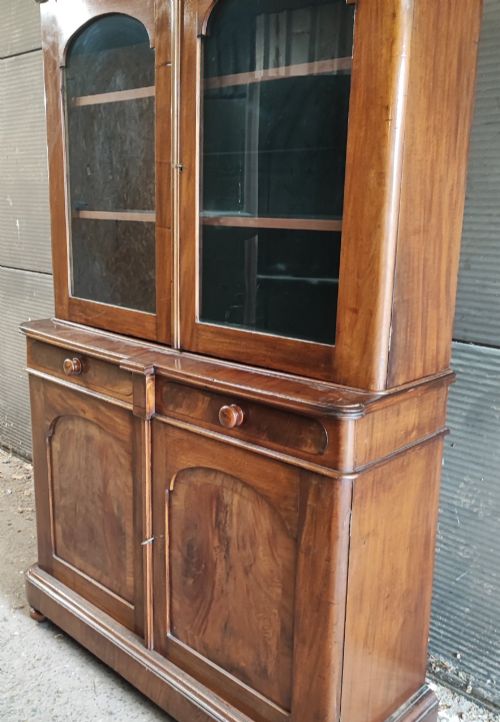


Nineteenth Century Mahogany Cupboard
Nineteenth century mahogany cupboard designs combine deep cabinet timber with practical shelving, offering durable storage suited to traditional and modern interiors alike.
Nineteenth Century Mahogany Cupboard
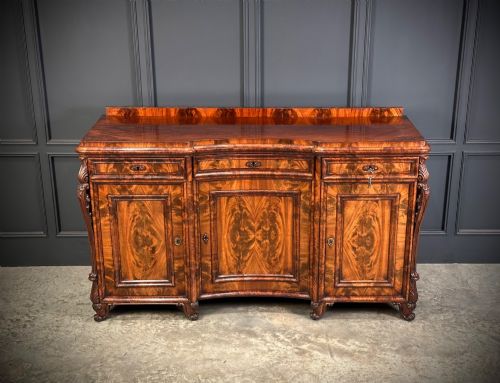
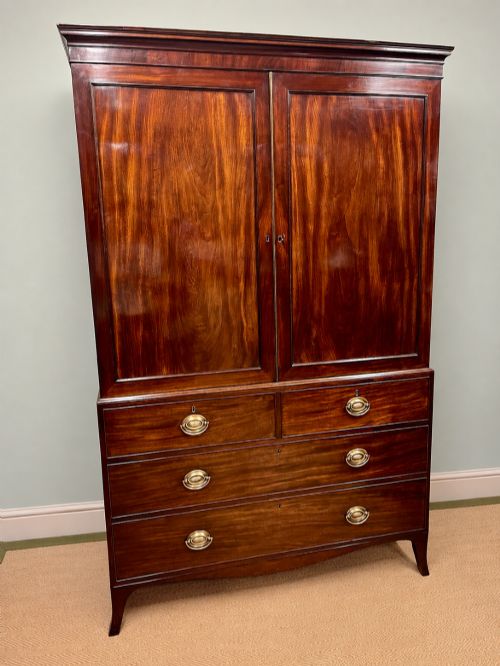
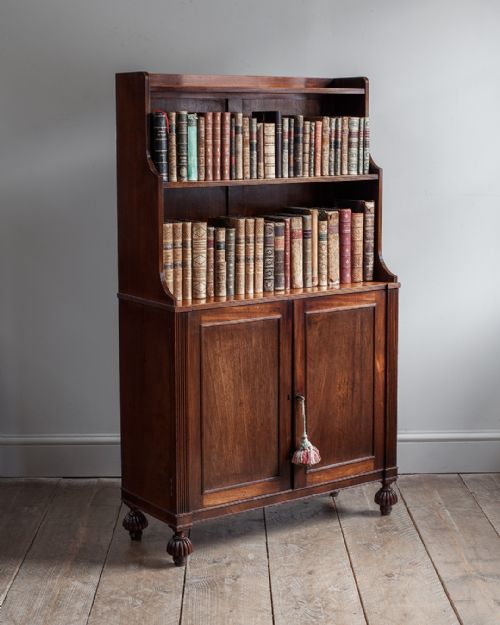
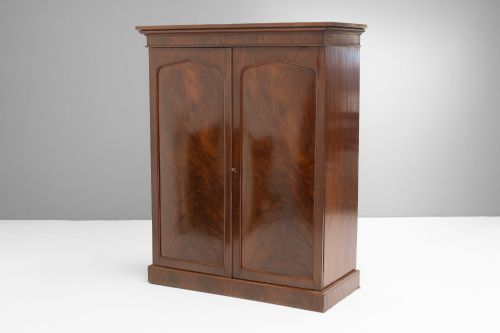
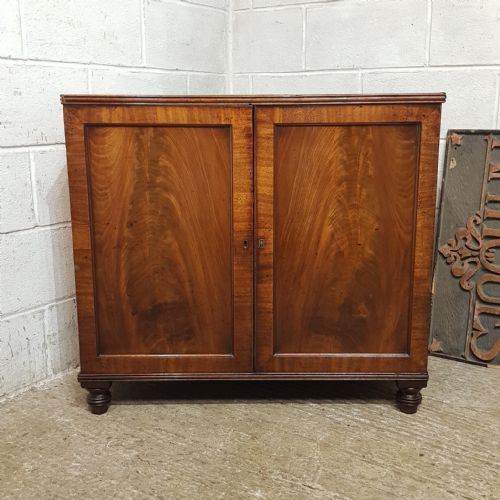
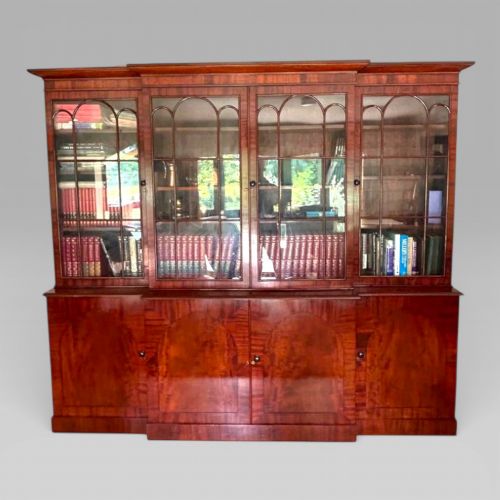
A nineteenth century mahogany cupboard encompasses a broad spectrum of utility forms, ranging from compact bedside units to expansive library bookcases and linen presses.
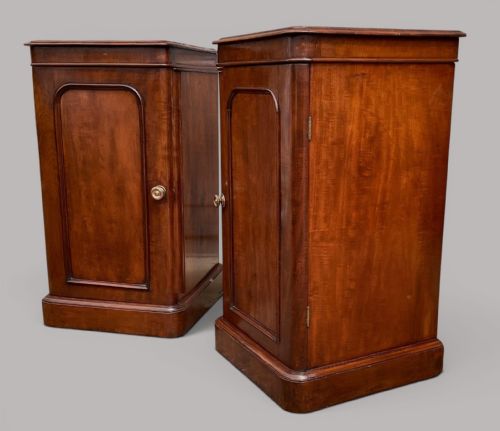
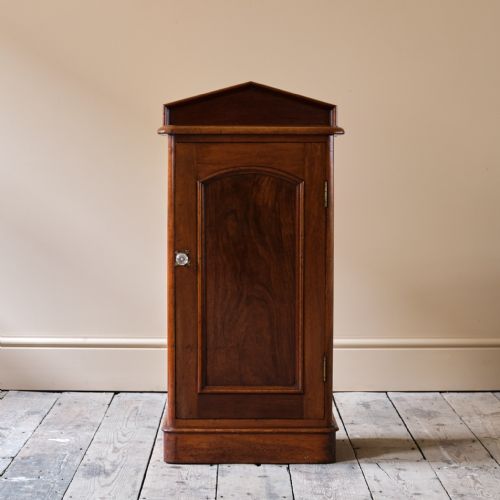
Buyers will most frequently encounter compact pot cupboards, bedside cabinets, and taller two-door bookcases bearing the hallmarks of Regency, Victorian, and William IV periods.
The selection extends to specialised pieces such as chiffoniers, side cabinets, and campaign furniture constructed throughout the eighteen hundreds.
Construction and Materials
Workshops utilised solid mahogany and figured flame mahogany veneers over secondary timbers, often accentuating the grain with intricate inlay work.
Hardware frequently incorporated cast brass handles, escutcheons, and grilles, while specific specialised pieces integrated leather, fabric, or marble surfaces.
Joinery methods varied from straightforward panel construction in utilitarian bedroom pieces to elaborate breakfront framing in large library bookcases.
Several compact bedside cabinets were originally built purely to hide chamber pots in polite company.
Evaluating Quality
Superior examples distinguish themselves through the choice of highly figured timber, such as matched flame mahogany veneers, rather than plain stock.
The refinement of the carving, the crispness of brass mounts, and the integrity of internal drawers and shelving separate standard utilitarian items from exceptional pieces.
Jas Shoolbred·Holland & Sons·HOWARD & SONS·Edwards & Roberts·Harrods
The Nineteenth Century Mahogany Cupboard Glossary
- Flame mahogany
- A veneer cut from the fork of the mahogany tree to create a distinctive, flamy pattern. This timber figuring was highly prized by cabinet makers.
- Pot cupboard
- A small bedside cabinet originally designed to house a chamber pot. These practical pieces often feature a single door and enclosed top surface.
- Linen press
- A tall cupboard featuring upper sliding trays or shelves for storing textiles, above a base section of drawers. They provide substantial vertical storage.
- Breakfront
- A cabinet design where the central section projects forward from the flanking wings. This architectural arrangement creates depth and visual interest.
- Chiffonier
- A low sideboard or cabinet developed in the nineteenth century, typically featuring a shelf or mirrored superstructure above enclosed lower cupboards.
Nineteenth Century Mahogany Cupboard: Frequently Asked Questions
How do I identify a Regency period mahogany cupboard?
Regency pieces often display classical architectural influences, delicate brass inlay, and restrained proportions typical of the early nineteenth century.
Look for clean lines and dark, rich mahogany surfaces that reflect the neoclassical taste of the era.
What is the difference between a chiffonier and a side cabinet?
A chiffonier generally includes an elevated shelf structure or small back panel above the main surface, whereas a side cabinet presents a flat top.
Both forms served as serving or storage furniture in nineteenth century dining and living spaces.
Where were bedside cupboards placed in Victorian bedrooms?
Bedside cupboards were positioned immediately adjacent to sleeping quarters to hold nighttime necessities and personal items.
Smaller pot cupboards and pedestal tables suited the tighter proportions of Victorian chamber layouts.
How should I care for nineteenth century mahogany furniture?
Maintain stable indoor humidity levels and keep wooden surfaces away from direct sunlight to prevent veneer drying or fading.
Apply traditional wax polishes sparingly to nourish the grain without building up heavy chemical residues.