
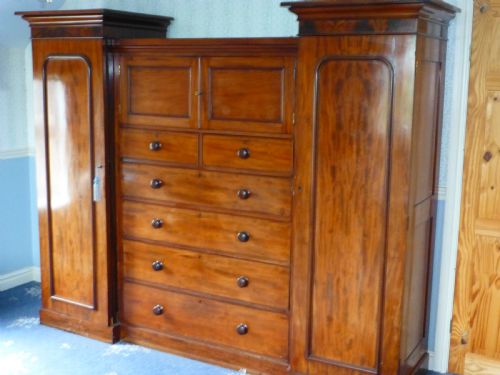


Nineteenth Century Mahogany Armoire
A nineteenth century mahogany armoire brings architectural dignity to a bedroom, offering deep storage within rich timber grains.
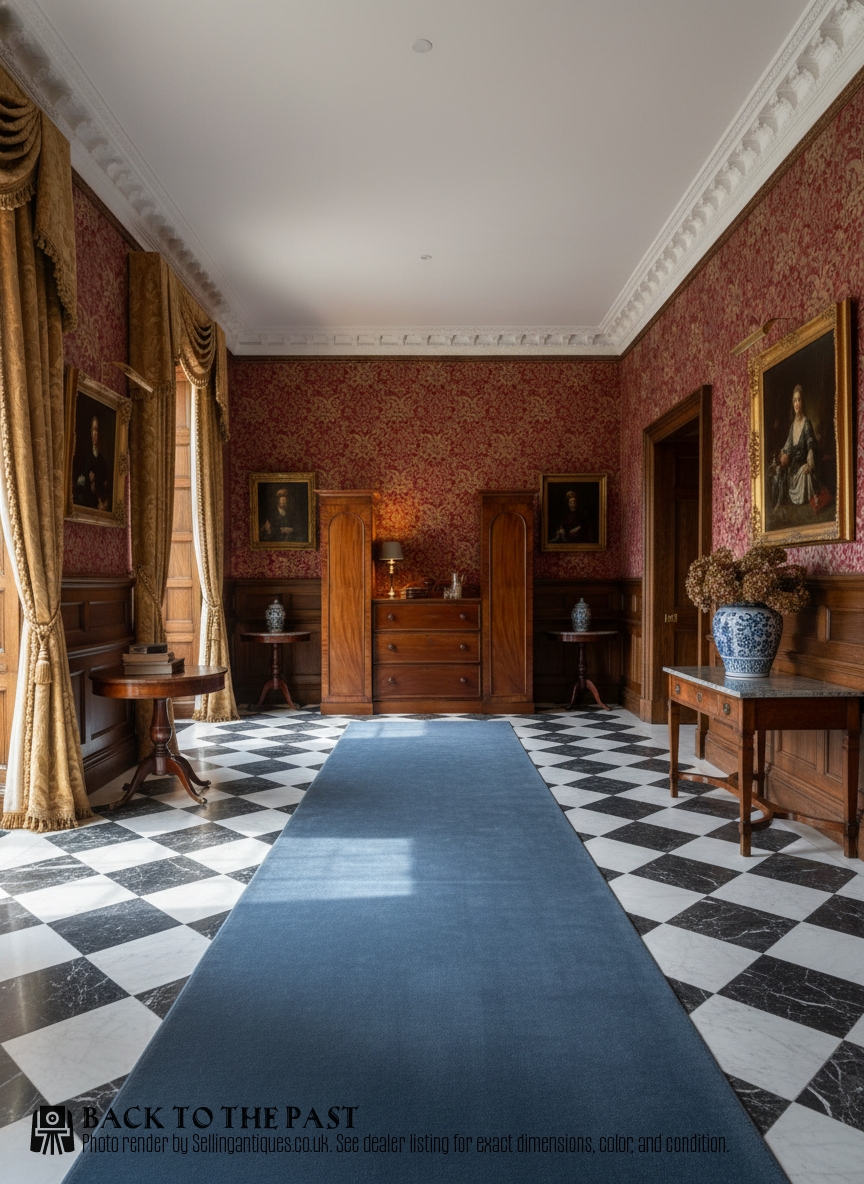
Nineteenth Century Mahogany Armoire
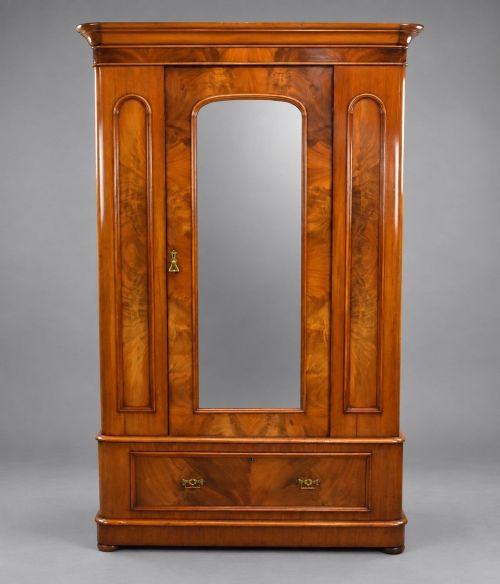
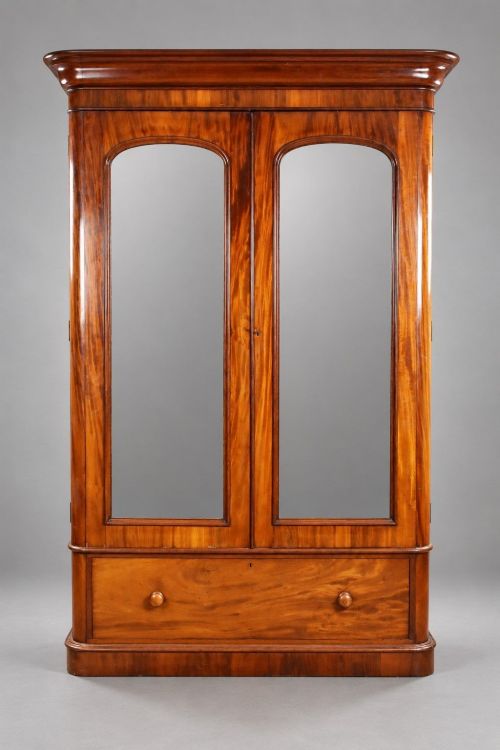
A nineteenth century mahogany armoire encompasses grand wardrobes, compactums, and linen presses produced across the nineteenth century, including Regency, William IV, and Victorian periods. These substantial pieces provide functional bedroom storage through hanging spaces, shelves, and internal drawers.
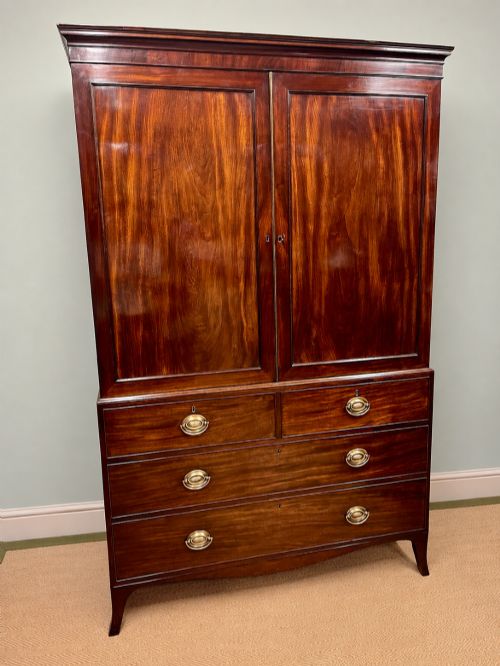
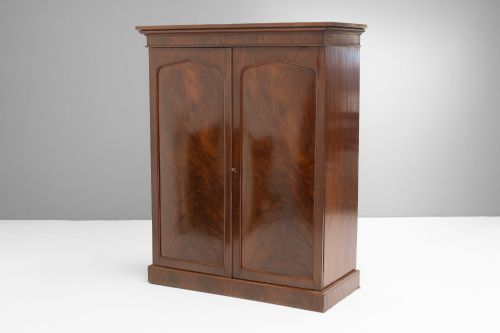
Buyers most frequently encounter large two-door wardrobes and breakfront linen presses fashioned from solid mahogany and flame mahogany veneer. Examples range from vernacular Scottish cupboards to refined French Empire and Louis XVI styles adorned with gilt bronze mounts.
The forms vary from simple panelled bedroom cupboards to complex combination compactums fitted with internal chest configurations. Pieces span from the early Regency era through to the late Victorian period, reflecting shifting domestic storage requirements.
How they were made
Cabinetmakers constructed these wardrobes using solid mahogany framing combined with flame mahogany veneer to create striking figured door panels. Timber selection prioritised rich grain patterns, often enhanced through book-matching across large surfaces.
Decoration relied upon architectural mouldings, brass inlays, and cast gilt bronze mounts in French Empire and Louis XVI interpretations. Internal fittings incorporated solid secondary woods for drawer linings and sliding linen trays.
Materials recorded across current pieces include solid mahogany, flame mahogany veneer, brass, gilt bronze, and glass.
What varies in quality
Quality reveals itself in the architectural ambition of the breakfront or inverted breakfront carcass and the choice of timber veneer. Superior examples display carefully selected flame mahogany grain that matches symmetrically across multiple doors.
Internal complexity and original fittings separate standard cupboards from exceptional compactums and linen presses. Finely cast gilt bronze mounts and integrated drawer arrangements indicate higher workshop standards.
Gillows
The Nineteenth Century Mahogany Armoire Glossary
- Compactum
- A multi-functional wardrobe combining hanging space, shelving, and internal drawers within a single large carcass. This form maximises storage efficiency in period bedrooms.
- Linen Press
- A tall piece of furniture featuring upper sliding trays or shelves enclosed by doors, positioned above a base section of drawers. These items traditionally stored folded textiles.
- Flame Mahogany
- A highly figured wood veneer sliced from timber where the grain creates a flame-like pattern. Cabinetmakers utilised this veneer on prominent exterior panels.
- Breakfront
- A cabinet design where the central section projects forward from the flanking wings. This architectural arrangement creates depth and shadow on large wardrobes.
Nineteenth Century Mahogany Armoire: Frequently Asked Questions
What is a compactum wardrobe?
A compactum is a large multi-functional storage piece that combines hanging space, sliding shelves, and drawers in one unit. These items provided comprehensive clothing storage for nineteenth-century bedrooms.
They appear in various period styles, offering a more complex interior layout than a standard two-door wardrobe.
How do linen presses differ from wardrobes?
Linen presses feature sliding trays or shelves in the upper section behind doors, traditionally used for storing folded textiles rather than hanging garments. The lower section typically incorporates a chest of drawers.
Standard wardrobes focus primarily on vertical hanging space for coats and dresses.
Which woods appear on these wardrobes?
Mahogany serves as the primary timber, appearing as both solid boards and highly figured flame veneer. Secondary woods like oak or pine often line internal drawers and shelves.
Decoration sometimes includes brass hardware and gilt bronze mounts on continental pieces.
How can I date a mahogany armoire?
Dating relies on stylistic markers associated with periods like Regency, William IV, and Victorian. Architectural details, hardware styles, and construction methods indicate the era of manufacture.
Earlier pieces often feature classical proportions, while later Victorian examples tend towards heavier proportions.