



Nineteenth Century Cross
Nineteenth century cross pieces bring together structural frames, banded borders and textile motifs from the Georgian and Victorian eras.
Nineteenth Century Cross
When buyers search for nineteenth century cross items, they encounter a diverse range of furniture and decorative works that incorporate crossed structural supports or decorative banding techniques. These objects bridge the Georgian, Regency, and Victorian periods, reflecting shifting tastes in interior ornamentation.
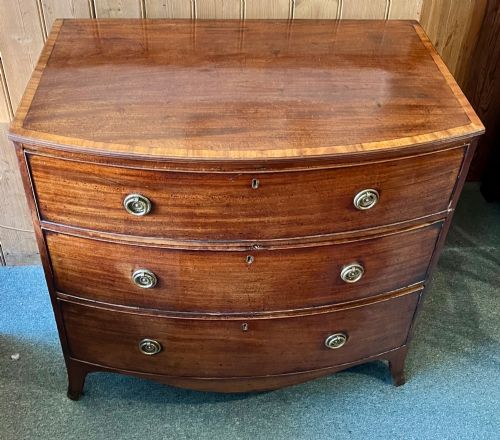
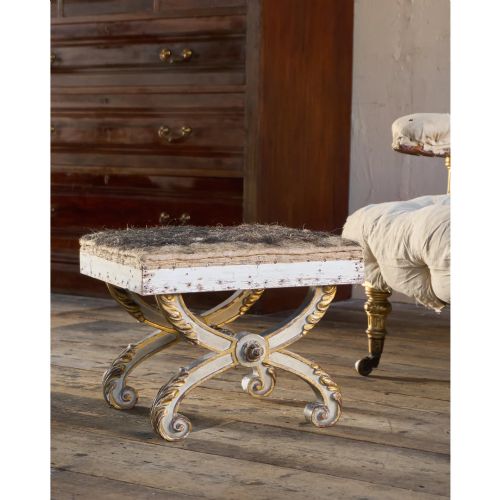
The most frequent examples appearing here are items featuring cross-banding on cabinet furniture and X-frame supports on seating. Mahogany chests of drawers and bookcases showcase contrasting timber borders, while footstools and dressing stools utilise structural cross forms.
Textile works also populate this category, specifically needlework samplers produced by makers such as Annabella Samon and Sarah Anne Hudson. These embroidered panels often incorporate symmetrical layouts and cross-stitch elements that reflect nineteenth century education and domestic craft.
How they were made
Cabinet makers constructed core structures from solid mahogany, walnut, and maple wood, applying contrasting veneers such as satinwood and kingwood to create distinct borders. Boxwood stringing frequently accompanied these banded edges to accentuate geometric panel shapes.
Seating forms relied on intersecting wooden members to form sturdy X-frames, often designated as curule or cross-stretcher designs. Metal components also appear in specific decorative objects, notably wrought iron or brass formations shaped into halberds and pikes.
Nineteenth Century Cross Retail Price Guide 2026
Typical asking prices for nineteenth century cross among the pieces listed under this phrase on Sellingantiques today, from the lower quarter to the upper quarter. They describe what is for sale here now, not the wider market.
The documented periods span the Georgian, Regency, and Victorian eras up to the late nineteenth century.
What varies in quality
The refinement of timber selection separates standard items from superior pieces, particularly in the grain matching of burr walnut, olive, and mahogany veneers. Master cabinet makers achieved crisp mitres at every border intersection and maintained precise widths in contrasting stringing.
In textile works, the density of the stitching and the clarity of lettering dictate the standard of execution. Samplers completed with varied stitch types and balanced composition demonstrate superior handwork compared to simpler, repetitive schooling exercises.
Miles & Edwards
The Nineteenth Century Cross Glossary
- Cross-banding
- A decorative technique where veneer is laid across the grain of the primary wood to form a contrasting border around a panel or drawer front. This method adds visual depth and frames the central timber.
- X-Frame
- A structural furniture support formed by two intersecting diagonal members resembling the letter X. It provides both stability and a classical aesthetic seen on stools and occasional tables.
- Sampler
- A piece of embroidery produced as a demonstration or test of skill, often featuring alphabets, numerals, and decorative motifs. Nineteenth century examples frequently record the maker's name, age, and date.
- Stringing
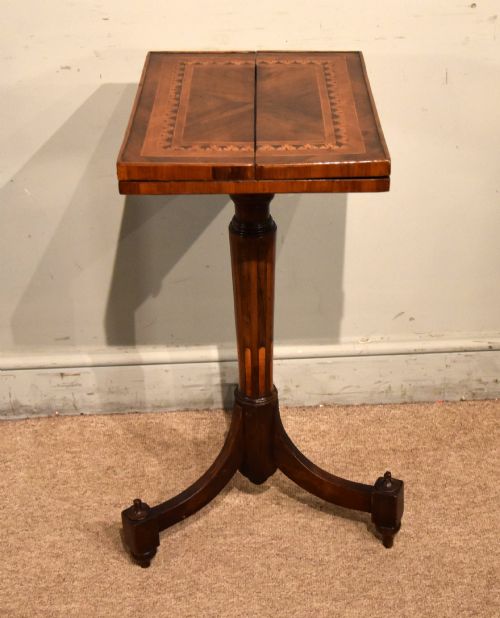
- A thin inlay of contrasting wood or light-coloured material set into grooves on furniture surfaces. It outlines drawers, tabletops, and cabinet doors to create linear definition.
- Credenza
- A low cabinet or sideboard designed for display and storage, often fitted with glazed doors or marquetry panels. These pieces gained prominence in Victorian interiors.
Nineteenth Century Cross: Frequently Asked Questions
What is cross-banding on furniture?
Cross-banding is a decorative technique where thin strips of veneer are laid with the grain running perpendicular to the border of the panel. This creates a contrasting frame around the central wood.
Cabinet makers used this method during the Regency and Victorian periods to elevate the visual appeal of mahogany and walnut surfaces.
How are X-frame stools constructed?
X-frame stools utilise two intersecting diagonal wooden members that cross at the centre to form the structural support. This ancient form provides robust weight distribution.
Victorian makers adapted this classical shape for dressing stools and footstools, sometimes pairing the wooden frame with upholstered seats.
What do nineteenth century samplers depict?
Nineteenth century samplers display stitched alphabets, numerical sequences, verses, and domestic motifs created with coloured threads on linen grounds. They served as exercises in needlework proficiency.
Many surviving examples include the name of the maker and a specific date, providing a direct link to the domestic education of the era.
Which woods appear in these pieces?
Makers utilised a variety of native and exotic timbers, including solid mahogany, walnut, maple wood, and rosewood. These served as primary structural woods for chests, cabinets, and tables.
Contrasting veneers such as satinwood, kingwood, and olive wood were applied for decorative banding and inlay work.
How do I date a nineteenth century piece?
Dating relies on identifying the prevailing style, construction methods, and secondary timbers used in the piece. Regency items often feature classical lines, while Victorian examples lean towards heavier ornamentation.
Inscribed dates on needlework samplers and maker stamps on furniture provide definitive chronological markers for specific items.