



Nine Drawer Kneehole Desk
A nine drawer kneehole desk is a compact pedestal writing table designed to organise correspondence while keeping your legs neatly tucked underneath.
Nine Drawer Kneehole Desk
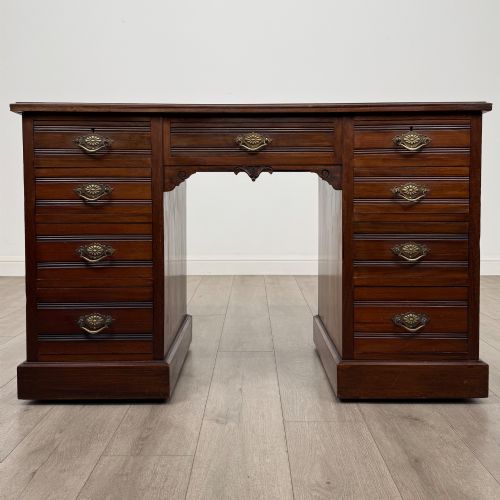
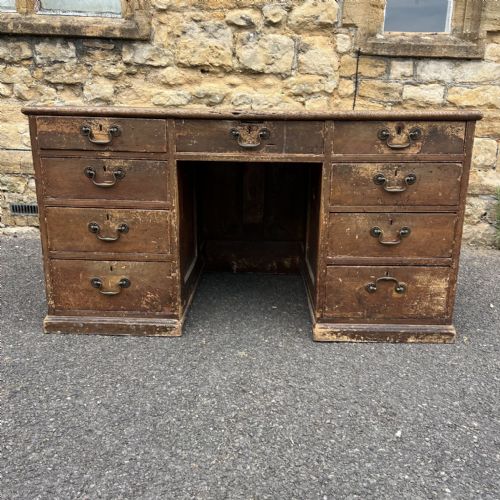
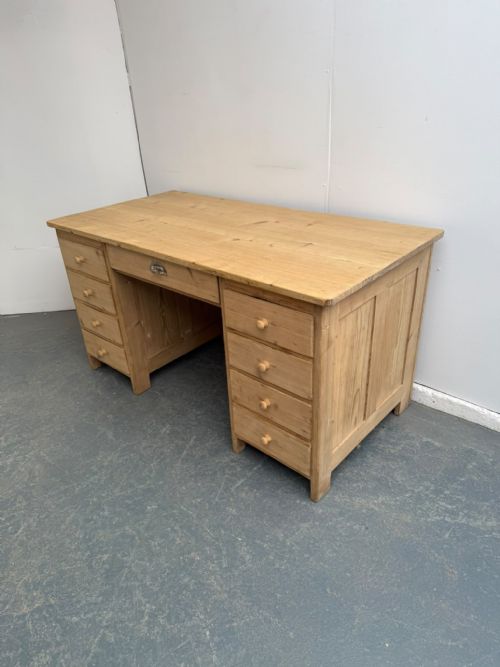
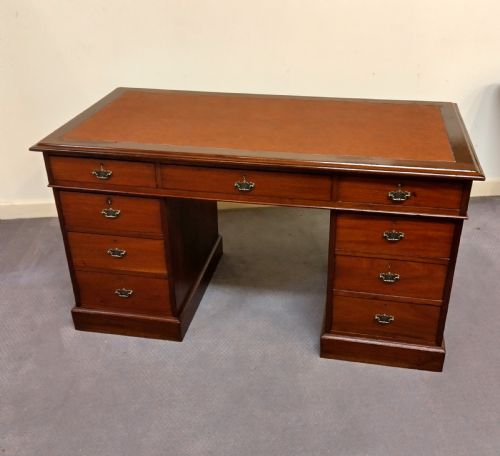
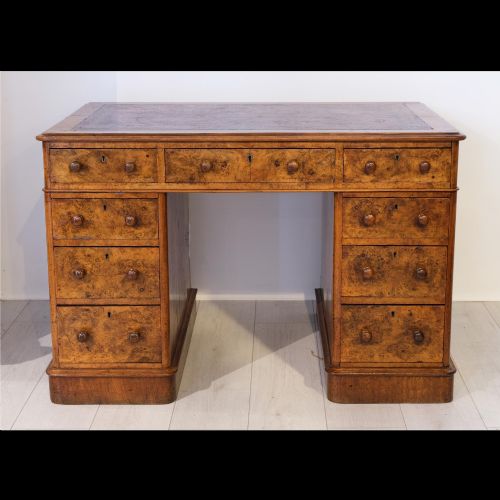
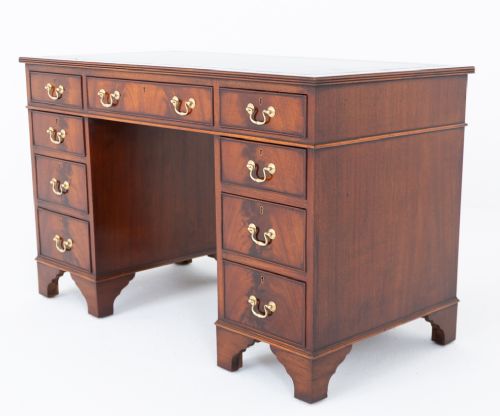
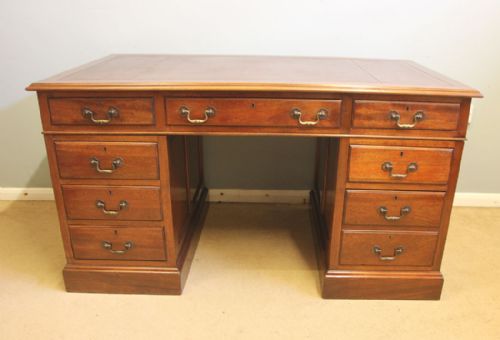
When you search for a nine drawer kneehole desk, you encounter sturdy writing furniture spanning the Victorian and Edwardian eras, alongside pieces built in earlier styles. The layout typically places a central cupboard or shallow drawer above the recess, flanked by two vertical banks of four smaller drawers.
You are most likely to meet mahogany examples on this page, often featuring boxwood stringing or leather inserts. The forms range from simple pine estate desks to finely figured burr walnut and satin birch pedestal desks.
Makers through the nineteenth and early twentieth centuries produced these pieces for studies and libraries, balancing generous storage capacity with a modest footprint. They provide a practical surface for daily writing while anchoring a traditional room.
How they were made
Cabinetmakers constructed these pedestal desks using solid timbers like oak and pine for the internal carcases and drawer linings, applying figured mahogany, walnut, or satin birch veneers to the visible exterior surfaces. Brass hardware, including drop handles and escutcheons, secures the drawer fronts.
Surface preparation involved skilled polishing with wax or shellac to bring out the natural grain of the wood, while writing surfaces often received inset panels of tooled leather. Inlaid details such as boxwood stringing demonstrate careful hand woodworking techniques employed across the Victorian and Edwardian periods.
Nine Drawer Kneehole Desk Retail Price Guide 2026
Typical asking prices for nine drawer kneehole desk among the pieces listed under this phrase on Sellingantiques today, from the lower quarter to the upper quarter. They describe what is for sale here now, not the wider market.
The periods represented on this page span the Victorian era, the Edwardian period, and the George III style.
What varies in quality
The choice of timber underpins much of the distinction between pieces, where richly figured burr walnut or dense mahogany sits above plain pine or secondary woods. The selection of matching veneers across the drawer fronts shows the care taken by the cabinetmaker.
Construction methods also separate the output, visible in the precision of the drawer dovetails and the integrity of the internal framing. Pieces retaining their original brass hardware and fitted leather writing surfaces hold greater visual cohesion.
The Nine Drawer Kneehole Desk Glossary
- Kneehole
- The recessed space in the centre of a pedestal desk where the user sits. It often conceals a small cupboard door or a shallow drawer above.
- Pedestal desk
- A heavy writing table supported by two upright banks of drawers rather than four separate legs. These form the left and right pedestals of the furniture.
- Stringing
- A thin inlay of contrasting wood, such as boxwood, set flush into the surface to create decorative borders around drawers or tabletops.
- Escutcheon
- A decorative metal plate surrounding a keyhole that protects the surrounding wood from wear and tear. They are typically cast in brass on quality desks.
- Burr walnut
- Timber taken from the abnormal growth of a walnut tree, yielding a swirling, highly figured grain pattern prized for decorative furniture panels.
Nine Drawer Kneehole Desk: Frequently Asked Questions
How do I clean a leather desk top?
Wipe the leather gently with a slightly damp, soft cloth to remove dust and surface dirt.
Avoid using harsh chemical cleaners or soaking the leather, as this damages the historical surface and any gold tooling.
Are these desks suitable for daily work?
Many people use these antique pedestal desks for writing and computing in modern studies. Their multiple drawers offer practical storage for stationery and documents.
Working surfaces may sit lower than modern office furniture, so checking the height of the kneehole is sensible before regular use.
How do I tell Victorian from Edwardian desks?
Victorian examples tend to use dense, dark mahogany with heavy mouldings and deep polish. They reflect the substantial tastes of the nineteenth century.
Edwardian pieces often feature lighter woods like satin birch or inlaid stringing, presenting a brighter appearance associated with the early twentieth century.
Can I move a pedestal desk easily?
Most nine drawer pedestal desks separate into three distinct sections for transport. The two drawer banks lift away from the top writing surface.
Lifting them apart makes moving the heavy timber furniture through doorways and up stairs much safer.