




Neoclassical Urn Desk Lamp
A neoclassical urn desk lamp brings classical form and warm illumination together, turning architectural dignity into practical desk lighting.
Neoclassical Urn Desk Lamp
A neoclassical urn desk lamp takes the silhouette of an ancient vessel and adapts it for interior lighting. You encounter these most frequently as converted oil lamps, cassolettes, or purpose-built electrical fittings shaped like classical vases.
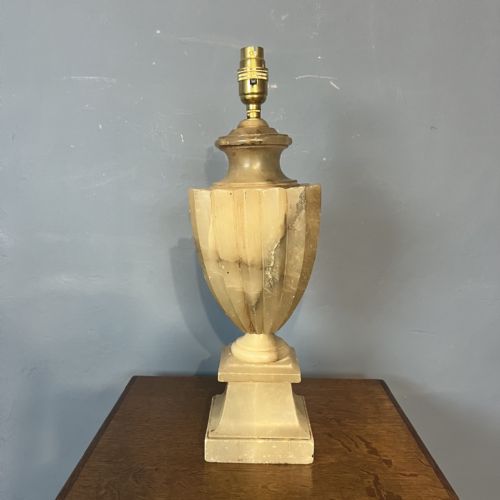
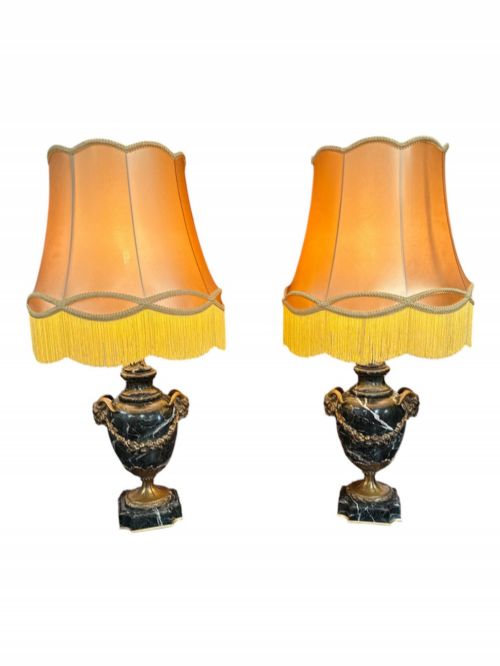
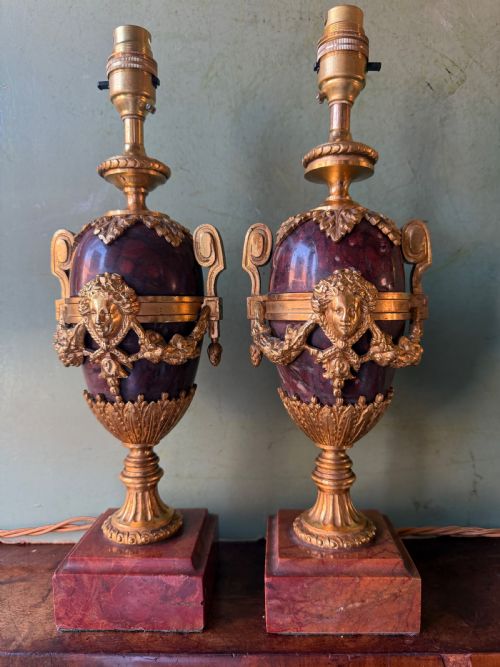
The material vocabulary draws heavily on the nineteenth century and early twentieth century, combining carved stone bodies with cast metal mounts. Pieces range from grand French ormolu-mounted rouge marble examples to simpler alabaster and brass configurations.
Makers and designers across Britain, France, and Italy looked directly to classical antiquity for their proportions. The resulting objects function equally well as sculptural centrepieces on a desk and as providers of focused task light.
How they were made
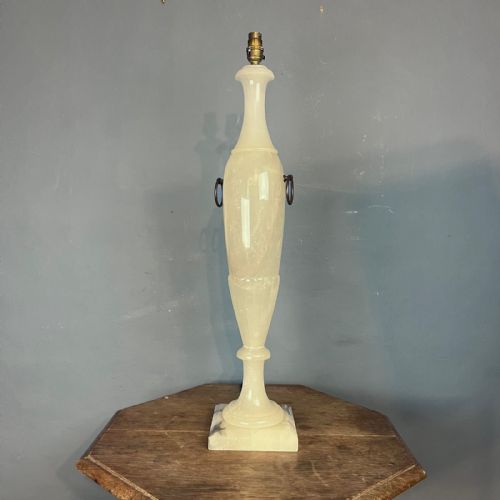
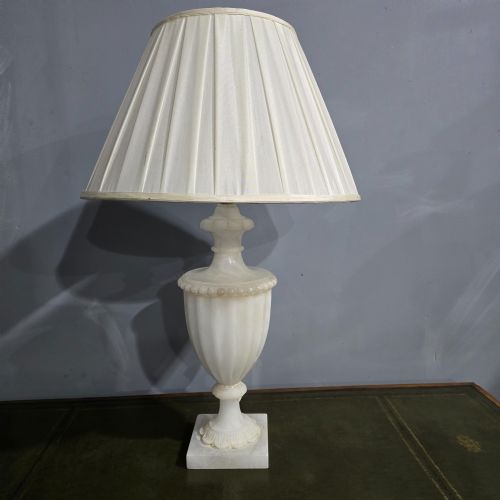
The body of the lamp typically relies on turned and polished stone such as marble, alabaster, or onyx, sometimes paired with moulded plaster or glazed ceramic. These rigid mineral bases provide the necessary weight to anchor the fitting securely on a desk.
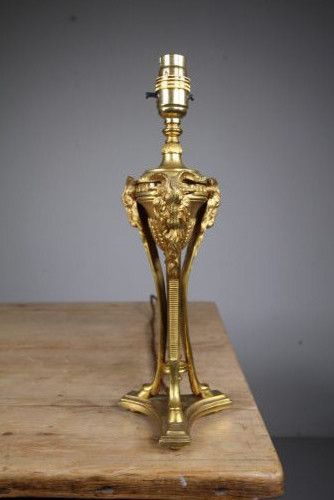
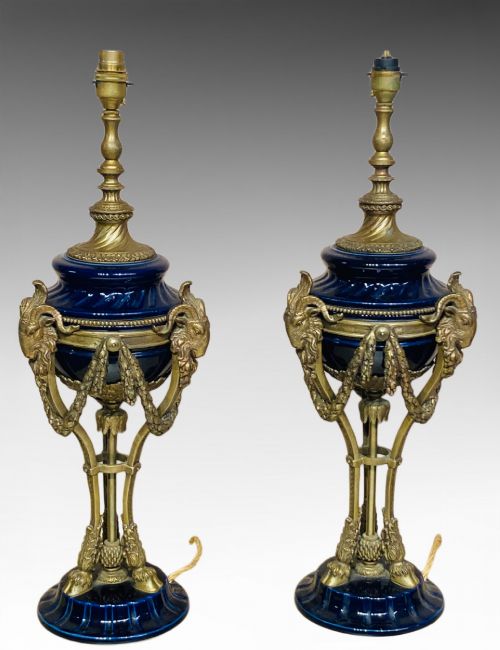
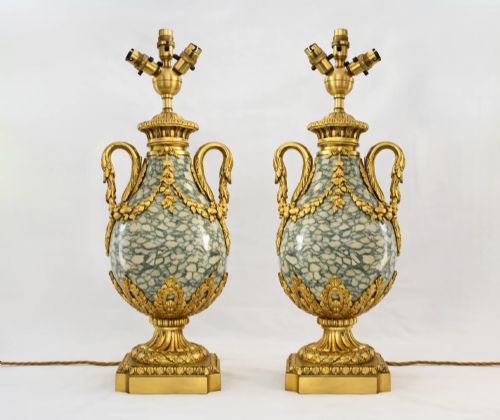
Metalwork components, including handles, bases, rams' heads, and classical masks, are cast in ormolu, gilt bronze, brass, or gilt metal. Artisans chased and gilded these metal mounts to contrast sharply against the dark or variegated stone beneath.
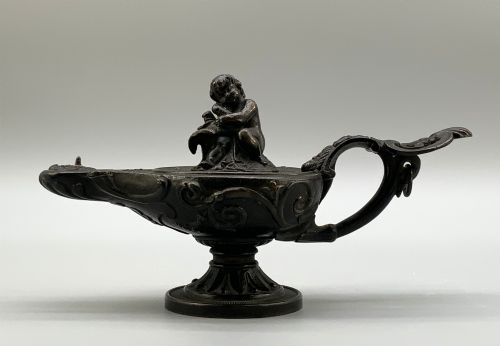
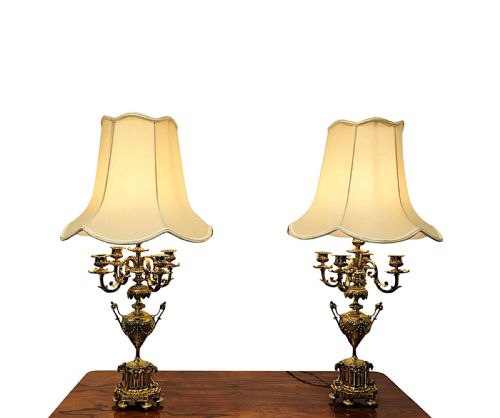
Many examples began life as oil lamps, candelabra, or decorative cassolettes before receiving electrical wiring later in their operational lives. Fabric shades are frequently added to complete the assembly and diffuse the bulb's glow downwards.
Several lamps stand firmly on tiny gilt metal paw feet, ensuring your desk lighting maintains a distinctly beastly posture.
What varies in quality
The selection and turning of the stone body reveal the ambition of the piece. Uniform veining, polished edges without filler, and substantial gauge marble or alabaster elevate the physical presence of the lamp on a desk.
The Neoclassical Urn Desk Lamp Glossary
- Ormolu
- Gilt bronze produced by applying a mercury-gilding technique to cast bronze. It provides a rich, durable golden surface on decorative mounts.
- Cassolette
- A decorative vessel featuring a removable lid or reversible top, frequently designed to function as an urn or perfume burner. Many were later converted into lamp bases.
- Pate sur pate
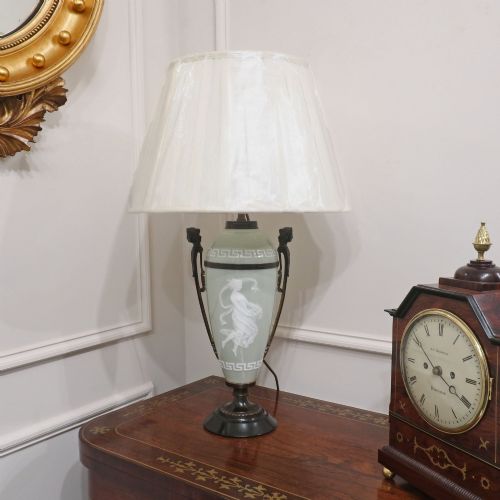
- A ceramic decorating technique where liquid clay is painted in successive layers onto a coloured body to create a low relief cameo effect.
- Amphora
- A two-handled ancient vessel with a narrow neck, serving as the primary architectural template for many classical table lamps.
Neoclassical Urn Desk Lamp: Frequently Asked Questions
What is a neoclassical urn desk lamp?
A neoclassical urn desk lamp is a light fitting shaped like a traditional classical vessel, utilising materials like marble, alabaster, and ormolu. These pieces draw on eighteenth and nineteenth century design motifs to create decorative yet functional desk lighting.
Most surviving examples originate from the nineteenth or early twentieth century. Many started as oil lamps or decorative cassolettes before being converted for modern electrical use.
How do I style one on a desk?
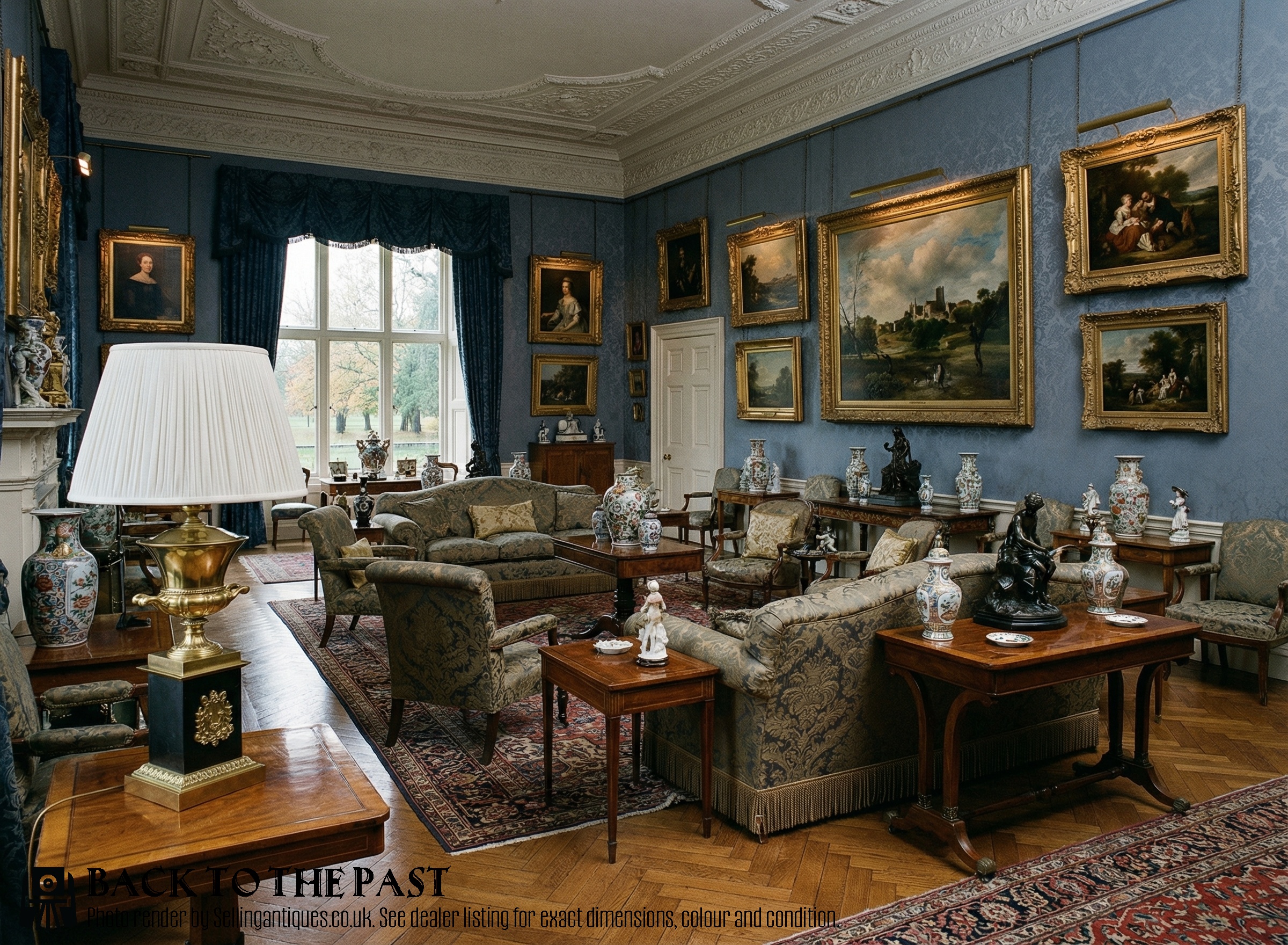
Place the lamp on a hardwood writing desk where the stone and metal finishes can contrast with the timber grain. Pair it with a simple fabric shade to keep the visual focus on the urn base.
Because these lamps carry significant visual weight, they suit traditional studies or libraries. They work well as standalone accent lighting alongside desk accessories made from brass or leather.
How can I tell the period of the lamp?
Examine the materials and the construction methods used for the internal wiring channel and the base mounts. Nineteenth century pieces often feature hand-chased ormolu and heavy quarried marble, while early twentieth century versions may incorporate onyx or moulded brass.
Stylistic cues also help narrow down the date, such as strict Louis XVI revival motifs versus later Edwardian interpretations. Checking for original burner components or conversion evidence provides further clues about the age.
Were these originally made as lamps?
Many examples on the market began life as oil lamps, decorative urns, or lidded cassolettes rather than electrical desk lamps. Workshops frequently adapted existing decorative objects when electric lighting became standard in homes.
This history of conversion means components like collars and burners often show mechanical ingenuity. The adaptations do not detract from the piece but rather record its transition through different domestic eras.