




Neoclassical Marble Top Cabinet
A neoclassical marble top cabinet brings sober architectural lines and cool stone surfaces into a room.
Neoclassical Marble Top Cabinet
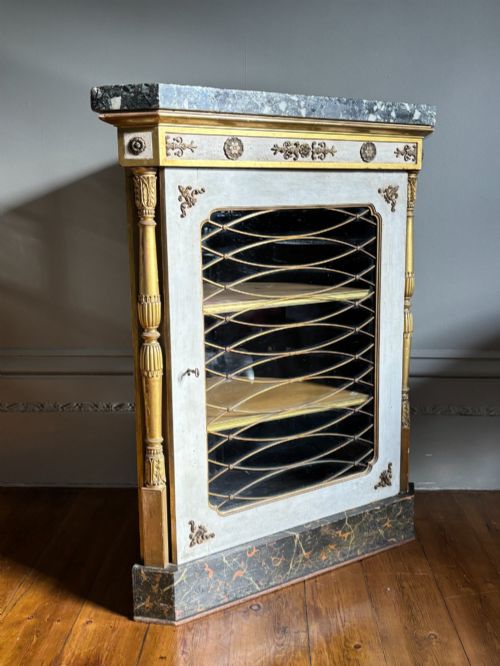
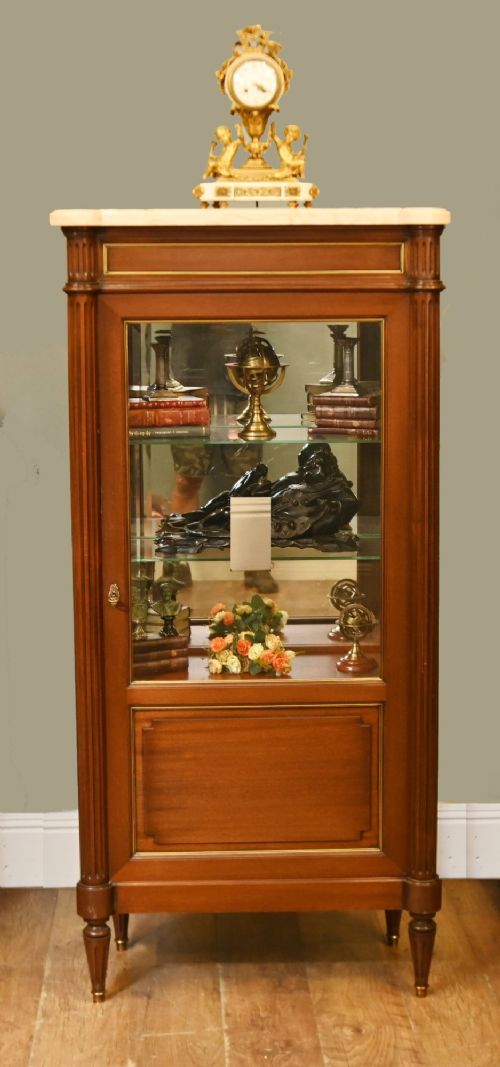
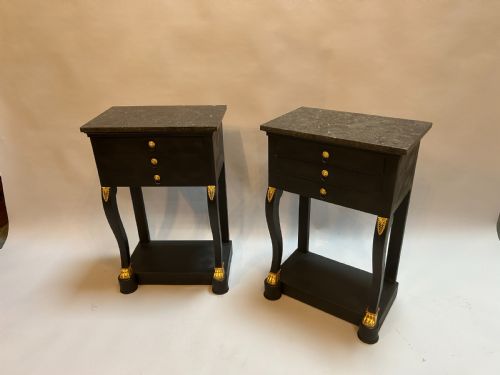
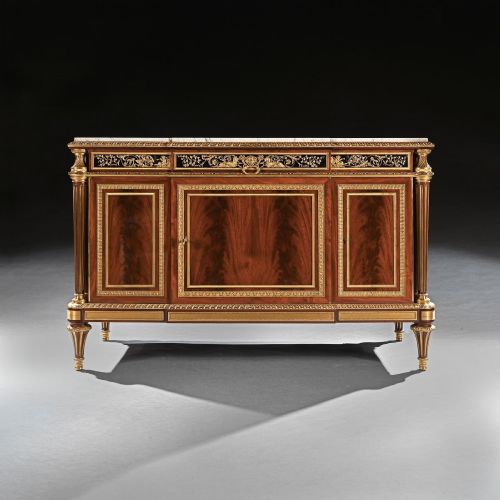
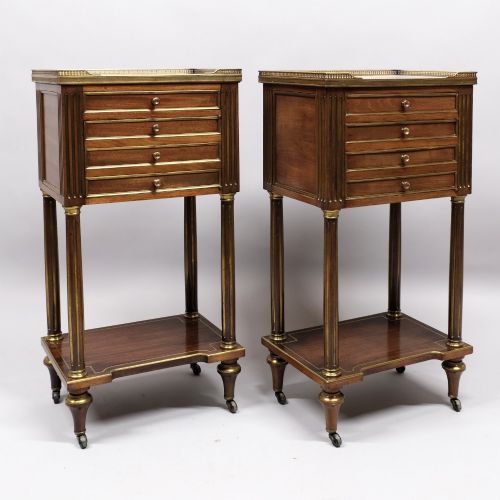
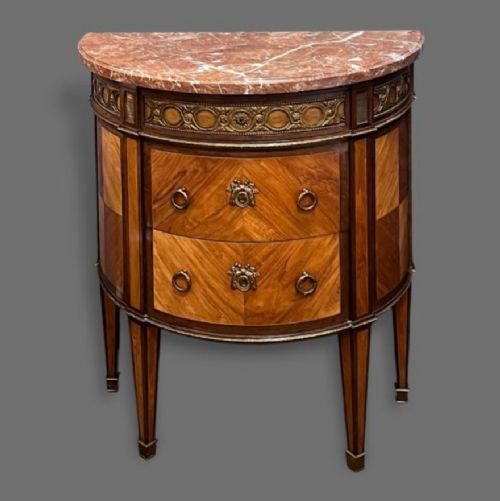
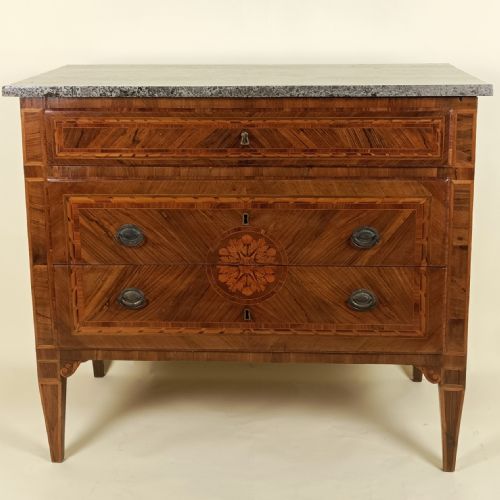
A neoclassical marble top cabinet combines restrained architectural proportions with a fitted stone slab across the upper surface. When you examine a neoclassical marble top cabinet on this page, you encounter forms ranging from commodes and side cabinets to bedside tables, corner cupboards, and console tables.
The selection draws heavily on continental workshops, featuring French Empire, Louis XVI, and Italian neoclassical designs alongside Regency and English interpretations. Makers often utilised rich timbers like mahogany, satinwood, walnut, and burr elm, frequently enhanced with marquetry or parquetry.
Dated examples span from the eighteenth century through the nineteenth century, extending into early twentieth century revivals. The stone tops themselves display variety, including fossil marble alongside plain white or coloured slabs.
Materials and construction methods
Cabinet makers built these pieces using solid and veneered hardwoods such as mahogany, satinwood, and walnut over robust carcases. They applied intricate marquetry and parquetry patterns, laying down geometric or floral designs in contrasting timbers.
Metal mounts in brass, ormolu, and gilt bronze provide structural punctuation and decorative framing around doors and drawers. Heavy marble slabs were cut and polished to fit precisely onto the wooden upper surfaces, serving both a decorative and a practical function.
Object forms span commodes, bedside cabinets, demi-lune chests, console tables, and corner cupboards.
Distinctions in execution and design
The sophistication of the timber work and the crispness of the gilt bronze or ormolu mounts set finer examples apart from standard production. Cabinets displaying detailed marquetry panels or complex parquetry require advanced joinery skills that elevate the piece.
The selection of the marble top also dictates the character of the object, with figured fossil varieties or thick moulded slabs commanding greater presence than simple thin plates.
Henry Dasson·Edmond Poteau
The Neoclassical Marble Top Cabinet Glossary
- Commode
- A low chest of drawers or cabinet designed for domestic use. These pieces often feature prominent marble tops and decorative veneer work.
- Ormolu
- Gilded bronze mounts applied to furniture for decoration and edge protection. Makers cast and chased these metal elements to catch the light.
- Marquetry
- Inlaid patterns formed by fitting small pieces of veneer into a background timber. Craftsmen used various woods to create pictorial or geometric designs.
- Demi-lune
- Half-moon shape used for the plans of certain side cabinets and chests of drawers. This curved profile fits snugly against flat walls.
- Parquetry
- Geometric mosaic woodwork arranged in repeating patterns across cabinet doors or drawer fronts. It differs from marquetry by relying on regular angular tiles.
Neoclassical Marble Top Cabinet: Frequently Asked Questions
What rooms suit a neoclassical marble top cabinet?
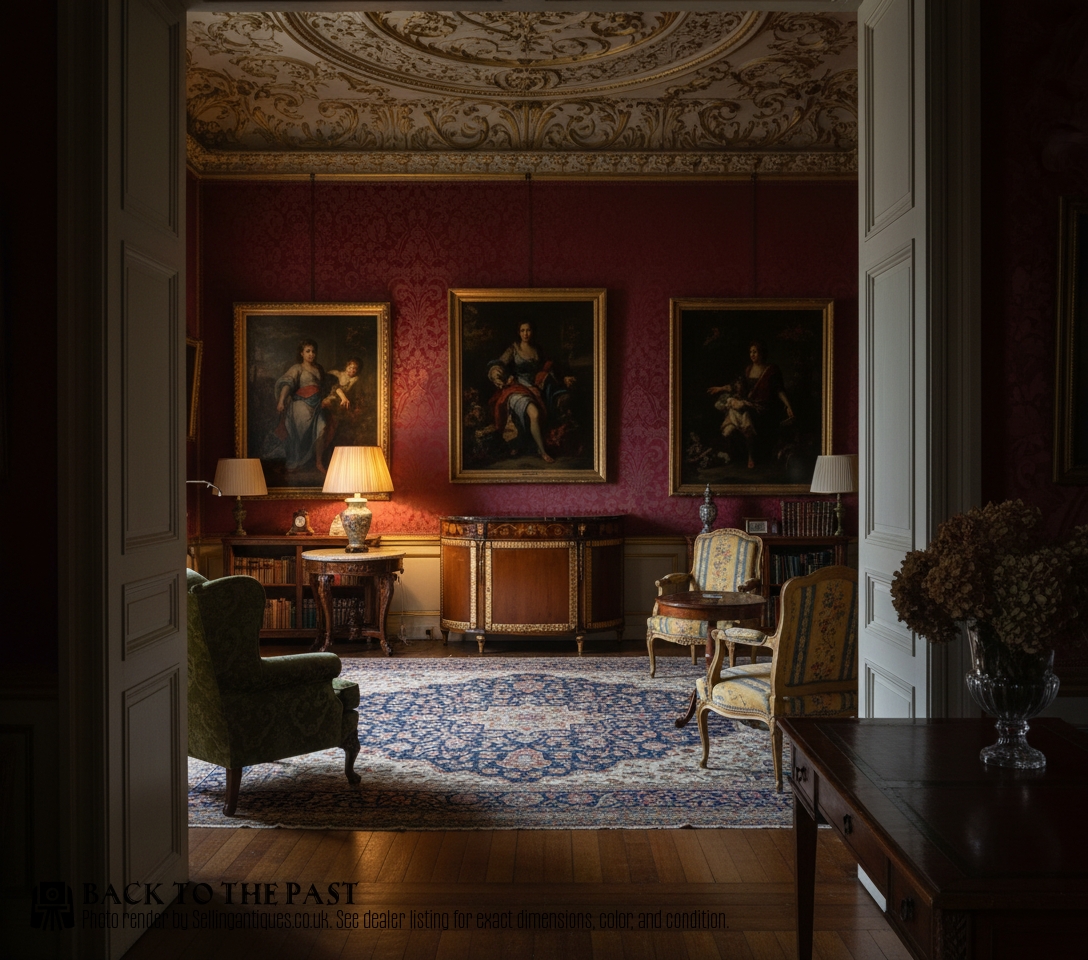
These cabinets work well in living rooms, bedrooms, or hallways as focal points or functional storage surfaces. The stone top offers a durable platform for lamps and decorative objects.
Their restrained proportions allow them to sit comfortably against walls without dominating the floor space, bridging formal and domestic interiors.
How do I care for the marble top?
Wipe the stone surface regularly with a soft, damp cloth and neutral soap to prevent staining from liquids. Avoid acidic cleaners that etch polished marble.
Keep heavy impacts away from the edges to prevent chipping along the moulded borders of the stone slab.
How do I distinguish French Empire from Louis XVI styles?
French Empire pieces often display heavier, militaristic classical motifs and rich mahogany surfaces with bold ormolu mounts. They reflect nineteenth-century revivals of Roman grandeur.
Louis XVI pieces favor lighter, more rectilinear proportions with fluted legs, painted finishes, and delicate neoclassical ornamentation dating back to the eighteenth century.
Are these cabinets meant for daily use?
Most of these pieces served practical domestic storage roles originally, functioning as commodes, night tables, or side cupboards. Their internal drawer and shelf configurations remain useful for modern storage.
Treating antique wood and marble with ordinary care ensures they withstand everyday placement of household items.