


Neoclassical Mahogany Desk
A neoclassical mahogany desk brings formal architectural proportion and dark timber grain into a room, uniting utility with classical restraint.
Neoclassical Mahogany Desk
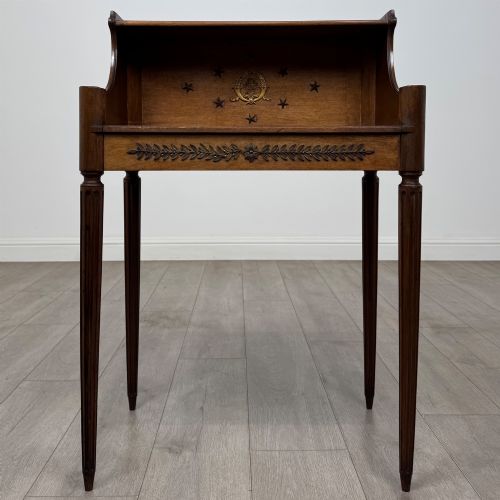
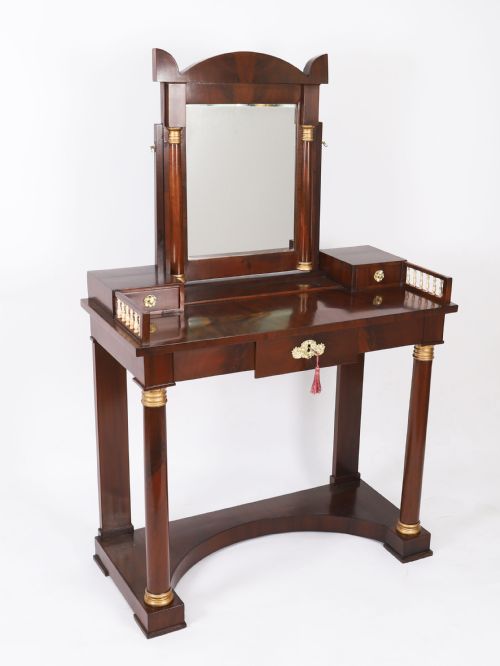
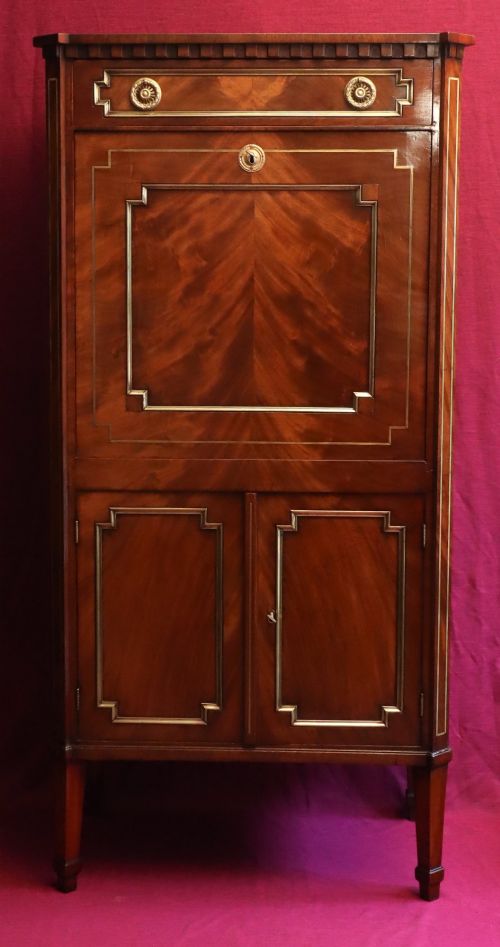
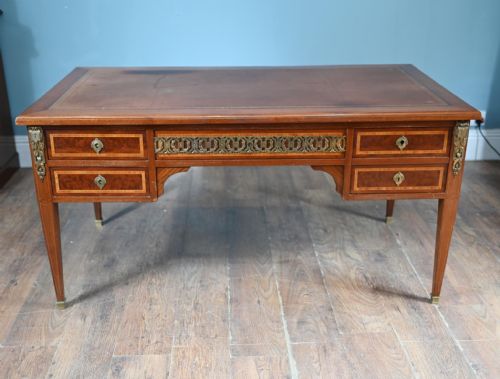
A neoclassical mahogany desk represents a tradition of writing furniture influenced by ancient Greek and Roman design principles, frequently appearing alongside related forms such as writing tables and bureau plats. These pieces are defined by clean lines, symmetrical balance and restrained classical ornamentation rather than heavy carved excesses.
Buyers browsing this selection will frequently encounter desks styled after French Empire, Louis XVI, Regency and Sheraton periods. The timbers span the eighteenth and nineteenth centuries, running from the Georgian era through the Edwardian period and into the early twentieth century.
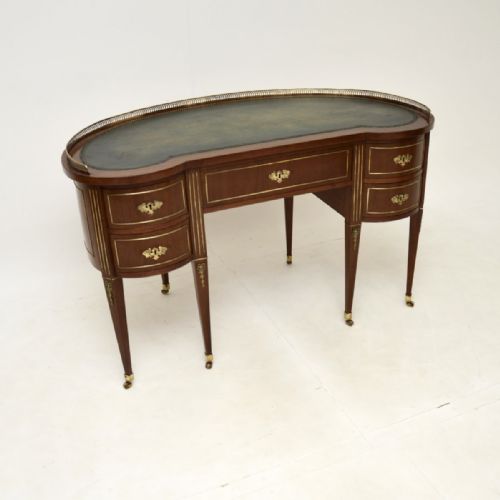
The inventory ranges from compact lady's writing tables to substantial library writing desks equipped with leather inserts. Alongside standard desks, the selection includes escritoires and bureau plat designs that utilise similar neoclassical vocabularies.
How they were made
Construction relies heavily upon solid and veneered mahogany, chosen for its rich grain and stable working properties. Cabinet makers combined this primary timber with contrasting secondary woods and occasional satinwood stringing to delineate panels and drawer fronts.
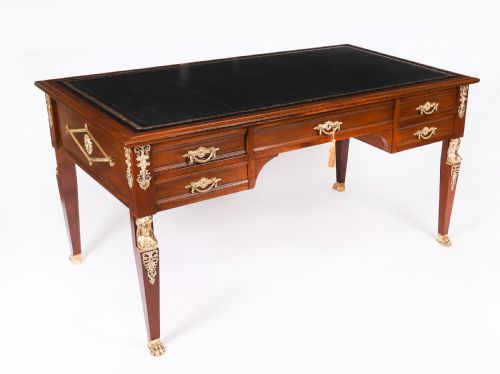
Metal mounts in ormolu and gilt bronze provide structural accent and visual weight, pinned or screwed to the mahogany carcase. Brass handles, key escutcheons and gallery rails complete the hardware, often cast with classical motifs such as acanthus leaves, egg-and-dart moulding or rosettes.
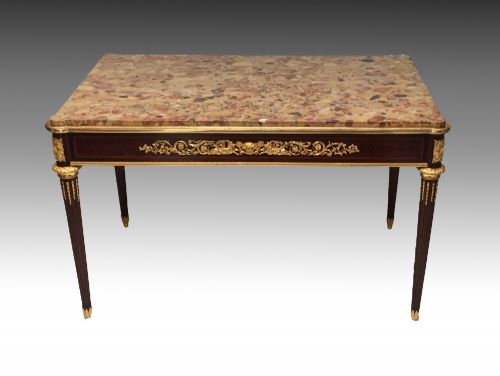
Writing surfaces are frequently lined with tooled leather, whilst heavier marble slabs appear on console and centre table variants. Interior compartments within escritoires and bureau plat pieces utilise precise joinery, secret drawers and tambour doors.
Several desks include secret compartments designed for stashing love letters or forged treaties away from prying eyes.
What varies in quality
The distinction between ordinary and exceptional pieces lies in the crispness of the carving and the quality of the ormolu mountings. Superior examples demonstrate finely chased bronze work that retains sharp relief, whereas lesser pieces show soft, rounded casting details.
Timber selection dictates the visual depth of the surface, with well-figured flame mahogany commanding greater presence than plain stock. The integration of secondary materials, such as genuine fossil marble tops or finely hand-tooled leather inserts, separates standard workshop production from high-end cabinet work.
The Neoclassical Mahogany Desk Glossary
- Bureau plat
- A flat-topped writing table, usually freestanding with drawers across the frieze. These French forms often feature ormolu mounts and leather writing surfaces.
- Ormolu
- Gilt bronze ornamentation applied to furniture mounts. The technique involves treating copper alloys with a gold amalgam to produce a bright metallic finish.
- Escritoire
- A vertical writing cabinet with a fall-front panel that conceals small drawers and pigeonholes. It provides a compact writing station with enclosed storage.
- Tambour
- A sliding surface made of narrow vertical strips of wood glued to a canvas backing. This flexible shutter conceals desk interiors without requiring swing clearance for doors.
- Satinwood
- A pale, hard timber utilised for contrasting stringing and marquetry panels on late eighteenth and nineteenth century furniture. It provides a bright visual counterpoint to dark mahogany.
Neoclassical Mahogany Desk: Frequently Asked Questions
What is a bureau plat?
A bureau plat is a freestanding writing table with a finished back and a row of drawers beneath the top. Originating in France, these desks were designed to sit in the centre of a room rather than against a wall.
They typically feature inset leather writing surfaces and cast ormolu mounts framing the drawer frieze and legs.
How do I care for the leather top?
Leather writing surfaces require gentle cleaning with a slightly damp cloth, avoiding harsh chemical cleaners or excessive moisture. Periodic application of neutral leather cream maintains suppleness and prevents cracking along the gold-tooled borders.
Keep the desk away from direct sunlight and heat sources to protect both the leather insert and the underlying mahogany timber.
How do I tell Regency from Edwardian pieces?
Regency pieces date from the early nineteenth century and display authentic period construction methods, heavy neoclassical influences, and dense, dark mahogany patination acquired through age. Edwardian pieces, made around 1900, are revival works that often incorporate lighter proportions and machine-assisted joinery.
Examining the interior secondary woods, drawer linings, and screw types helps clarify the exact manufacturing era.
Were these desks used for writing?
These pieces were built as functional writing furniture for correspondence, bookkeeping, and state administration in grand houses. The incorporation of leather inserts provided a smooth, non-glare surface for quill pens and ink.
Many designs include integrated drawers, pigeonholes, and cabinets to store stationery, ledgers, and sealing wax.