

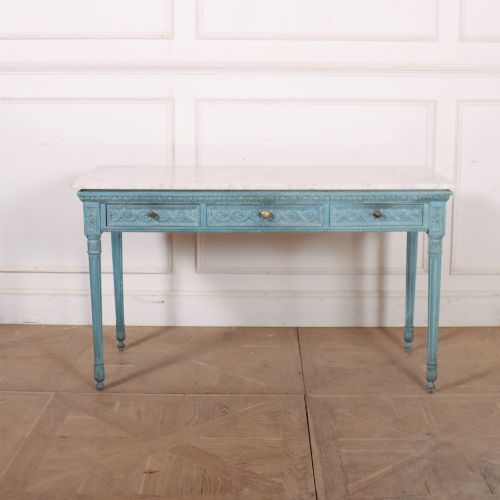
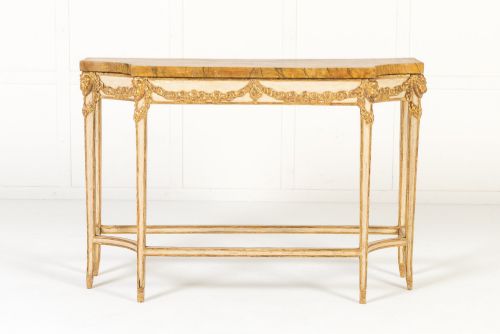
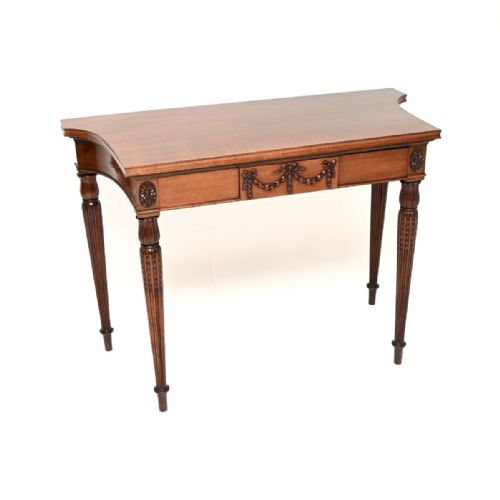
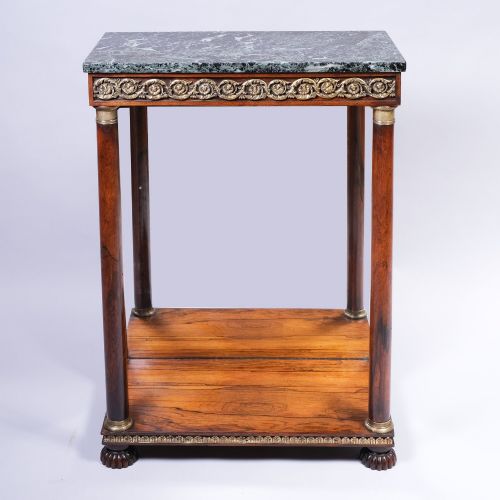




Neoclassical Hallway Table
A neoclassical hallway table brings architectural restraint and classical symmetry to an entrance, grounding the space with mahogany, marble, or painted wood.
Neoclassical Hallway Table
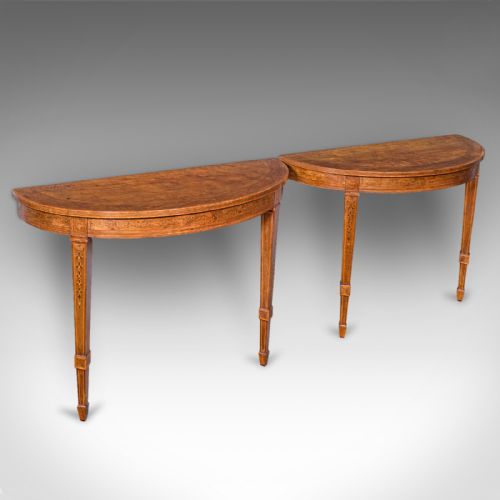
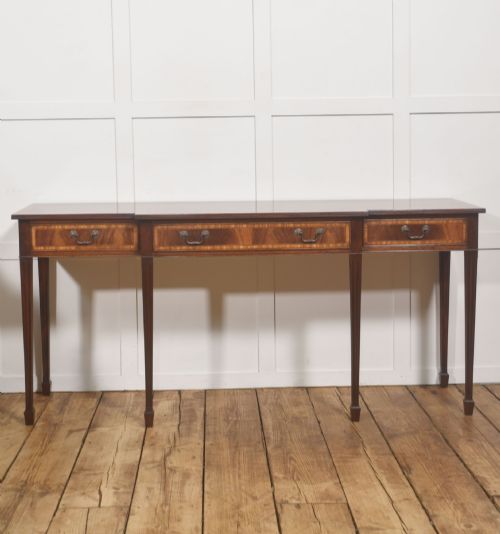
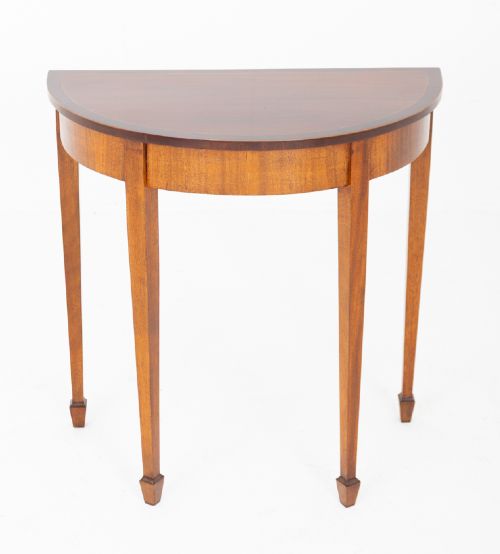
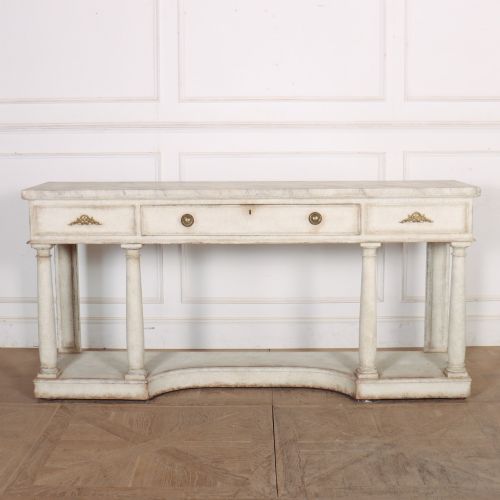
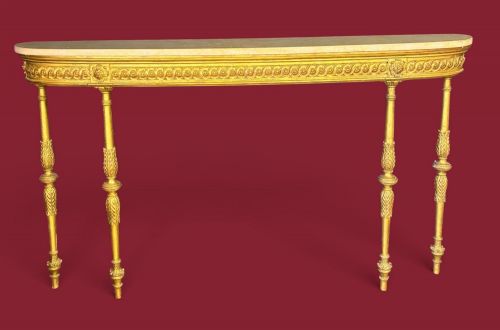
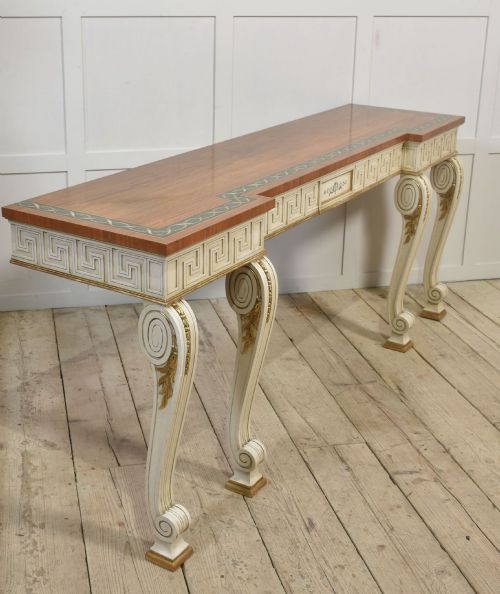
A neoclassical hallway table takes the form of a console, serving table, or demi-lune, designed to stand flat against a wall in a narrow space. These pieces emerge across the eighteenth, nineteenth, and early twentieth centuries, spanning periods from Georgian and Regency to revival styles like Louis XVI and Adam. English, French, Italian, Dutch, and Swedish workshops all contribute distinct regional interpretations to the form.
Materials and Construction
Timbers such as mahogany, oak, walnut, rosewood, beech, and painted wood form the structural carcasses of these tables, often shaped into demi-lune or serpentine profiles. Cabinetmakers employ solid woods alongside veneers, constructing tabletops designed to carry heavy stone elements without warping.
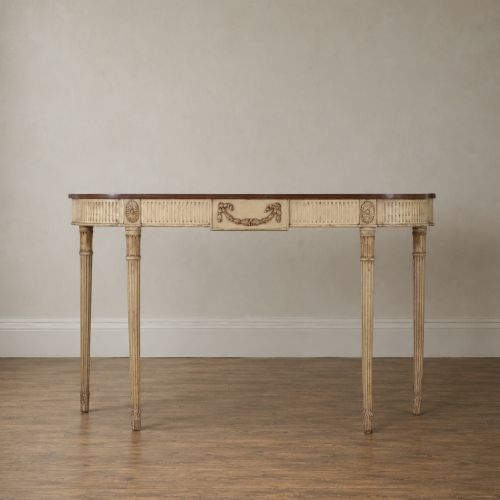
Surface finishes define the aesthetic, combining marble inserts, brass mounts, paint, gesso, and giltwood. Carving and gilding are applied directly to wooden frames, while marble slabs rest neatly upon upper ledges to create durable, decorative display surfaces.
Neoclassical Hallway Table Retail Price Guide 2026
Typical asking prices for neoclassical hallway table among the pieces listed under this phrase on Sellingantiques today, from the lower quarter to the upper quarter. They describe what is for sale here now, not the wider market.
Object types on this site include console tables, serving tables, tea tables, side tables, sideboards, and console cabinets.
Quality and Execution
The refinement of the carving and the integrity of the surface finish separate standard examples from finer works. Crisp detail in giltwood and gesso ornamentation, balanced proportions in demi-lune curves, and the weight of the chosen marble top dictate the overall standing of a piece.
Material selection and execution drive distinction, particularly in how neatly brass mounts integrate with rosewood or mahogany bodies. Pieces retaining their original painted surfaces or matching architectural mirrors show a higher degree of initial commission quality.
The Neoclassical Hallway Table Glossary
- Demi-lune
- A half-moon shape used for console tables designed to sit flush against a wall. This profile saves floor space in entrance halls.
- Console table
- A table supported by wall brackets or front legs, built primarily for display rather than freestanding use. They frequently feature marble tops and giltwood frames.
- Giltwood
- Timber coated with gold leaf over a prepared gesso ground. This technique creates a bright, reflective surface seen on many decorative tables.
- Gesso
- A plaster-like mixture applied to wood and carved before gilding or painting. It provides a smooth base for intricate surface decoration.
- Marquetry
- The art of inlaying different woods into a veneer to create decorative patterns. It adds visual complexity to flat tabletops.
Neoclassical Hallway Table: Frequently Asked Questions
Where should I place a console table?
A console table fits best in a hallway, entryway, or against a blank living room wall where floor space is limited. Its shallow depth allows it to provide surface area without obstructing movement.
Pairing the table with a matching mirror or placing a lamp upon the marble top completes the traditional arrangement in a reception space.
How do I care for a marble top?
Marble surfaces require simple dusting with a soft cloth and immediate wiping of liquid spills to prevent staining. Avoid acidic cleaners that etch the polished stone.
Applying a neutral stone wax occasionally helps protect the finish while preserving the natural sheen of the marble.
What is the difference between a console and a side table?
A console table is traditionally designed to stand against a wall, sometimes anchored or supported at the front by legs while relying on stability from the structure. Side tables are freestanding pieces meant to be viewed from multiple angles.
In neoclassical design, console tables often feature flat backs and elaborate front aprons suited for narrow passageways.
How do I identify a revival piece?
Revival pieces combine stylistic motifs from earlier Georgian, Adam, or Louis XVI periods with the manufacturing techniques of the nineteenth or early twentieth centuries. Examination of the secondary woods, screw types, and overall wear helps establish the true era of construction.
These later interpretations offer the classical aesthetic of earlier centuries with sturdy modern joinery.