
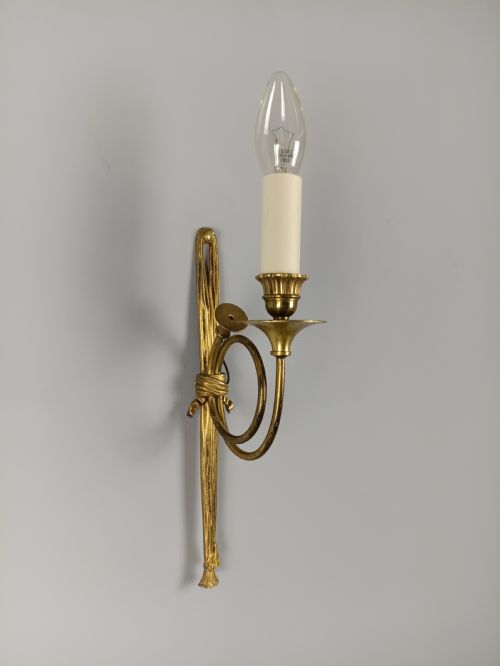
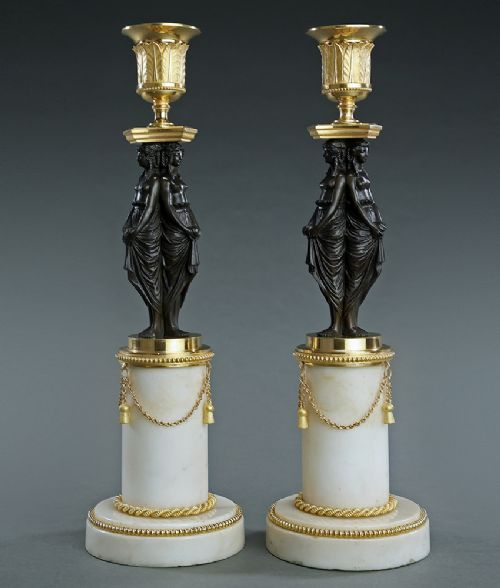
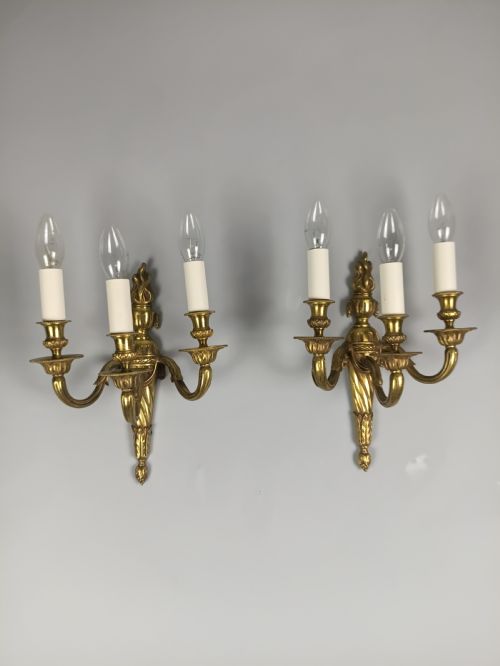
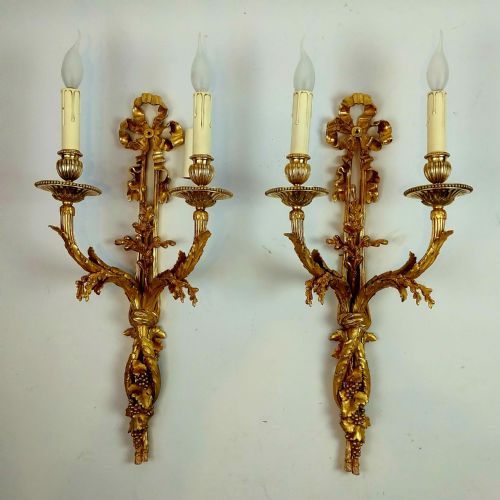
Neoclassical Gilt Sconces
Neoclassical gilt sconces bring architectural order and warm reflected light to an interior, channelling the symmetry of ancient Greece and Rome.
Neoclassical Gilt Sconces
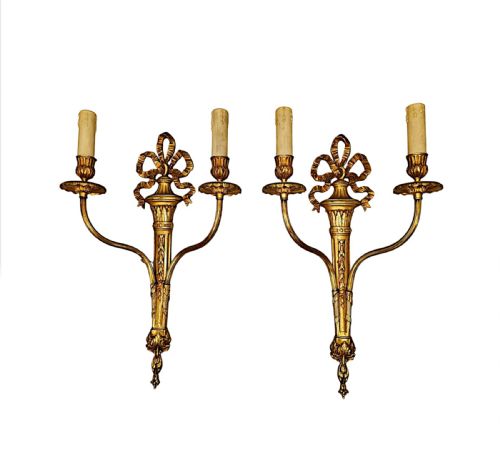
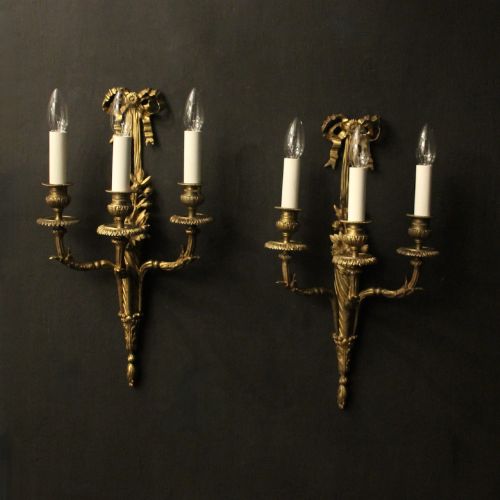
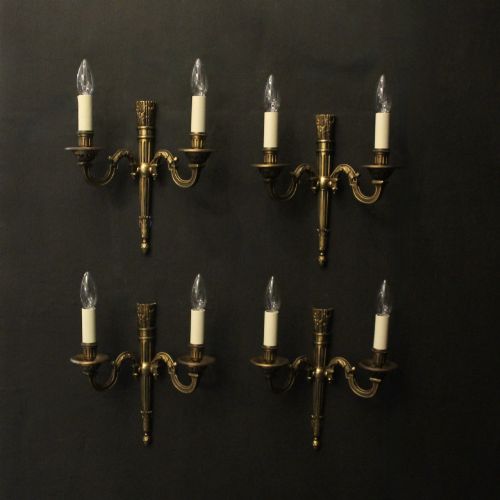
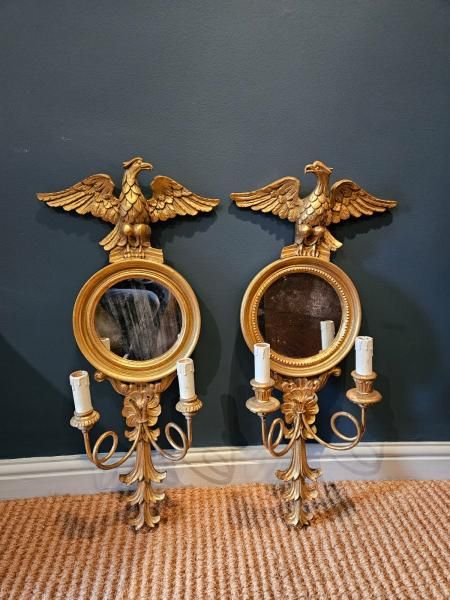
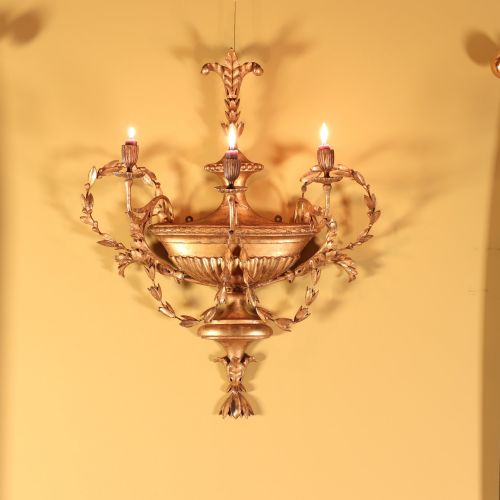
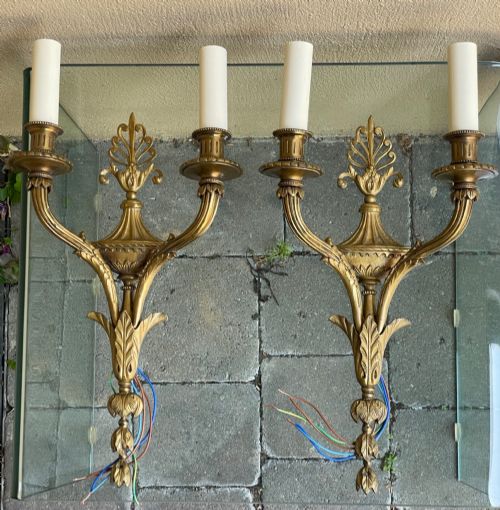
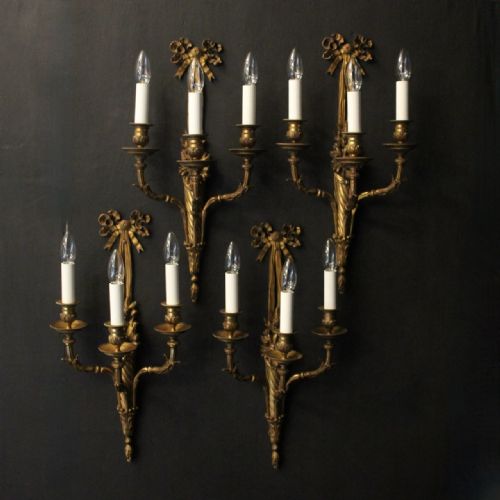
Neoclassical gilt sconces provide layered wall illumination through bracketed arms designed to hold candles or electric lamps. They draw directly on eighteenth-century design vocabulary, adopting the balanced proportions and ornamental restraint of the period.
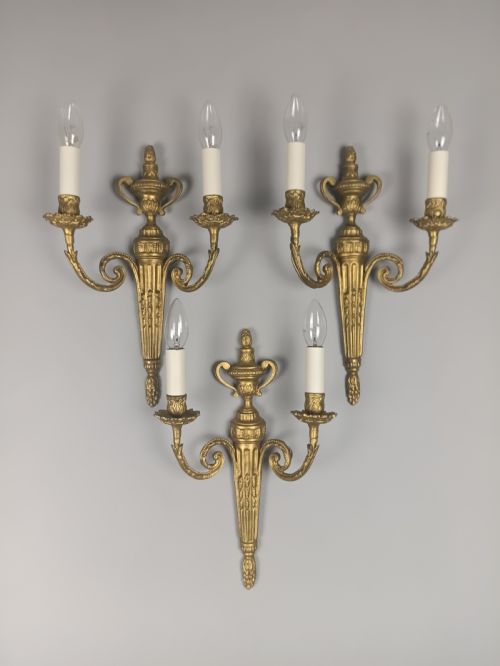
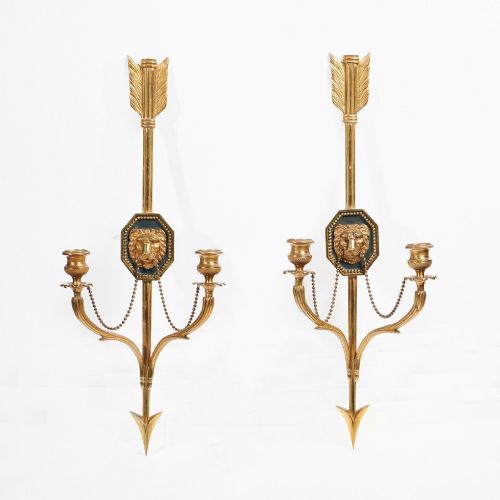
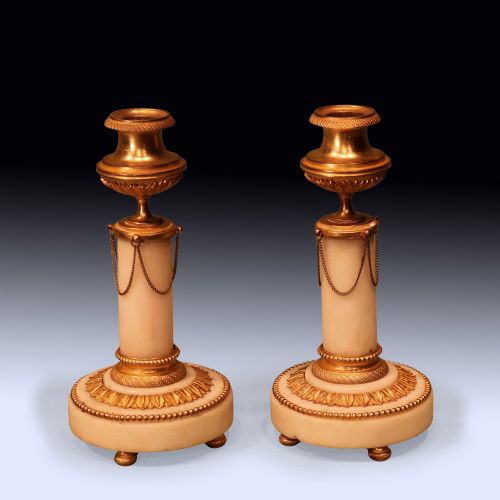
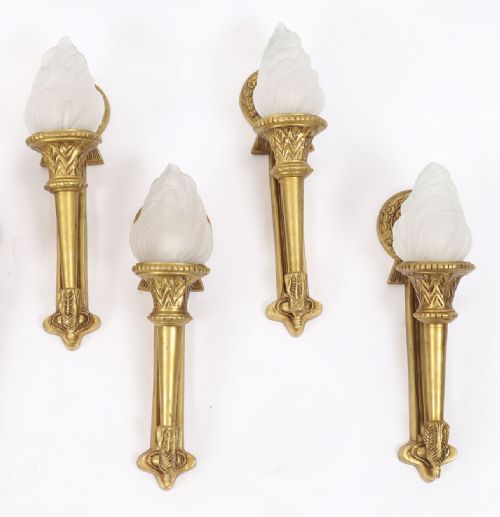
The selections available here lean heavily toward French design, particularly Louis XVI style, Empire, and Neo-Classical expressions produced across the nineteenth and early twentieth centuries. Pairs and sets of four dominate the forms, frequently manifesting as twin-arm or triple-arm wall lights.
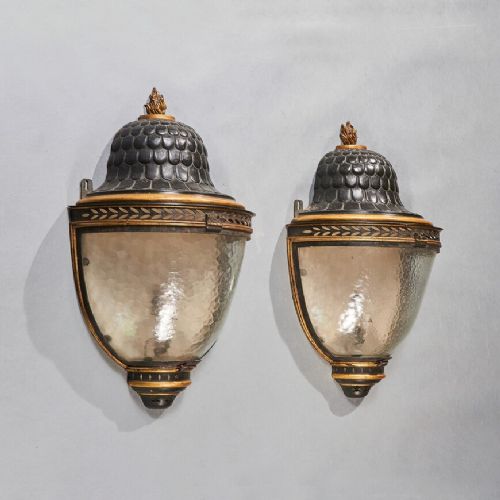
Alongside standard wall brackets, buyers encounter specialised variants including mirror-backed sconces, tole peinte lanterns, and girandole mirrors that integrate candlelight with reflective surfaces to amplify illumination.
Materials and construction
Foundational structures rely on cast bronze, brass, and carved giltwood, providing the rigid armature necessary to support extending arms. Ormolu and gold leaf impart the characteristic luminous metallic finish, applied to highlight surface details.
Many examples combine mixed media, pairing gilt bronze with white marble bases, patinated bronze elements, or cut glass drops. Tole peinte and gesso appear where painted iron or moulded chalk grounds require a gilded overlay.
Listings feature pieces spanning from the eighteenth century through the 1930s, encompassing French, Italian, and English workshops.
Assessing execution
Quality rests primarily on the crispness of the chasing and the depth of the metal casting. Superior pieces retain sharp leaf motifs, distinct acanthus scrolls, and cleanly articulated figural elements without the softening typical of secondary casts.
The integrity of the surface treatment separates standard production from exceptional work. Thick, well-preserved fire gilding or gold leaf reflects light with a rich warmth that thin electroplating fails to replicate.
Henri Vian·Maison Baguès
The Neoclassical Gilt Sconces Glossary
- Ormolu
- Gilded bronze produced through a mercury amalgamation process that yields a deep, enduring metallic lustre. It was widely utilised on fine French lighting fixtures during the eighteenth and nineteenth centuries.
- Giltwood
- Timber, usually lime or pine, prepared with gesso and bole before the application of gold leaf. It forms the basis of many mirrors and carved wall brackets from the Georgian era onward.
- Girandole
- A wall-mounted candle sconce featuring a reflective mirror backplate. The glass serves to multiply the ambient light cast by the candles.
- Tole Peinte
- Painted sheet metal, frequently shaped into decorative lanterns or shades. It allows for vibrant colour contrasting against parcel-gilded frames.
- Caryatid
- A sculpted female figure serving as an architectural support. These figures often form the main stem or backplate of neoclassical wall lights and candlesticks.
Neoclassical Gilt Sconces: Frequently Asked Questions
How do I wire antique wall sconces?
Most twentieth-century and nineteenth-century sconces can be adapted by a qualified electrician to accept modern candle tubes or small SES bulbs. Wiring is typically channelled through the existing backplate and arms to preserve the exterior finish.
Original mounting points should be inspected to ensure they can support the weight of cast bronze or giltwood structures safely against the wall.
What is the difference between Louis XVI and Empire styles?
Louis XVI wall lights feature lighter, straight-lined geometry influenced by archaeological discoveries at Pompeii, displaying motifs like ribbons, urns, and delicate floral garlands. They feel restrained and architectural.
Empire sconces are heavier and more militaristic, drawing on Roman imperial symbols such as sphinxes, laurel wreaths, and winged figures finished in high-contrast ormolu and dark patinated bronze.
How do I clean gilded bronze safely?
Dusting with a soft, dry microfibre cloth is sufficient for routine maintenance. Avoid commercial metal cleaners, harsh abrasives, or water, as these can strip thin gold leaf or damage historic lacquers.
If the metal requires deeper cleaning, consult a professional conservator to prevent irreversible loss to the original gilt surface.