



Neoclassical Desk Clock
These neoclassical desk clock pieces bring architectural symmetry and precise timekeeping to a room, drawn largely from nineteenth-century French workshops.
Neoclassical Desk Clock
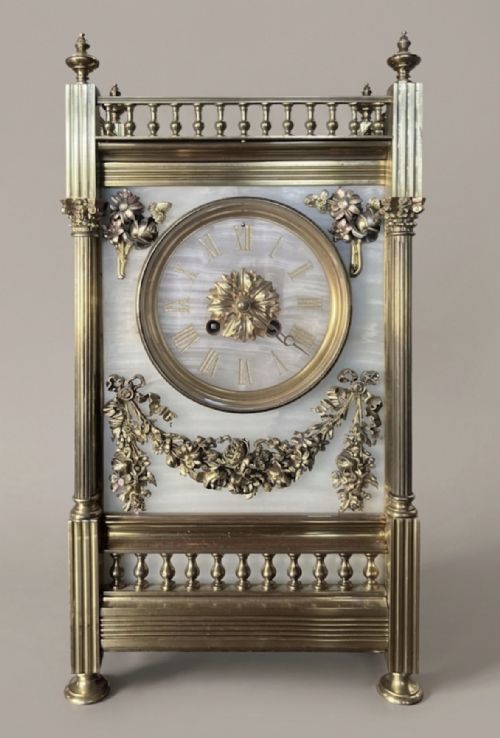
A neoclassical desk clock combines strict architectural forms with functional timekeeping, echoing the decorative vocabulary of antiquity and the eighteenth century. When you search for a neoclassical desk clock, you encounter heavy reliance on French design, spanning periods from the eighteenth century through the Victorian era and into the early twentieth century. These objects frequently take the form of mantel clocks, desk clocks, and clock garnitures that anchor a surface with metal and stone.
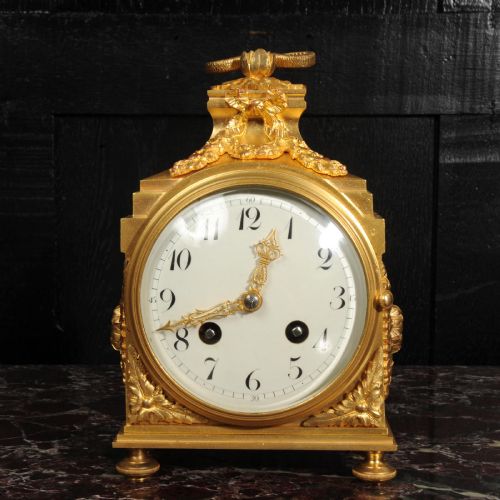
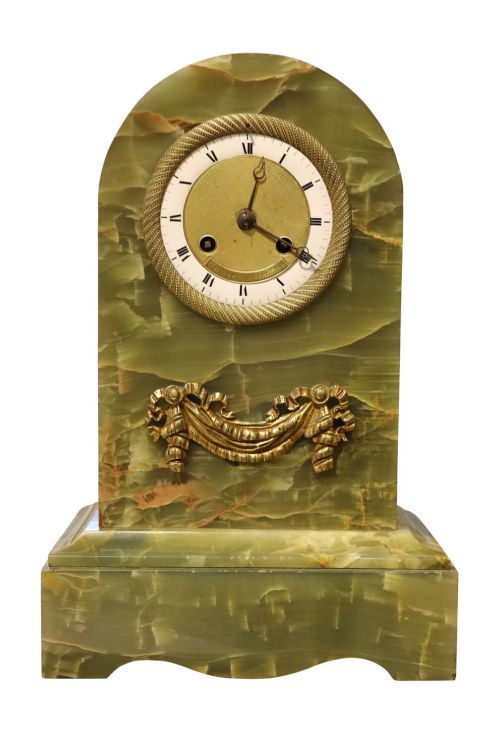
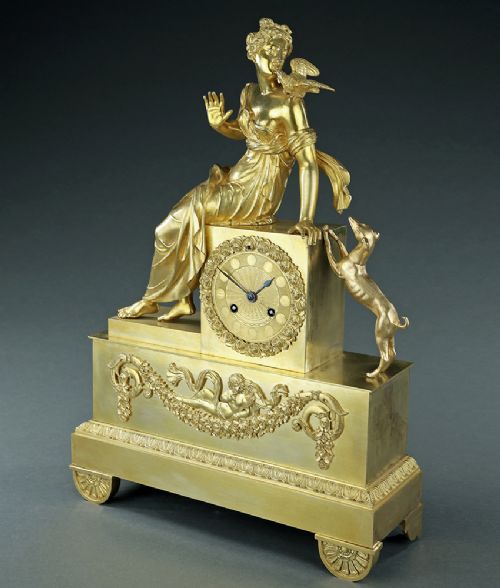
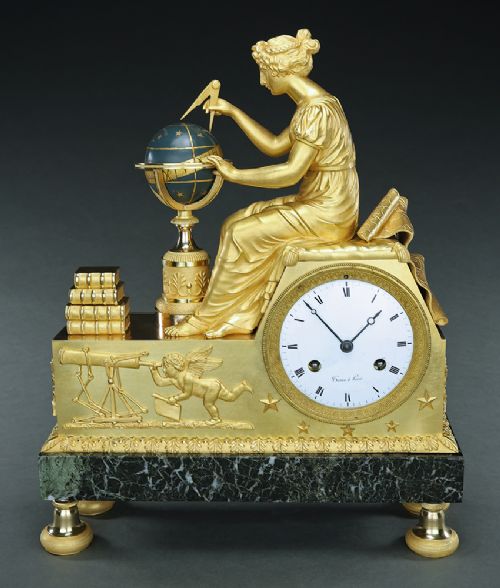
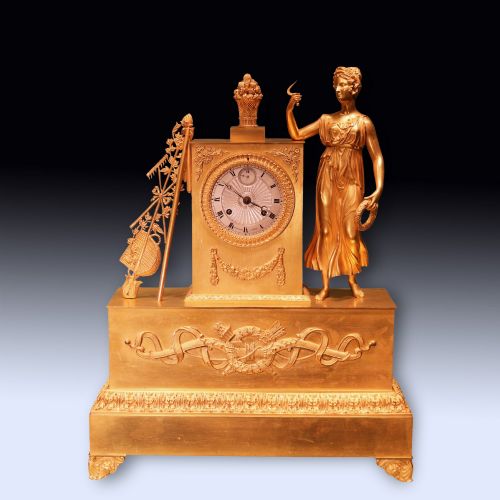
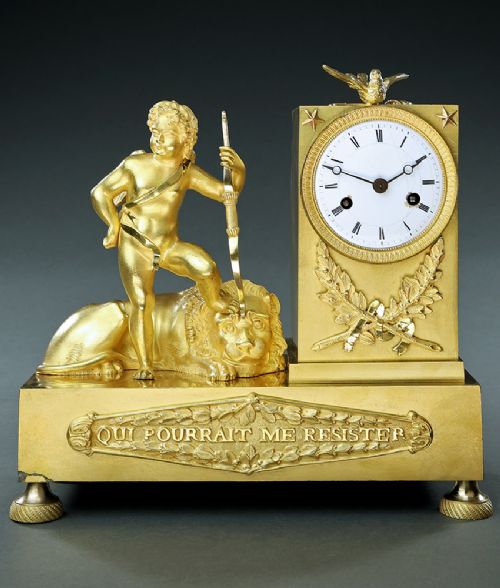
The most common versions on this page are French pieces produced in the nineteenth century, utilising styles such as Louis XVI, French Empire, and French Neoclassical. You will find them constructed around white marble, sienna marble, or green onyx bodies, mounted with ormolu, gilt bronze, or brass. They range from small proportions designed for intimate desks to larger architectural mantel pieces adorned with putti, lions, or astronomical motifs.
How they were made
Makers of these clocks relied heavily on cast metals combined with natural stone bodies. Ormolu, gilt bronze, and brass were cast, chased, and fire-gilt to create decorative mounts, bezels, and figural ornaments that contrast sharply with the polished surfaces of white marble, sienna marble, and green onyx.
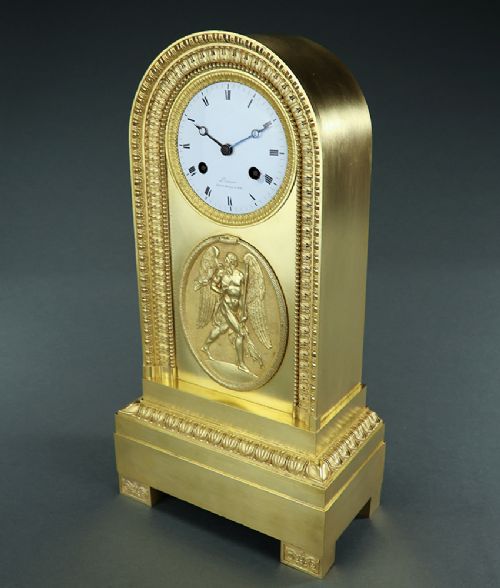
Movements were built for eight-day striking, timepieces, or single chain fusee configurations, fitted into drum heads, lyre frames, or borne cases. Glass was incorporated into four glass mantel clocks and crystal regulators to expose the intricate mechanics within.
Neoclassical Desk Clock Retail Price Guide 2026
Typical asking prices for neoclassical desk clock among the pieces listed under this phrase on Sellingantiques today, from the lower quarter to the upper quarter. They describe what is for sale here now, not the wider market.
Several French Empire models feature the triumph of love over strength, reminding every room that time eventually surrenders to romance.
What varies in quality
Quality rests in the crispness of the bronze casting and the depth of the gilding. Superior examples display sharply defined chasing on figural mounts like putti or lion masks, while lesser pieces show softened details from worn moulds.
The selection of materials also dictates the tier of the piece. Solid marble and heavy ormolu mounts signal superior workshop production compared to lighter metal alloys and simpler painted cases.
Charles à Orléans·Reiche·Canaillor of Paris·Le Roy, Paris·Louis Goret, Paris·L Epee France·Ferdinand Berthoud·Asprey Of London
The Neoclassical Desk Clock Glossary
- Ormolu
- Gilded bronze produced by applying a mercury-gold amalgam to cast bronze and firing it. This technique gives the metal a distinctive warm lustre that resists tarnishing over centuries.
- Pendule d'Officier
- A portable officer's clock featuring a striking movement and a carrying handle on top. These were originally invented for military commanders on campaign.
- Clock Garniture
- A matching set consisting of a central clock flanked by decorative accessories such as candelabras or urns. They were designed to create a balanced display across a mantelpiece.
- Crystal Regulator
- A clock encased in glass panels on all sides with a mercury or compensated pendulum, allowing the escapement and gear train to be viewed from multiple angles.
- Chain Fusee
- A mechanism utilised in better quality clocks to equalise the declining power of the mainspring as it unwinds. It ensures even tension is delivered to the gear train for accurate timekeeping.
Neoclassical Desk Clock: Frequently Asked Questions
What is a neoclassical desk clock?
A neoclassical desk clock is a timekeeper influenced by classical Greek and Roman architecture and motifs, typically featuring columns, urns, and symmetrical proportions.
They are constructed from materials like marble, ormolu, and bronze, serving both as functional instruments and decorative centerpieces.
Where were most of these clocks made?
The majority of these pieces originate from French workshops, particularly in Paris, drawing on Louis XVI and Empire design traditions.
English makers such as Asprey also produced notable examples during the nineteenth and twentieth centuries.
How do I care for an antique clock movement?
Antique mechanical movements require professional cleaning and lubrication every few years to keep the brass gears from wearing down.
Placing the clock on a level surface ensures the pendulum swings evenly and the strike train operates without jamming.
What is a crystal regulator clock?
A crystal regulator is a mantel or desk clock featuring heavy glass panels held in a brass or gilt frame that reveals the internal mechanism.
These clocks became popular in the late nineteenth century and often incorporate delicate mercury pendulums.