

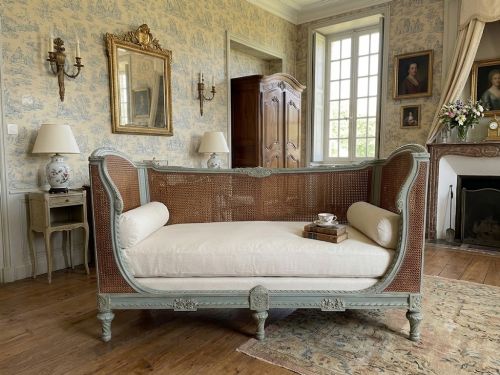


Neoclassical Couch
A neoclassical couch brings architectural proportion and clean lines into a room, offering refined seating shaped by classical antiquity.
Neoclassical Couch
A neoclassical couch draws upon classical motifs and symmetrical forms to create a structured seating piece. These sofas emerge across the eighteenth and nineteenth centuries, alongside revival iterations from the Edwardian period and the early twentieth century.
The listings here showcase daybeds, settees, and large salon sofas framed in timber, mahogany, birch, and giltwood. Examples span French Louis XVI styles, French Empire revivals, Swedish Gustavian aesthetics, and Georgian designs.
Visitors to this page most frequently encounter painted canework couches, mahogany frames with brass mounts, and carved birch settees. These pieces range from compact two-seater sofas to expansive country house furniture.
Materials and construction
Makers constructed these frames from solid timbers including mahogany, beech, and birch, often finishing surfaces with paint, cream decoration, or gilding. Structural elements frequently incorporate woven cane panels for lightness alongside traditional upholstery fabrics and linen.
Decorative detail relies on applied brass or ormolu mounts, intricate carving, and architectural mouldings. Giltwood frames and painted finishes define the aesthetic vocabulary of the French and Swedish workshop traditions represented here.
Neoclassical Couch Retail Price Guide 2026
Typical asking prices for neoclassical couch among the pieces listed under this phrase on Sellingantiques today, from the lower quarter to the upper quarter. They describe what is for sale here now, not the wider market.
Several couches require careful navigation around nineteenth-century serpentine curves and delicate gilt frames during a room redesign.
Distinctions in quality
Quality rests in the crispness of the carved ornamentation, the integrity of the timber framing, and the preservation of original painted or gilt surfaces. Superior examples demonstrate refined proportions and meticulous joinery that withstands centuries of use.
The refinement of brass mounts and the execution of integrated canework elevate certain pieces above standard production. The depth of historical detailing, from George III flourishes to Swedish Empire lines, marks the upper tier of these furnishings.
The Neoclassical Couch Glossary
- Canapé
- A French term for a decorative sofa or settee, often featuring an exposed wooden frame and upholstered seat. These forms frequently adopt Louis XVI or Empire styling.
- Giltwood
- Timber coated with a thin layer of gold leaf or gesso, commonly utilised on formal eighteenth and nineteenth-century salon seating. It provides a luminous surface finish.
- Ormolu
- Cast bronze mounted details finished with high-purity gold amalgamation, frequently applied to French Empire furniture. These metal enrichments highlight structural lines.
- Gustavian
- The Swedish interpretation of neoclassical design, characterised by restrained carving, pale painted finishes, and light proportions. This style emerged during the late eighteenth century.
- Hepplewhite
- An English furniture design style associated with the eighteenth century, known for elegant shield-back or straight-line framing and tapered supports.
Neoclassical Couch: Frequently Asked Questions
What is a neoclassical couch?
A neoclassical couch is a formal seating piece inspired by the art and architecture of classical Greece and Rome. These sofas feature balanced proportions, straight lines, and classical ornamentation.
Examples on this page include French daybeds, Swedish birch settees, and English Georgian sofas. They combine structural timber frames with refined upholstery or cane work.
How were these couches used?
These pieces served primarily as formal seating in grand salons, drawing rooms, and parlours. Daybeds additionally provided daytime lounging spaces for reading or resting.
In period interiors, large settees anchored conversational groupings while smaller painted daybeds functioned as decorative window seating or gallery furnishings.
How do I style a neoclassical couch?
A neoclassical couch works well as a focal point in a contemporary or traditional living room. Pairing the piece with neutral walls allows the carved wood frame and painted finish to stand out.
Keep surrounding furniture complementary in scale and period to maintain the architectural harmony inherent in these designs. Soft furnishings in linen or silk enhance the historical character.
How do I identify a period frame?
Identifying the period involves examining the timber species, joinery methods, and decorative motifs. Eighteenth-century pieces often display hand-carved mahogany or birch, whereas later revivals from the Edwardian era utilise machine-assisted construction.
Stylistic markers such as Gustavian pale paint or French Empire ormolu mounts provide direct clues to the geographic origin and era of manufacture.