

Neoclassical Chest
A neoclassical chest brings restrained geometry and classical proportion to a room, offering practical storage through disciplined design.
Neoclassical Chest
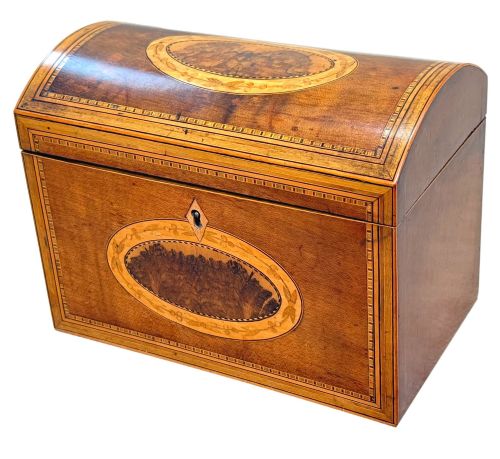
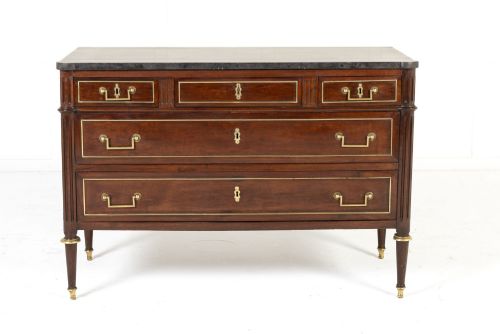
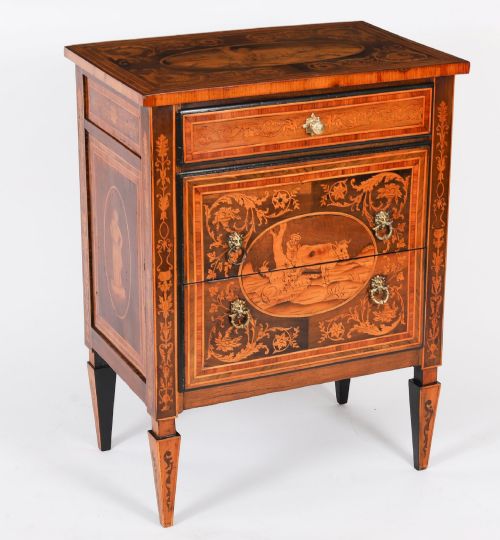
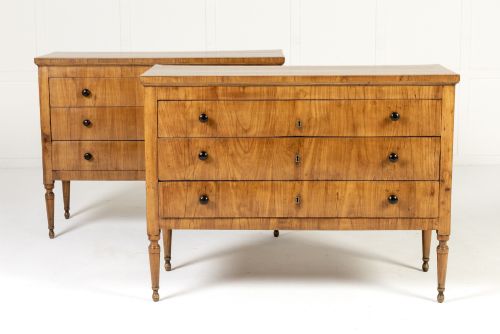
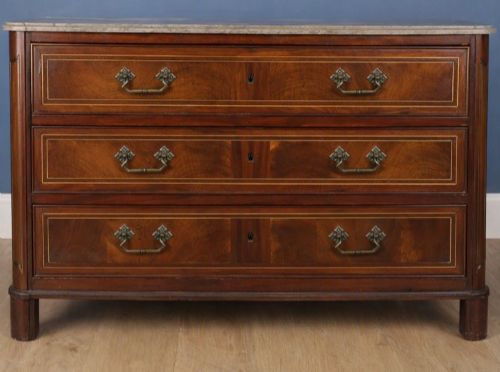
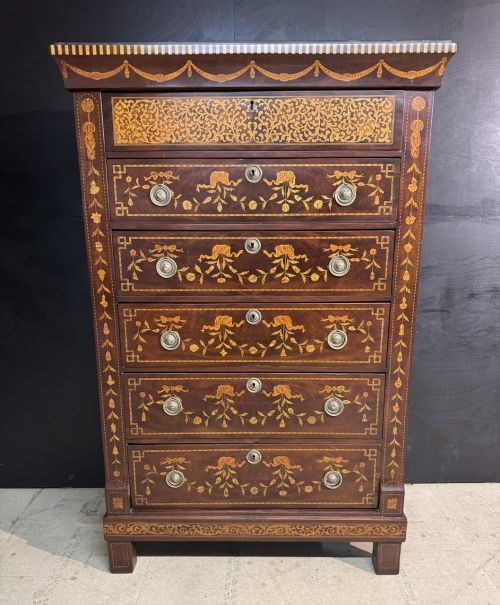
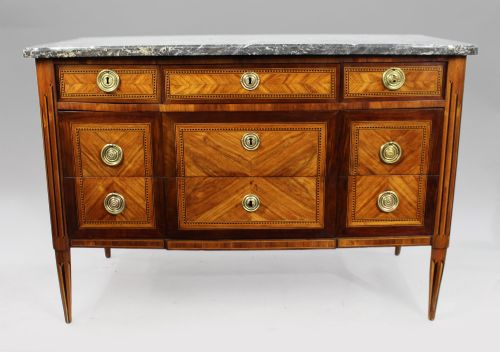
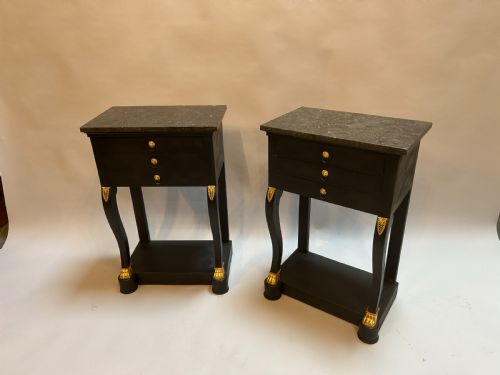
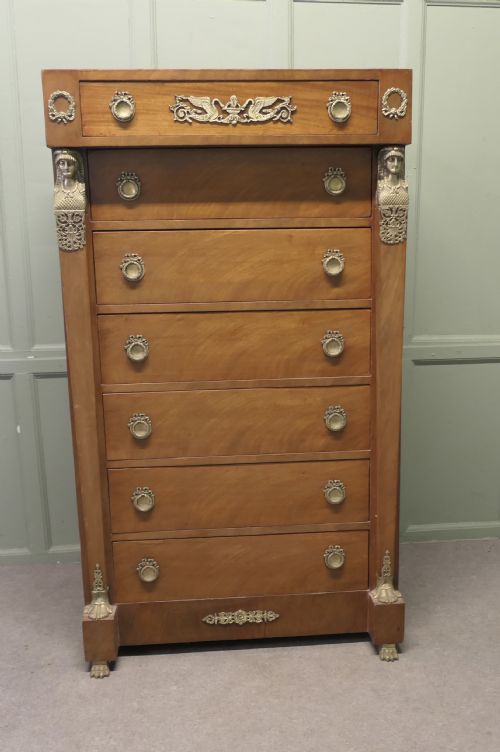
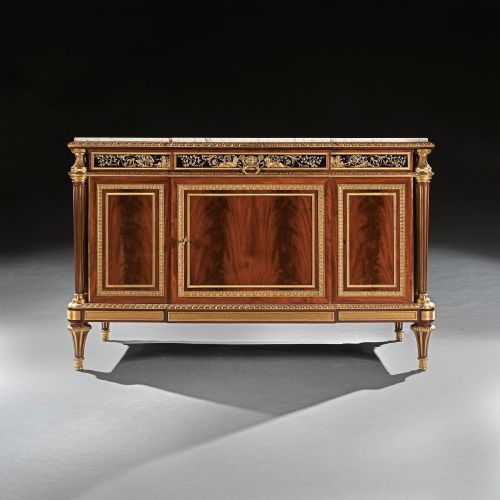
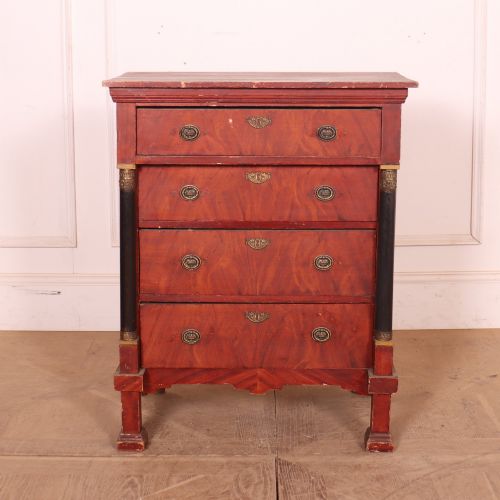
When you search for a neoclassical chest, you encounter case pieces designed with classical restraint, linear structure, and balanced proportions originating from the eighteenth and nineteenth centuries. These items manifest primarily as commodes, tall chests of drawers, and bedside cabinets fashioned in regional workshops across Italy, France, Sweden, and the Netherlands. The typical form encountered on this page relies on rectangular or demi-lune silhouettes rather than heavy baroque curves.
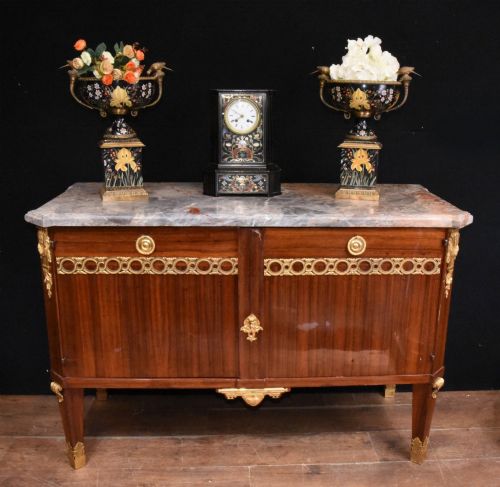
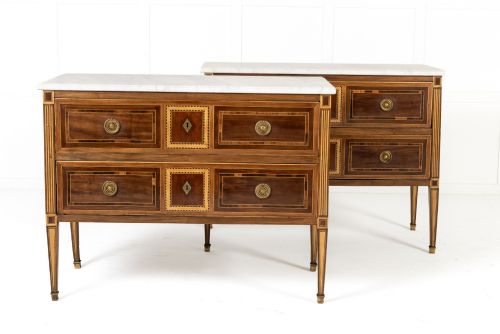
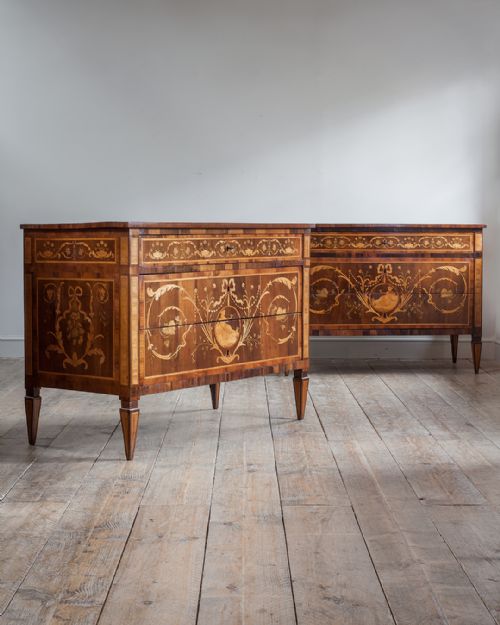
Makers working within this idiom drew inspiration from archaeological discoveries, applying architectural motifs such as fluting, pilasters, and restrained marquetry. Pieces range from grand walnut commodes with marble tops to painted Swedish Gustavian chests and compact cherrywood bedside units. Each regional school interprets the classical vocabulary differently, producing variations from strict French Empire models to lighter Italian marquetry designs.
How they were made
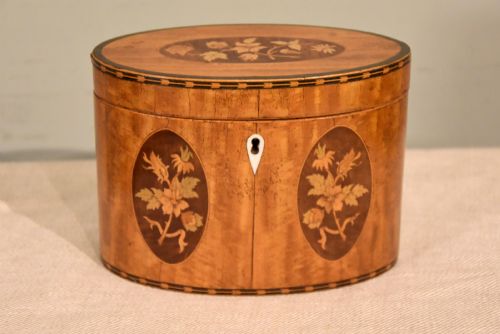
Cabinetmakers constructed carcass frames using solid timbers like mahogany, walnut, oak, and cherry, often applying fine veneers of satinwood, kingwood, and fruitwood over secondary woods. Marquetry panels required precise cutting of contrasting timber veneers to form floral or geometric motifs, while parquetry arranged wood blocks into repeating patterns. Surfaces frequently received hand-painted finishes, particularly in Scandinavian workshops where light tones dominated.
Mounts of cast or gilt ormolu and brass reinforced structural corners and provided keyhole escutcheons, adding metallic contrast to the timber. Heavy slabs of marble, cut and polished with ogee or square edges, served as functional tops on many French and Italian commodes. Dovetail joints secured the drawer construction, reflecting high standards of period cabinetry.
Neoclassical Chest Retail Price Guide 2026
Typical asking prices for neoclassical chest among the pieces listed under this phrase on Sellingantiques today, from the lower quarter to the upper quarter. They describe what is for sale here now, not the wider market.
Listings span the eighteenth and nineteenth centuries, featuring materials like marble, ormolu, satinwood, and mahogany across various European styles.
What varies in quality
The sophistication of the timber selection and the precision of the marquetry define the upper tier of these pieces. Master cabinetmakers balanced grain patterns deliberately across drawer fronts, whereas simpler examples relied on uniform painted surfaces or plain veneers. The integration of mounts also marks a distinction, as finely chased ormolu secured with original brass pins differs markedly from later replacement hardware.
Structural integrity depends on the retention of original marble tops, the smooth travel of drawers within their runners, and the survival of period drawer linings. Regional variations show divergence in execution, where provincial workshops produced sturdy, honest furniture while metropolitan cabinetmakers delivered intricate geometric parquetry and refined architectural detailing.
Henry Dasson·Weisweiler·Mon Krieger·Robert Hennell·Charles Heathcote Tatham
The Neoclassical Chest Glossary
- Marquetry
- Decorative inlay work using various coloured wood veneers to create pictorial or geometric designs on a furniture surface. Craftsmen cut these patterns meticulously to fit flush within the primary timber.
- Ormolu
- Gilded bronze used for decorative mounts and furniture hardware during the eighteenth and nineteenth centuries. The technique involves applying a gold amalgam to cast bronze.
- Gustavian
- The Swedish neoclassical style spanning the late eighteenth and early nineteenth centuries. This design vocabulary favours pale painted finishes and simplified classical motifs.
- Demi-lune
- A half-moon shape applied to the plan of tables and chests of drawers designed to stand flat against a wall.
Neoclassical Chest: Frequently Asked Questions
How do I identify a neoclassical chest?
Look for straight lines, symmetrical arrangements, and classical architectural details such as fluted columns or restrained brass mounts. The silhouette generally avoids the curved excesses of earlier baroque or rococo designs.
Examine the secondary woods inside the drawers and the construction methods, which should align with eighteenth or nineteenth-century workshop practices. Regional markers, such as Gustavian pale paintwork or Italian marquetry, help confirm the specific origin.
Where should I place a commode?
These pieces function effectively in hallways, bedrooms, or living spaces where surface area and enclosed storage are both required. A marble-topped version works well in a hallway to receive daily items.
Ensure the room maintains stable humidity levels to protect antique veneers and solid wood panels from warping. Keep the chest away from direct heat sources to preserve the finish.
How do I care for antique veneer?
Maintain stable indoor temperatures and avoid placing the item in direct sunlight, which can fade delicate satinwood and walnut. Dust the surface regularly with a soft, dry cloth.
Apply specialist wax sparingly to nourish the timber without building up a heavy residue. Avoid liquid cleaners and modern polishes that can damage older finishes.