



Neoclassical Chandelier
A neoclassical chandelier brings formal symmetry and warm, ambient illumination to high ceilings.
Neoclassical Chandelier
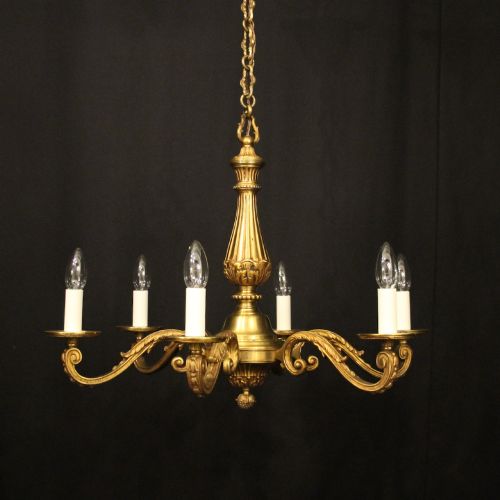
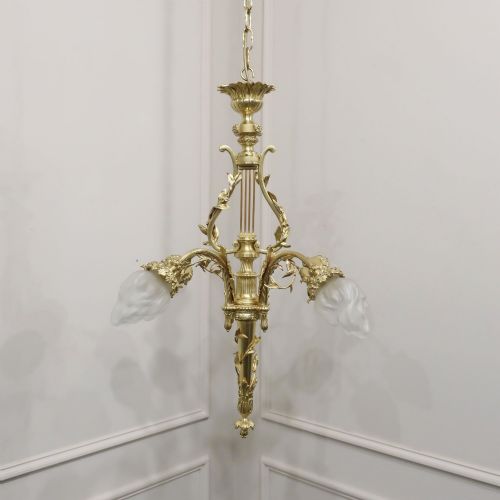
A neoclassical chandelier is a ceiling light rooted in the classical motifs of antiquity, drawing upon architectural forms from the eighteenth and nineteenth centuries. When searching for a neoclassical chandelier, buyers encounter numerous examples originating from France, England, Italy, and Russia, spanning the nineteenth century through the mid-twentieth century.
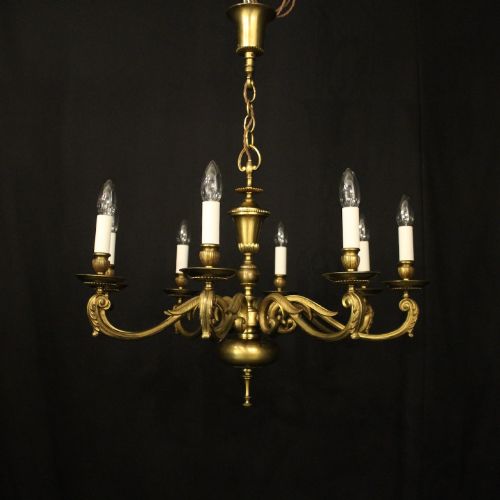
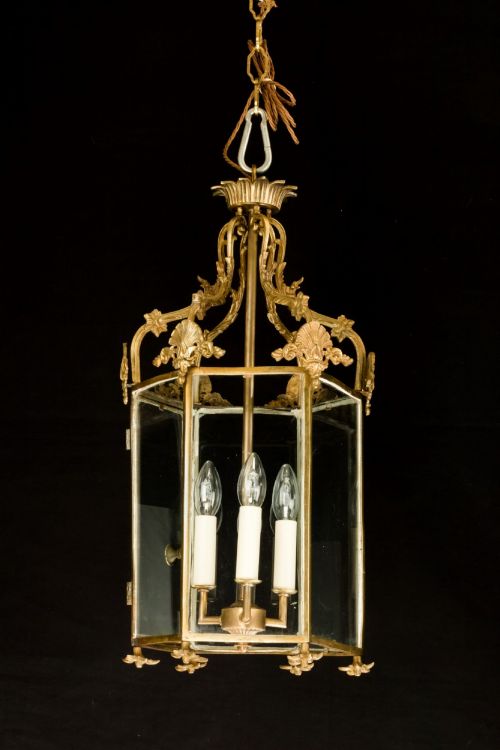
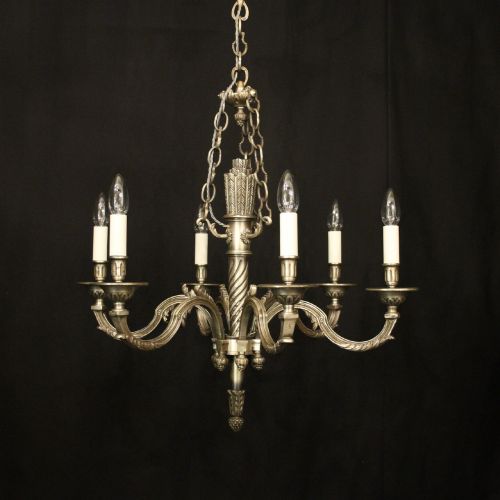
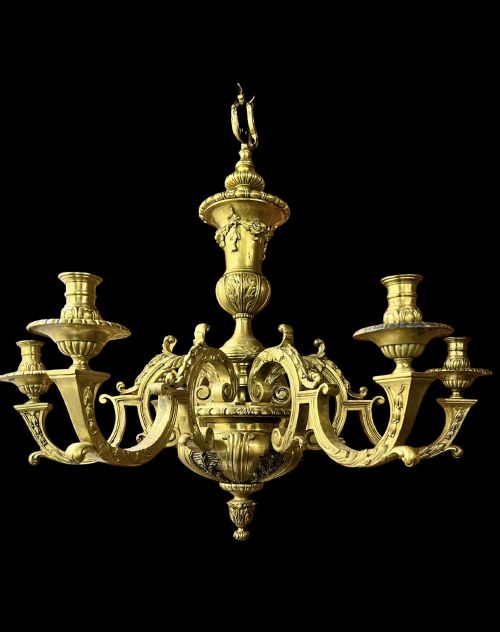
The forms vary from multi-armed candelabra fixtures to glazed hanging lanterns and tent-and-basket configurations. Many pieces reflect specific regional interpretations such as French Empire, Regency, or Edwardian styles, utilising disciplined symmetry and classical ornamentation.
Light distribution ranges from modest four-arm designs to expansive nine-light double-tiered fixtures. These ceiling lights typically suspend from chains or rods, commanding attention in entrance halls, formal reception rooms, and dining spaces.
How they were made
Makers constructed these fixtures primarily from cast and chased metals including brass, bronze, ormolu, and gilded bronze, frequently enhancing them with silver plating or ebonised details. Metal components were meticulously cast, assembled with threaded pins, and finished with chased surface ornamentation.
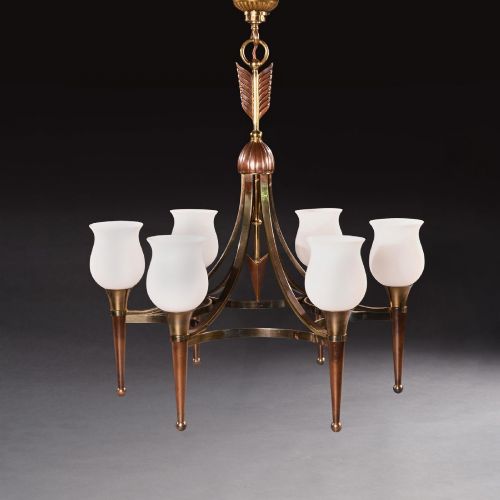
Translucent elements such as cut crystal, moulded glass panes, and beaded swags were integrated to refract and amplify candle or electric light. Glass components were hand-blown or cut, then secured into metal frames with pinned bezels or prongs.
Cherubs occasionally peek from brass arms, reminding us that even formal neoclassical lighting occasionally possessed a sense of humour.
What varies in quality
Quality reveals itself in the crispness of the metal chasing and the depth of the gilding or patination. Superior pieces display sharply rendered classical details such as acanthus leaves, urns, and lion pelts, whereas lesser examples rely on soft, uniform castings lacking manual finish work.
The integration of the glass and crystal elements also marks the distinction between standard production and exceptional manufacture. Hand-cut crystal prisms and heavy cast ormolu mounts indicate a higher tier of craftsmanship than stamped brass and pressed glass.
Maison Jansen·Andre Arbus
The Neoclassical Chandelier Glossary
- Ormolu
- Gilded bronze produced by applying a mercury and gold amalgam to a bronze object before heating to drive off the mercury. This technique yields a deep, enduring golden lustre characteristic of fine antique lighting.
- Tent and basket
- A chandelier configuration featuring an upper canopy of strings or beads forming a tent shape above a lower bowl or basket of crystal drops. This style directs light through intricate prismatic formations.
- Lyre chandelier
- A lighting fixture shaped to mimic the ancient stringed musical instrument, often decorated with symmetrical scrollwork and brass strings. It stands as a distinct motif within French neoclassical design.
- Colza hanging light
- An interior light fixture originally designed to burn colza oil, featuring mechanical reservoirs or burners adapted from nineteenth-century lighting technology. These pieces possess notable weight and industrial provenance.
Neoclassical Chandelier: Frequently Asked Questions
How do I hang a heavy neoclassical chandelier safely?
Suspension requires securing the fixture directly to a ceiling joist or structural nogging using a rated steel hook and loop system. The weight of cast bronze and crystal components demands professional ceiling reinforcement.
Electrical wiring must be routed carefully through the central brass or bronze stem, ensuring the internal hardware supports both the mechanical load and the modern electrical components.
What is the difference between Empire and neoclassical styles?
Empire style forms a specific, militaristic and imperial subset of the broader neoclassical movement, heavily influenced by Napoleonic conquest and Roman symbolism. It frequently incorporates motifs like eagles, sphinxes, and classical military trophies.
Broader neoclassical design draws upon cleaner Greek and Roman architectural proportions without the heavy imperial iconography found in strict French Empire or Regency pieces.
How should I clean crystal and gilt bronze fixtures?
Maintenance involves dusting the metal elements with a soft, dry brush and wiping glass components with a lint-free cloth dampened in mild soapy water. Strong chemical cleaners strip the historic gilt finish and damage fragile patination.
Crystal prisms and drops can be washed individually while detached from the frame, then re-hung once thoroughly dried to prevent corrosion on the metal pins.
Can these antique chandeliers be converted for modern electricity?
Most antique fixtures have already undergone electrical conversion during the twentieth century, adapting original candle sockets or oil fonts for standard bulb holders. Rewiring ensures compliance with current safety standards while preserving the exterior housing.
Internal channels designed for gas pipes or oil tubes usually accommodate modern insulated flex wiring without altering the visible brass or bronze structure.