


Neoclassical Buffet Lamps
Neoclassical buffet lamps bring formal classical proportion to a room, offering refined illumination drawn from historical columns and urns.
Neoclassical Buffet Lamps
Neoclassical buffet lamps draw upon classical antiquity, utilising architectural columns, urns and vases adapted for interior lighting. The selection spans the nineteenth century through to the early decades of the twentieth century, capturing revivals from Victorian interpretations to French Empire styles.
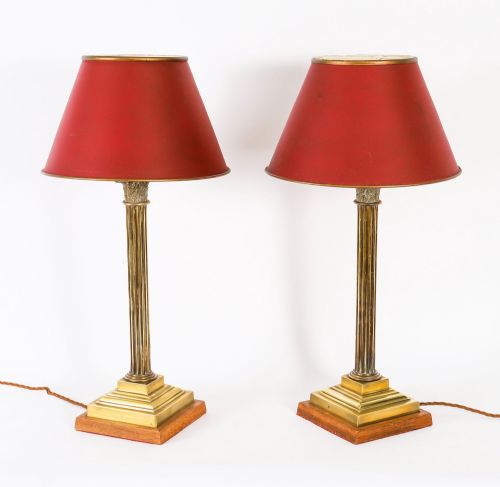
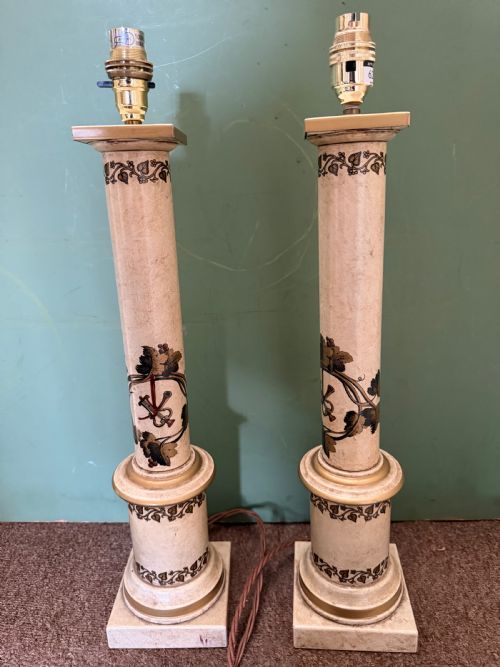
Column forms dominate the offerings, particularly brass Corinthian column designs alongside French examples in bronze, marble and toleware. Buyers frequently encounter matched pairs designed to sit symmetrically on furniture surfaces, grounded in established classical orders.
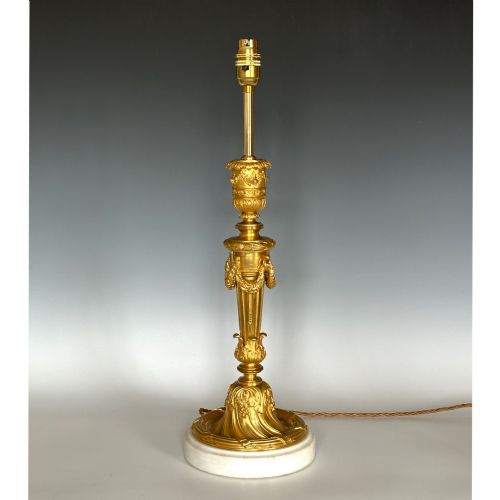
Origins cluster around French and British workshops, often taking the form of converted candlesticks or purpose-built table lights. Pieces incorporate stylistic markers such as gilt bronze mounts, ormolu details and classical motifs including the Townley vase.
Materials and Construction
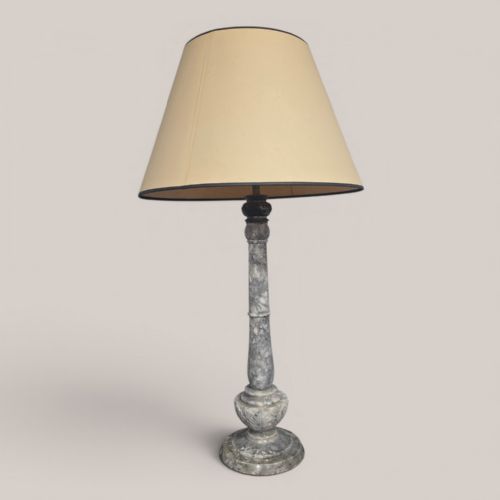
Metals form the structural backbone of these lamps, utilising cast brass, bronze and ormolu alongside electroplated finishes and iron-based toleware. Makers combined these heavy elements with carved white and coloured marble bases to ensure stability.
Decorative surfaces rely on patination, fire gilding, hand-painted tole-peinte scenes and porcelain components such as Porcelain de Paris inserts. Fabric shades complete the construction, often paired with weighted metal bases and classical column fluting.
Some columns stand so tall they appear ready to hold up a temple roof rather than a simple fabric shade.
Craftsmanship and Proportion
Quality rests in the crispness of the cast metalwork, where finely chased acanthus leaves and fluted columns separate superior examples from softer, simpler castings. The weight of the materials, particularly dense marble plinths and substantial bronze or brass bodies, dictates the physical presence of the object.
Proportion and fidelity to historical models define the upper tier of production, exemplified by pieces after known classical designs or French decorative schemes. Original surface patination and integrated, high-status materials like fire-gilded ormolu elevate individual items above standard commercial lighting.
Jean Démosthène Dugourc
The Neoclassical Buffet Lamps Glossary
- Ormolu
- Gilded bronze, produced by applying a mercury-gold amalgam to cast bronze. This technique creates a rich, durable surface finish common in French decorative arts.
- Toleware
- Lacquered or painted sheet metal items. The technique yields robust decorative surfaces, frequently seen in black finishes or paired with painted motifs.
- Corinthian Column
- A classical column order distinguished by ornate capitals decorated with acanthus leaves. It serves as a primary structural motif for the tall lamps in this group.
- Townley Vase
- A large Roman marble vase discovered in the eighteenth century and reproduced in various mediums. Its classical silhouette informs decorative lamp bodies of the period.
- Porcelain de Paris
- Hard-paste porcelain produced by various independent workshops in and around Paris. It provides a refined contrasting element to metal columns.
Neoclassical Buffet Lamps: Frequently Asked Questions
What defines a neoclassical lamp?
These lamps draw inspiration from ancient Greek and Roman architecture, utilising forms like fluted columns, urns and classical vases. They emphasise symmetry, restraint and traditional proportions rather than ornate curves.
Most examples incorporate structural elements such as Corinthian capitals or patinated bronze figures derived directly from classical antiquities.
How do I date these lamps?
Dating relies on identifying manufacturing techniques, material combinations and stylistic revivals present in the metalwork and bases. Nineteenth-century examples often feature heavier sand-cast bronze and hand-chased details.
Early twentieth-century pieces introduce modified wiring pathways, varying alloy compositions and specific regional revival traits linked to French or British production standards.
Are these lamps usually sold as pairs?
Many listings feature matched pairs designed specifically for balanced placement on sideboards, buffets or mantlepieces. Symmetrical lighting was a standard requirement for formal interior decoration during the nineteenth and early twentieth centuries.
Single lamps also appear, often representing larger, individual forms like tall column standards or converted decorative vases.
How do I care for bronze and brass?
Maintenance requires gentle dusting with a soft, dry cloth to prevent the accumulation of dirt within intricate cast details. Avoid harsh chemical cleaners or abrasive polishes that can strip away original patination and historical surface finishes.
Waxing is rarely necessary for stable metal surfaces, provided the lamps remain in dry interior environments away from excessive moisture.