

Neoclassical Bronze Decorative Urns
Neoclassical bronze decorative urns bring classical antiquity into domestic interiors through sculptural metalwork and marble plinths.
Neoclassical Bronze Decorative Urns
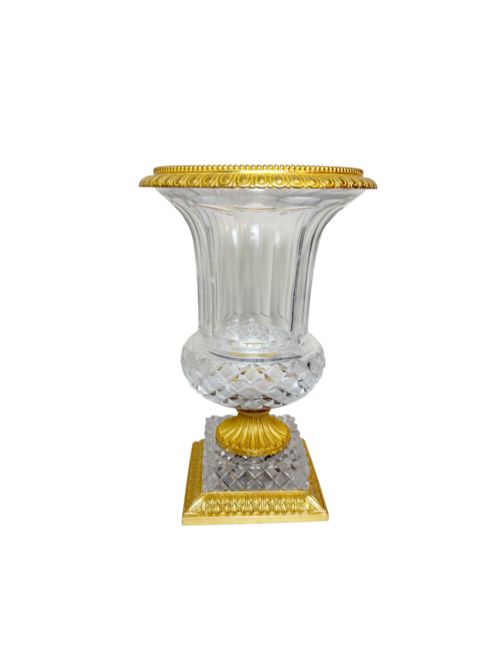
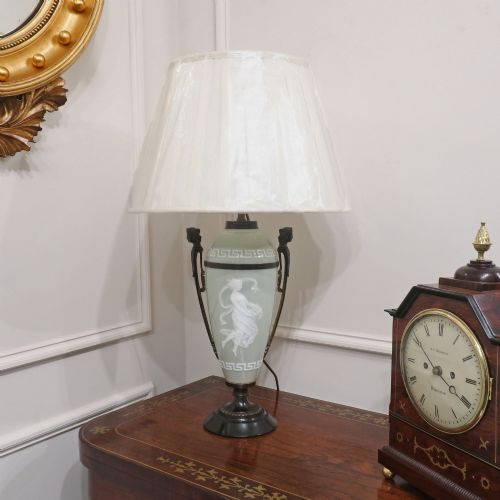
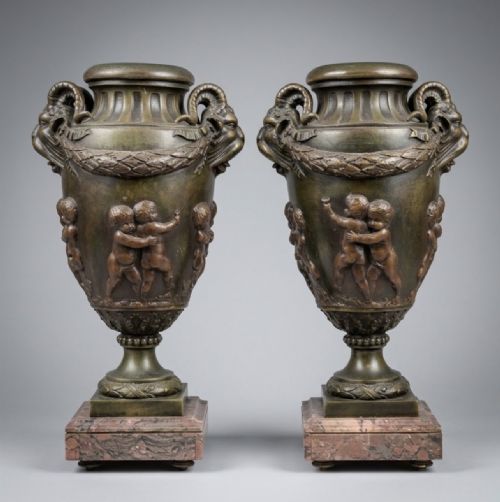
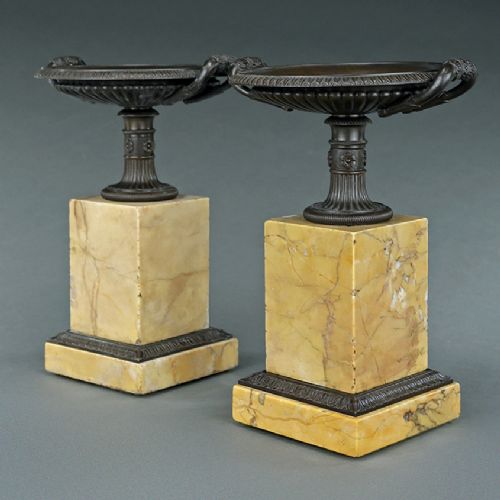
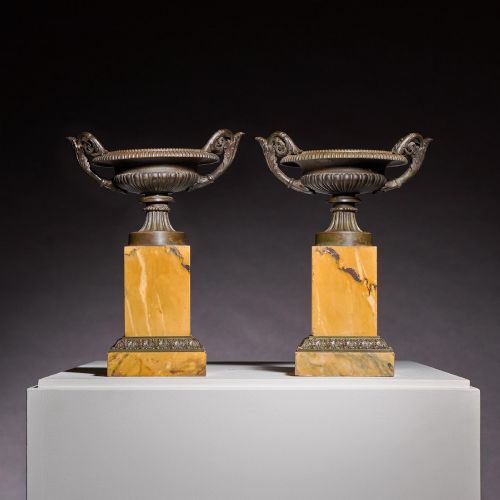
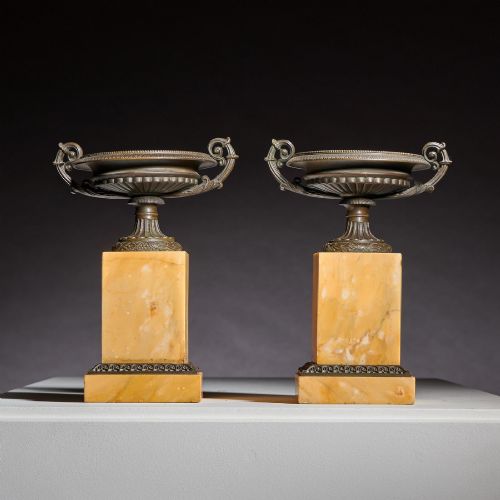
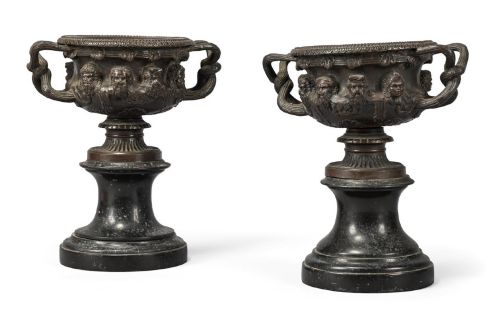
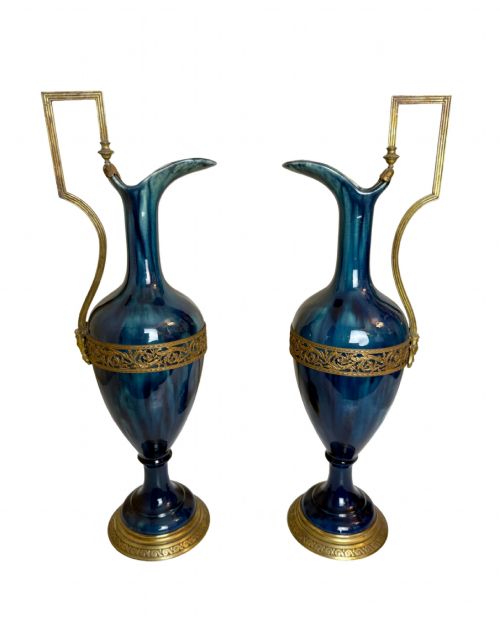
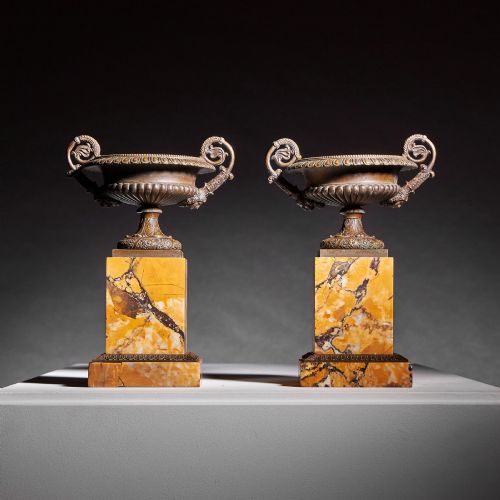
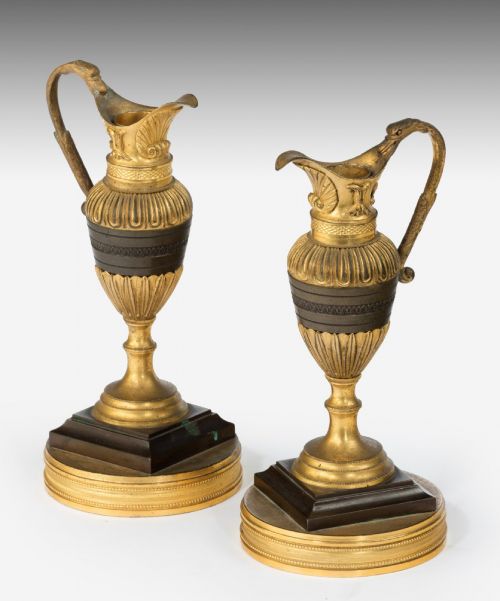
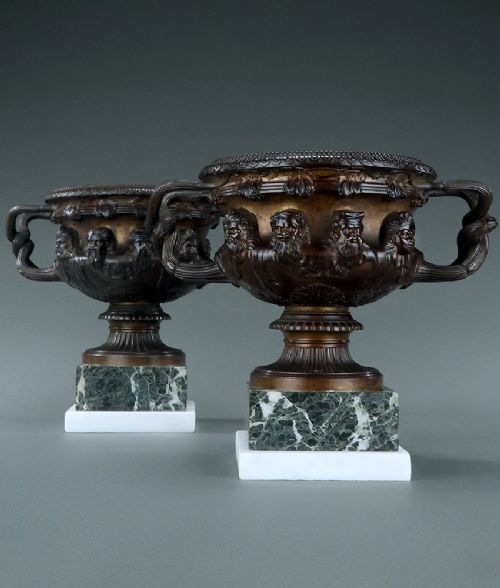
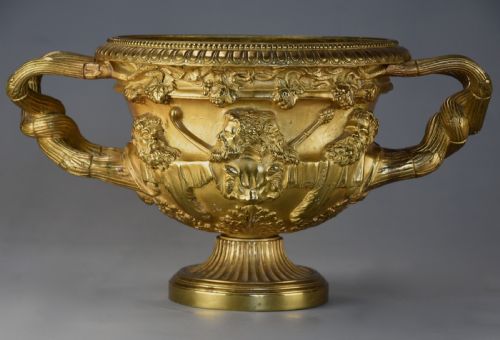
When you search for neoclassical bronze decorative urns, you encounter ornamental vessels rooted in classical antiquity, often produced during the nineteenth century as souvenirs of the Grand Tour. These pieces take various forms, including campana urns, tazzas, and ewers, frequently paired with marble bases or pedestals.
You are most likely to meet French and Italian examples from the nineteenth century, reflecting French Empire, Louis XVI, and Regency styles. Makers of the period drew heavily on classical archaeology, adapting ancient marble vase designs into reduced bronze and ormolu ornaments for interior display.
How they were made
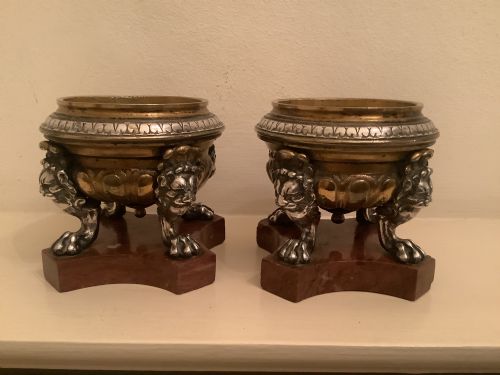
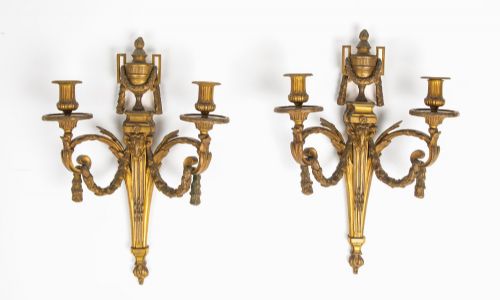
These objects rely on the combination of cast bronze and carved stone, utilising patinated or gilt bronze alongside white, green, Siena, or rouge marble bases. Ormolu mounts, cast and mercury gilded, provide bright metallic contrast to dark patinated bronze bodies and cool stone plinths.
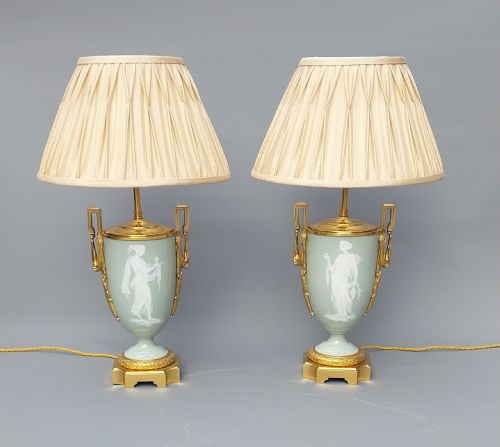
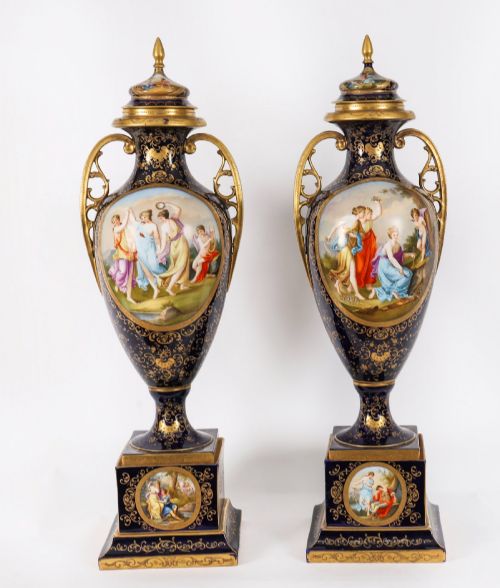
Many items incorporate porcelain elements, such as Sevres bodies or pate sur pate panels, integrated directly with bronze trim and handles. Construction often involves threaded metal rods securing multi-part assemblies of stone, metal, and sometimes ceramic components.
Neoclassical Bronze Decorative Urns Retail Price Guide 2026
Typical asking prices for neoclassical bronze decorative urns among the pieces listed under this phrase on Sellingantiques today, from the lower quarter to the upper quarter. They describe what is for sale here now, not the wider market.
Listings feature nineteenth century pieces spanning styles from French Empire and Regency to Louis XVI Revival.
What varies in quality
Quality in these pieces depends upon the crispness of the bronze casting and the depth of the subsequent chasing work. Finer examples display sharply rendered details in foliage, masks, and classical figures, whereas lesser pieces exhibit softer edges and shallow relief.
The choice and preparation of the supporting stone also distinguish the work, with solid, finely figured marble or onyx plinths elevating the piece above simpler spelter or composite alternatives.
Sevres
The Neoclassical Bronze Decorative Urns Glossary
- Ormolu
- Gilt bronze, typically produced by applying a mercury and gold amalgam to a cast bronze base and heating it to drive off the mercury. This technique creates a durable, luminous surface finish characteristic of fine decorative metalwork.
- Campana urn
- A bell-shaped vessel with a flaring rim and a footed base, modelled after ancient Roman pottery and stone garden vases. These forms frequently appear in nineteenth century decorative bronzes.
- Tazza
- A shallow saucer-like cup or vase mounted on a stem and foot, often used in classical antiquity and replicated during the Grand Tour. They serve primarily as ornamental centrepieces on marble plinths.
- Grand Tour
- A cultural journey of Europe undertaken by wealthy young men in the eighteenth and nineteenth centuries to study classical art. Souvenirs purchased on these trips included miniature bronze and marble antiquities.
- Cassolette
- A decorative vase featuring a reversible lid that functions either as an open container or a closed urn. They are commonly turned from marble and mounted with gilt bronze trims.
Neoclassical Bronze Decorative Urns: Frequently Asked Questions
What are neoclassical bronze decorative urns?
These decorative objects are nineteenth century interpretations of ancient Greek and Roman vessels, cast in metal and mounted on stone bases.
They were produced across Europe, particularly in France and Italy, to satisfy the nineteenth century demand for classical interior ornamentation.
How were these urns used originally?
In nineteenth century drawing rooms and libraries, they functioned strictly as ornamental display pieces rather than practical containers.
Many originated as souvenirs brought back by travellers touring the archaeological sites of Italy during the Grand Tour.
How do you style them at home?
These urns suit formal mantelshelves, sideboards, or console tables where their classical silhouettes and contrasting materials can stand out.
They pair effectively with period mirrors and candelabra, adding architectural weight to traditional or eclectic interiors.
How do you tell periods apart?
Regency and early nineteenth century examples often display strict classical austerity and heavy bronze casting, while later nineteenth century pieces lean into Louis XVI revival ornamentation.
The inclusion of specific marbles, such as Siena or rouge, and the evolution of the bronze patination help indicate the decade of manufacture.