



Neoclassical Brass Pendant
These neoclassical brass pendant lights and lanterns bring balanced proportion and classical detail to high ceilings.
Neoclassical Brass Pendant
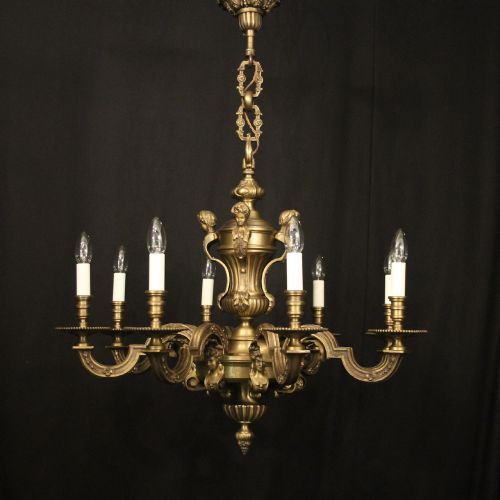
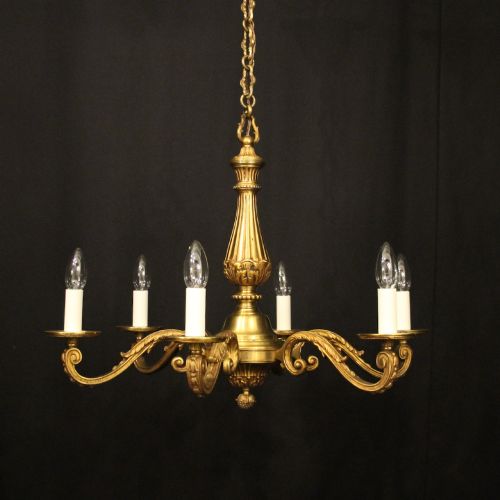
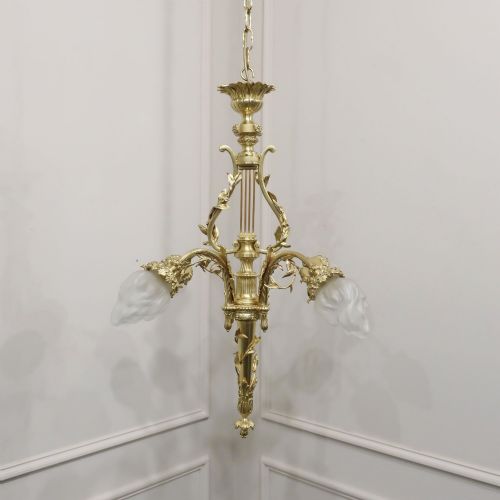
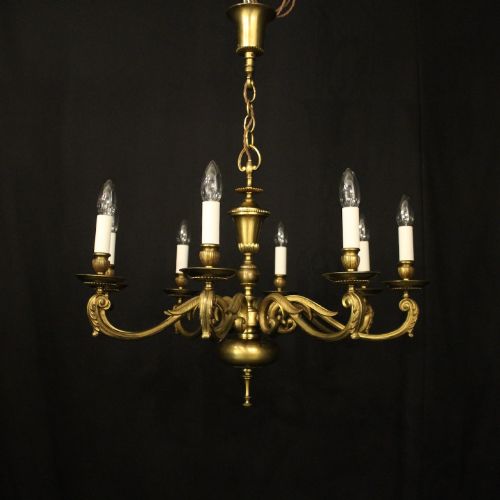
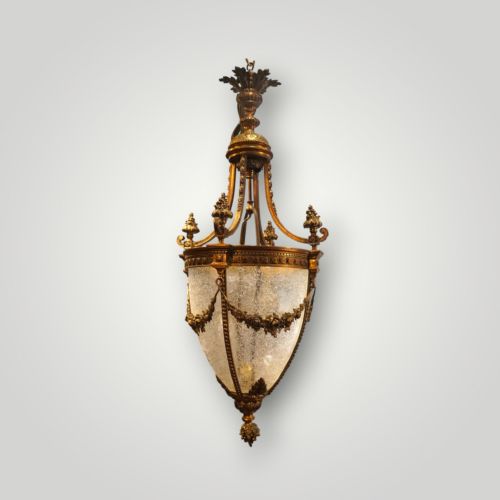
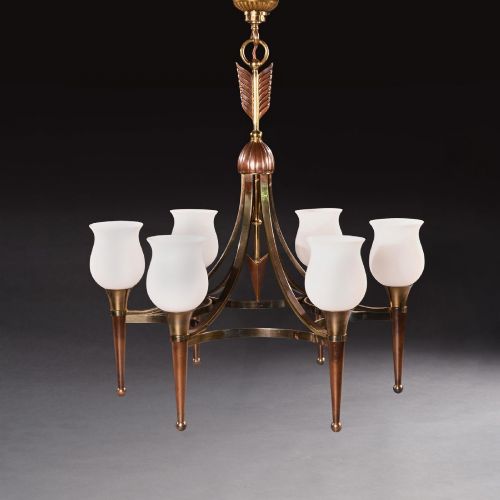
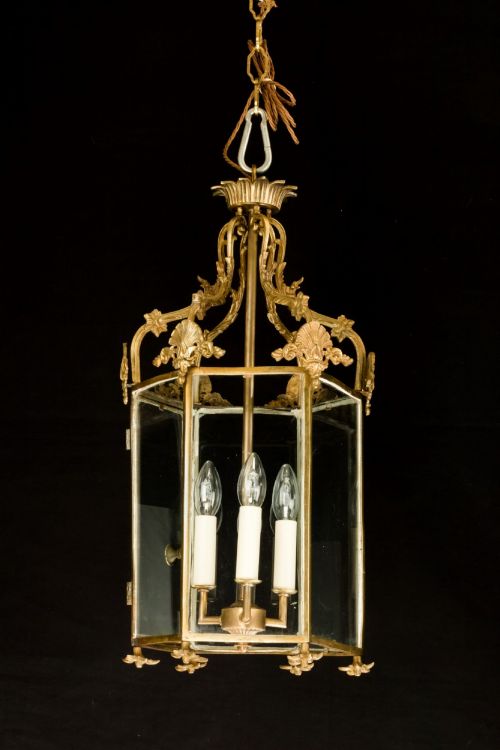
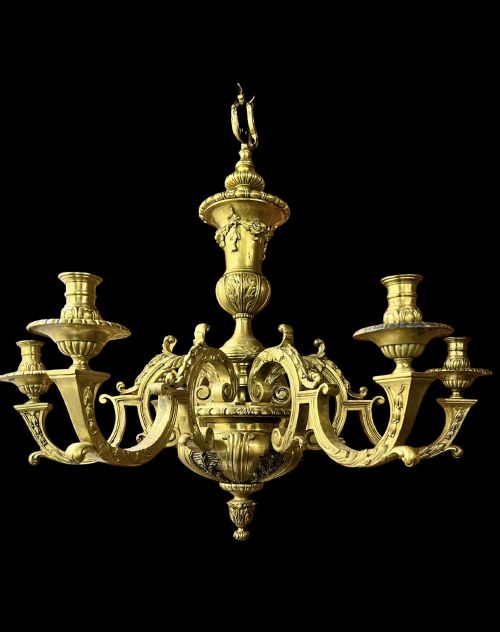
A neoclassical brass pendant hangs from the ceiling to cast balanced light across a room, drawing on classical architectural motifs for its framework. Buyers seeking this phrase encounter multi-armed chandeliers, hall lanterns, and hanging lanterns rather than simple drop pendants.
The pieces on this page span the nineteenth century through to the middle of the twentieth century, with strong representation from the nineteen-twenties and nineteen-thirties. English and French workshops dominate, channelling earlier Louis the Sixteenth, Empire, and Georgian aesthetics into hanging lights.
Forms range from hexagonal or convex glass lanterns to multi-tiered candelabra chandeliers dressed in cast metal. Many incorporate glass shades, tents, and baskets of cut crystal alongside metal frames.
How they were made
Metalwork relies on cast and chased brass, bronze, and ormolu, often enhanced with gilding or silvering. Makers used these durable copper alloys to build rigid frames that could support multiple candle arms or glass enclosures.
Glass elements, including convex panels, shades, and cut crystal drops, were hand-blown or cut to fit specific metal armature. Painted details and patination were applied to finish the surfaces of the bronze and brass components.
Forms on this page include ceiling lights, hall lanterns, and multi-arm chandeliers.
What varies in quality
The crispness of the casting marks the division between ordinary production and finer work, particularly in the rendering of classical motifs like cherubs, acanthus leaves, and lyres. Sharp, deeply chased details show that the metalworker spent time refining the raw casting.
Substance and assembly also determine the grade of a piece, visible in the gauge of the brass or bronze used for the frame and the heft of the glass panels. Heavier metal components and robust chains or ceiling plates indicate sturdier construction.
Maison Jansen·Andre Arbus
The Neoclassical Brass Pendant Glossary
- Ormolu
- Gilded bronze applied to furniture and decorative metalwork. The technique involves a mercury amalgam fired onto the bronze base to create a rich gold finish.
- Plafonnier
- A ceiling-mounted light fixture that sits close to the surface rather than hanging on a long suspension rod or chain.
- Tent and basket
- A lighting configuration where strings of glass beads form a tent shape above a lower basket-like bowl holding the lights.
- Hall lantern
- An enclosed hanging light designed specifically for entryways and corridors, often featuring glazed panels within a metal frame.
Neoclassical Brass Pendant: Frequently Asked Questions
How do I hang a heavy brass chandelier?
Suspension requires fixing directly into ceiling joists or using a rated structural noggins rather than plasterboard alone. The weight of solid bronze and brass assemblies demands sturdy steel fixings and appropriate chain links.
Electrical wiring must be routed safely through the hanging stem or chain, so consulting a qualified electrician is standard practice before installation.
Are these lights wired for modern ceilings?
Most antique hanging lights have been rewired at some point in their lifespan to meet contemporary electrical standards. It remains sensible to inspect the internal lampholders and wiring condition upon acquisition.
Compatibility with standard bulbs depends on the specific candle tubes or sockets fitted inside the frame during previous restoration work.
How do I clean gilded bronze?
Dusting with a soft, dry microfibre cloth removes surface particles without disturbing delicate patination or wear on the gold surface. Moisture and chemical cleaners should be avoided because they strip historic gilding from the metal base.
Preserving the finish relies on gentle handling and keeping the metal away from damp environments.
How do I tell Empire style from Georgian style?
Empire style draws directly on Napoleonic and classical Roman motifs, featuring military emblems, sphinxes, laurel wreaths, and heavy cast bronze forms. Georgian style tends to be more restrained, reflecting eighteenth-century English interpretations of Palladian symmetry and proportion.
Examining the structural details and decorative mounts helps reveal which classical revival period inspired the maker.