





Neoclassical Bedroom Furniture
Neoclassical bedroom furniture brings balanced proportions and restrained classical ornamentation into sleeping quarters through chests, commodes, beds, and seating.
Neoclassical Bedroom Furniture
When searching for neoclassical bedroom furniture, buyers encounter pieces spanning the eighteenth century through to the Edwardian revival, drawing on Louis XVI, French Empire, Gustavian, and Italian styles. The selection centres heavily on storage forms such as commodes and chests of drawers, alongside beds, wardrobes, dressing tables, and bedroom chairs.
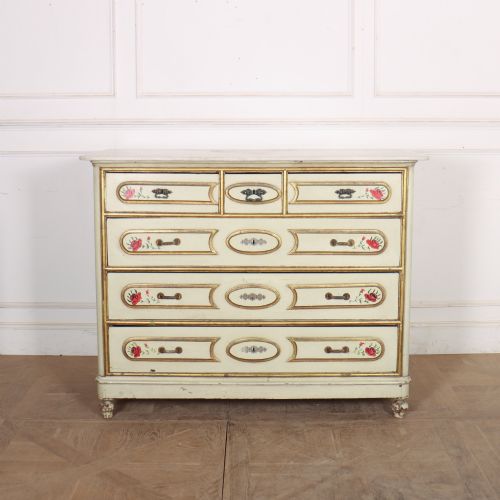
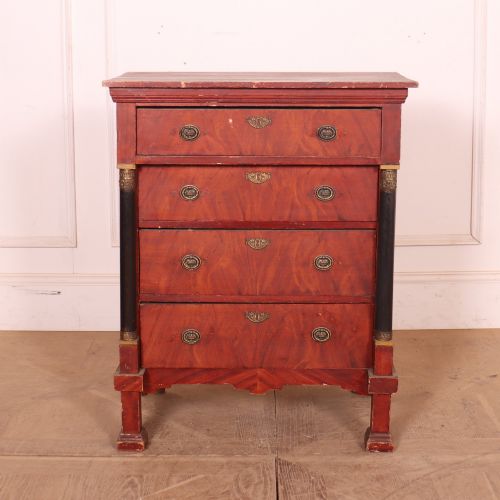
Continental European workshops dominate the offerings, with Swedish Gustavian painted pieces and Italian walnut and kingwood commodes appearing frequently alongside French Empire mahogany pieces and English satinwood suites. Forms range from simple painted oak chests to grand nine-piece inlaid satinwood bedroom suites and king-size beds.
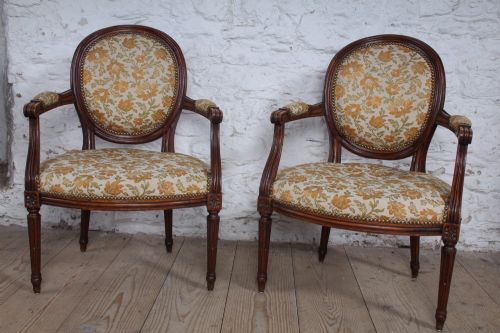
Buyers will also find occasional seating such as painted oval window seats and pairs of Italian window seats that complement the larger case pieces and beds. These items reflect the revival periods of the nineteenth and early twentieth centuries as well as eighteenth-century origins.
Materials and Construction
Timber selection ranges from native European walnut and oak to imported mahogany, satinwood, and kingwood, often utilised as solid woods or applied as veneers. Cabinet makers combined these rich timbers with painted wood finishes, particularly in Swedish Gustavian and French painted pieces.
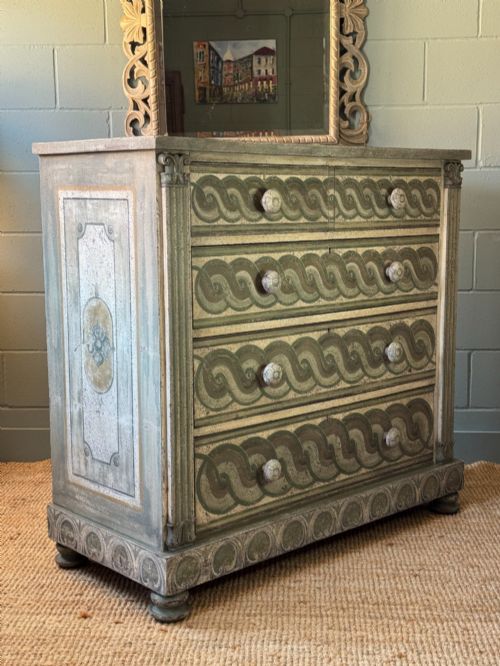
Surface enhancement relied on detailed inlay work and decorative paint schemes rather than heavy carving, maintaining the clean architectural lines characteristic of the style. Structural fittings frequently incorporate brass hardware, while top surfaces on commodes and chests often feature fitted marble slabs.
Neoclassical Bedroom Furniture Retail Price Guide 2026
Typical asking prices for neoclassical bedroom furniture among the pieces listed under this phrase on Sellingantiques today, from the lower quarter to the upper quarter. They describe what is for sale here now, not the wider market.
Period origins span the eighteenth, nineteenth, and early twentieth centuries, encompassing Edwardian and Victorian revivals.
Quality and Craftsmanship
The division between standard and superior pieces rests on the precision of timber selection, the subtlety of veneer matching, and the integrity of original painted or polished surfaces. Fine examples display crisp execution in inlaid details and well-balanced proportions that respect classical architectural rules.
Hardware integration and the structural soundness of drawers, frames, and joints further distinguish finer pieces from simpler utilitarian items. The presence of original marble tops and period-appropriate brass mounts elevates the status of commodes and bedside cabinets within this design tradition.
The Neoclassical Bedroom Furniture Glossary
- Commode
- A low chest of drawers or cabinet with doors, originating in France and frequently featuring marble tops in neoclassical designs. They provide both decorative presence and practical bedroom storage.
- Gustavian
- The Swedish interpretation of neoclassical style, characterised by light paint colours, restrained carving, and functional elegance. It emerged during the late eighteenth century and saw revivals in later periods.
- Empire Style
- A design movement inspired by the classical architecture of ancient Greece and Rome, favouring dense mahogany, prominent brass mounts, and imposing symmetry. It developed during the early nineteenth century.
- Inlay
- A technique where pieces of contrasting timber or satinwood are inserted into depressions within a solid wood surface to form decorative patterns. This method highlights the skill of the cabinet maker.
- Wardrobe
- A tall standing cupboard intended for hanging garments, appearing in period listings as large sectional storage units. These pieces often echo the architectural cornice details of neoclassical buildings.
Neoclassical Bedroom Furniture: Frequently Asked Questions
What periods do these pieces date from?
The selection includes authentic eighteenth-century examples alongside nineteenth-century interpretations and twentieth-century revival pieces.
Craftsmen across Europe produced these styles continuously, adapting classical motifs through various eras including the Victorian and Edwardian periods.
How do I identify a Gustavian piece?
Gustavian pieces typically feature pale painted wood finishes, muted colour palettes, and understated neoclassical carvings inspired by French styles.
Swedish workshops created these items to bring light and symmetrical elegance into northern European interiors.
Are marble tops original to these commodes?
Many commodes and chests of drawers incorporate fitted marble tops as a standard feature of continental neoclassical design.
These stone surfaces offered a durable, cool top layer that contrasted with the timber or painted bodies below.
What is the difference between Empire and Louis XVI styles?
Louis XVI pieces generally display lighter proportions, straight tapered legs, and subtle geometric ornament derived from classical excavations.
Empire style items are heavier and more monumental, utilising dark mahogany and prominent brass mounts to project imperial authority.
How do I incorporate these pieces into a modern bedroom?
Neoclassical case pieces work well as focal storage points, pairing a commode or chest with simpler modern surroundings to highlight their proportions.
Bedside cabinets and window seats can also add classical punctuation without overwhelming the room's primary layout.