

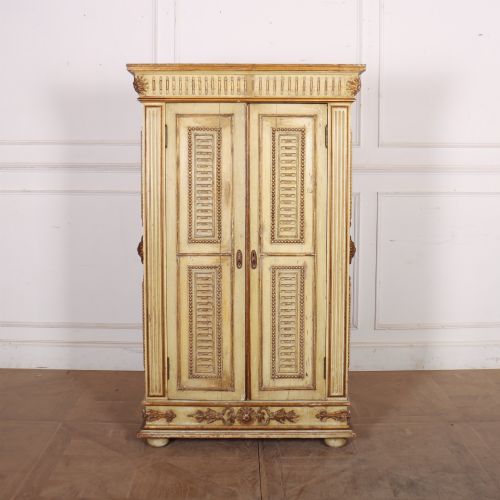


Neoclassical Armoire
These neoclassical armoire selections span grand 18th Century country house linen cupboards and Edwardian satinwood wardrobes designed to anchor a traditional bedroom.
Neoclassical Armoire
A neoclassical armoire search brings up large storage furniture that crosses several periods, including 18th Century, Georgian, Edwardian, and late 19th Century examples. The forms vary from Dutch country house linen cupboards and Italian cupboards to large Swedish Empire revival pieces in bleached birds-eye maple and brass.
Buyers also encounter Sheraton style mahogany wardrobes and inlaid satinwood bedroom suites from the Edwardian era. These tall storage pieces often double as linen presses or compactums, combining hanging space with internal shelving or drawers.
The aesthetic leans heavily on classical revival styles, taking cues from Louis XVI and George III neoclassical design as well as Biedermeier interpretations. Such pieces offer substantial architectural presence combined with functional bedroom or hallway storage.
How they were made
Cabinet makers utilised choice timber foundations such as mahogany, satinwood, bleached oak, and bleached birds-eye maple, often pairing them with contrasting boxwood stringing and elaborate marquetry inlay. The construction relies on solid cabinet-making techniques suited to tall wardrobes and linen presses.
Many examples incorporate decorative metalwork, mounting brass hardware, handles, and occasional brass accents against the timber surfaces. Painted wood finishes and detailed paintwork also appear on specific compactums and country house cupboards from the period.
Neoclassical Armoire Retail Price Guide 2026
Typical asking prices for neoclassical armoire among the pieces listed under this phrase on Sellingantiques today, from the lower quarter to the upper quarter. They describe what is for sale here now, not the wider market.
One gentleman's robe from the Georgian era patiently waits to sort out your morning routine.
What varies in quality
The standard of a neoclassical armoire depends heavily on the precision of its marquetry inlay and the choice of primary timber veneers, such as figured satinwood or birds-eye maple. Finer examples display balanced proportions, crisp classical architectural details, and integrated hardware like matching brass mounts.
Construction depth also separates standard regional cupboards from grand bedroom suite wardrobes, particularly in the complexity of internal configurations like linen presses and multi-section wardrobes. The treatment of secondary timbers and the crispness of painted surfaces further distinguish the cabinet work.
The Neoclassical Armoire Glossary
- Armoire
- A tall cupboard or wardrobe used primarily for storing clothes and textiles. These pieces often feature double doors enclosing hanging space or shelving.
- Linen Press
- A tall storage unit designed traditionally for flat linens and garments, typically combining upper cupboard doors with lower drawers or a compactum layout.
- Marquetry
- Decorative veneer work where small pieces of contrasting wood, such as boxwood and satinwood, are fitted together to form pictorial or geometric patterns on the surface.
- Compactum
- A multi-functional wardrobe or closet that divides internal space into specific compartments for hanging clothes, drawers, and shelving.
- Biedermeier
- A Central European style from the 19th century emphasising clean lines, utilitarian comfort, and minimal ornamentation over excessive revival flourish.
Neoclassical Armoire: Frequently Asked Questions
Where did people put an armoire?
These large storage pieces traditionally stood in bedrooms, dressing rooms, or country house landings to hold bulky garments and household linens. Their substantial height and depth required dedicated wall space away from active walkways.
Today, they function similarly in modern homes, serving as freestanding bedroom wardrobes or as architectural storage cabinets in large hallways and living areas.
How do I style a neoclassical armoire?
Allow the piece to anchor the room by giving it a clear wall where its architectural proportions and timber grain can stand out without visual clutter. Keeping surrounding decor simple highlights the classical revival details and inlay work.
Pairing the darker mahogany or lighter satinwood tones with complementary antique furniture helps maintain a cohesive period aesthetic within the interior space.
What is the difference between a wardrobe and a linen press?
A wardrobe is built principally for hanging garments upright on rails or hooks behind tall doors. It prioritises vertical clearance for coats and dresses.
A linen press is traditionally configured with shallow internal shelving for folded textiles and linens, frequently accompanied by sliding trays and lower drawer banks.
How do I date an antique cupboard?
Dating relies on observing the primary woods, construction techniques, and stylistic revival markers like Sheraton or Louis XVI motifs. Details such as the type of brass hardware and the presence of painted wood finishes provide further chronological clues.
Comparing the specific proportions and regional characteristics, such as Dutch country house or Swedish Empire revival traits, helps narrow down the era of manufacture.