
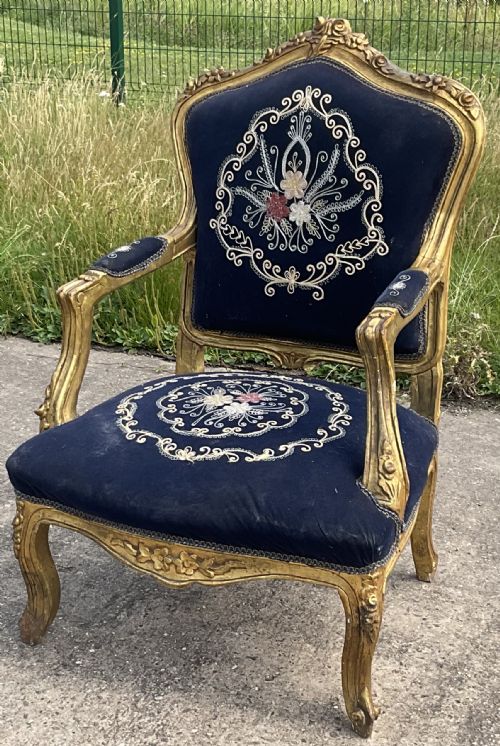
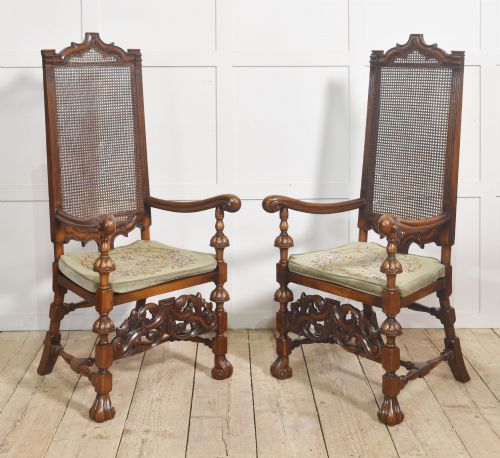
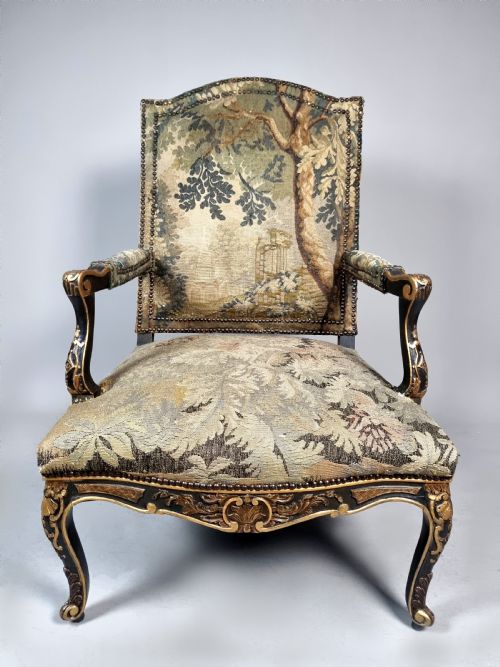
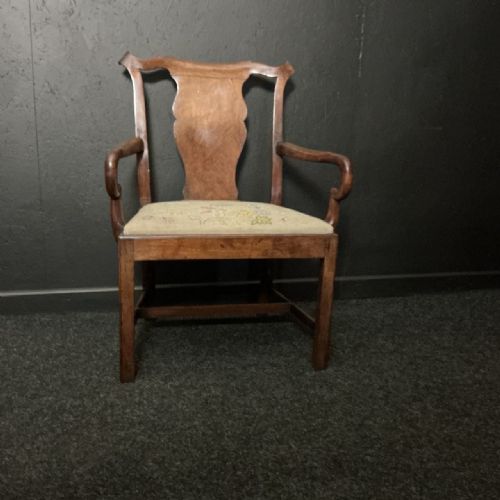
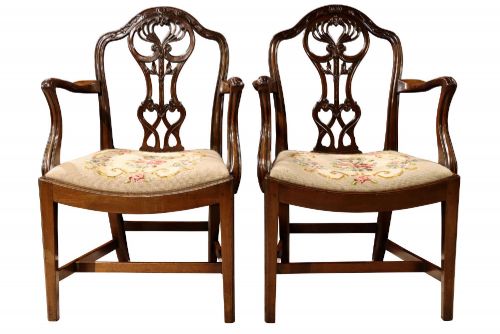


Needlepoint Open Armchair
A needlepoint open armchair brings together structural timber and hand-worked textile, offering a seat designed for both display and use.
Needlepoint Open Armchair
When you search for a needlepoint open armchair, you are looking at seating framed in timber and upholstered with stitched panels. The form encompasses chairs made across the eighteenth and nineteenth centuries, including revival pieces from the Edwardian era.
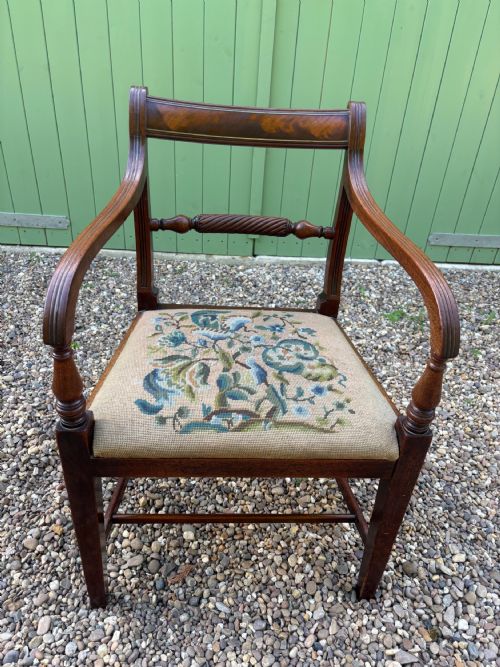
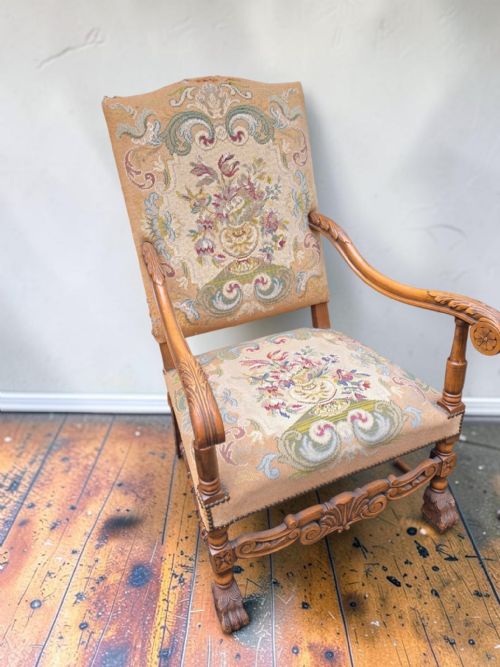
The version you are most likely to meet on this page is nineteenth-century walnut or mahogany, often carrying French or English design influences. These range from heavy salon chairs to lighter elbow chairs with exposed wooden arms.
Origins stretch from English workshops to French ateliers, taking in George III, Regency, Victorian, and Edwardian periods. The upholstery defines the group, using wool tapestry panels worked in needlepoint.
How they were made
Makers shaped the frames from hardwoods such as walnut and mahogany, alongside gilded or painted giltwood and occasional ebonised timber. Joinery methods relied on traditional pegged and tenoned joints to support the open arm construction.
Upholstery combined a structural foundation of webbing and stuffing with a top layer of hand-stitched wool tapestry. Brass tacks frequently secure the tapestry edges directly to the wooden rails of the frame.
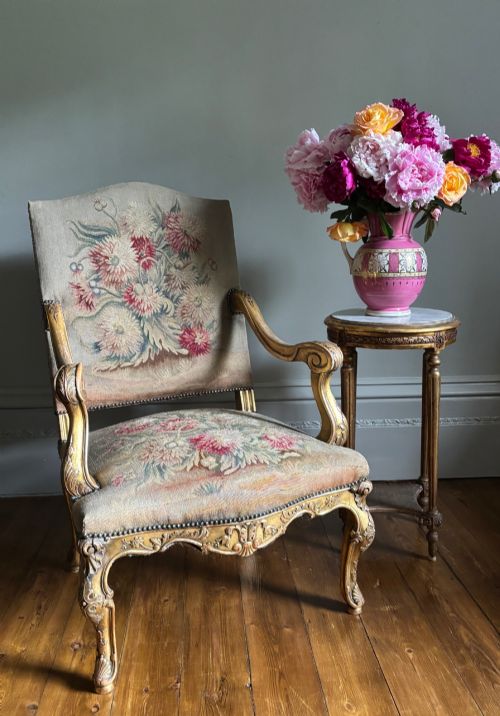
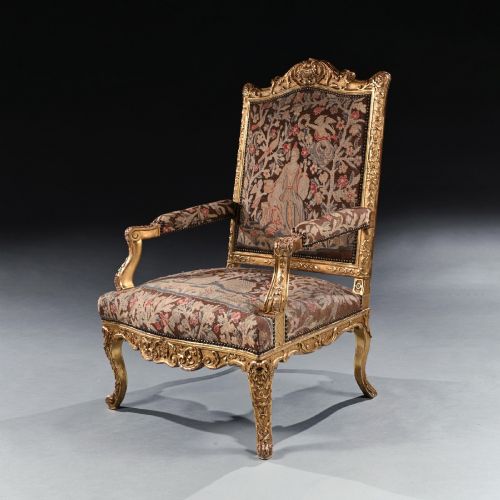
The selection includes both English country house seating and French Regence and Louis-inspired fauteuils.
What varies in quality
The ambition of the wooden frame sets one chair apart from another, moving from simple turned supports to deeply carved cabriole legs or giltwood enrichment. Timber selection also dictates grade, with figured walnut and dense mahogany marking out superior examples.
Needlepoint density creates the primary distinction in the textile work, where finer stitches permit greater detail and pictorial depth in the panels. The integration of the textile to the specific dimensions of the chair frame reveals the original maker's intent.
Holland and Sons
The Needlepoint Open Armchair Glossary
- Armchair
- A seat with side supports for the arms, constructed with an open wooden frame in the examples listed here.
- Needlepoint
- A type of canvas work embroidery executed with a yarn, forming the tapestry panels seen on these seats.
- Giltwood
- Timber treated with a thin layer of gold leaf, frequently found on French and revival salon frames.
- Elbow chair
- An alternative term for an open armchair, often denoting a lighter seating form designed for a desk or parlour.
- Fauteuil
- An upholstered open armchair with wooden arms originating from French design traditions.
Needlepoint Open Armchair: Frequently Asked Questions
How do I date a needlepoint open armchair?
Dating relies primarily on the timber species, framing style, and the characteristic carving details of the legs and arm supports. Eighteenth-century pieces display different proportions and joinery compared to nineteenth-century revivals.
The needlework itself can offer clues, though replacement upholstery remains common on older frames. Comparing the structural construction to documented period examples helps confirm the decade of manufacture.
Were these chairs used at desks?
Many open armchairs, particularly mahogany elbow chairs and specific Georgian forms, were designed for writing desks or library tables. Their open sides allowed comfortable movement while seated at work.
Heavier salon chairs and giltwood armchairs served reception rooms and parlours rather than workspaces. Examining the height of the seat and arms indicates the intended domestic function.
What is the difference between French and English styles?
French designs in this category often feature curved cabriole legs, giltwood finishes, and rounded fauteuil proportions. They emphasise decorative carving and ornate tapestry panels.
English equivalents tend to utilise mahogany or walnut with straighter lines, Chippendale influences, or understated Gainsborough proportions. The structural restraint reflects domestic English tastes of the Georgian and Victorian eras.
How should I care for the needlepoint upholstery?
Needlepoint panels require gentle treatment, avoiding direct sunlight to prevent the wool yarns from fading. Regular light suction through a mesh guard removes dust without stressing the old canvas.
Keep the timber frames conditioned with appropriate wax while protecting the surrounding textile from moisture. Professional textile conservation is advisable if structural repairs to the stitching become necessary.