

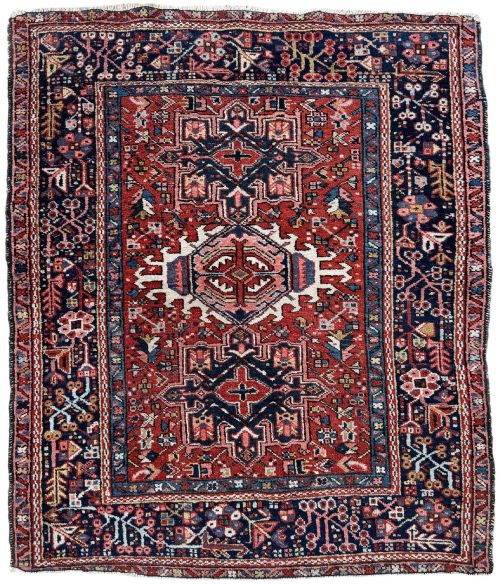
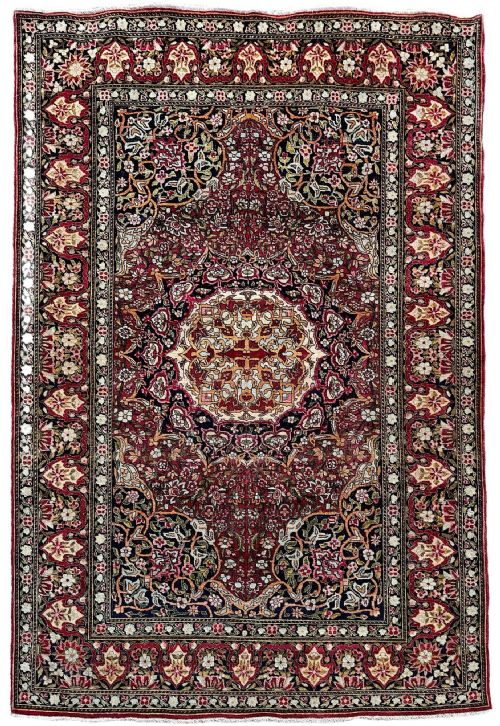

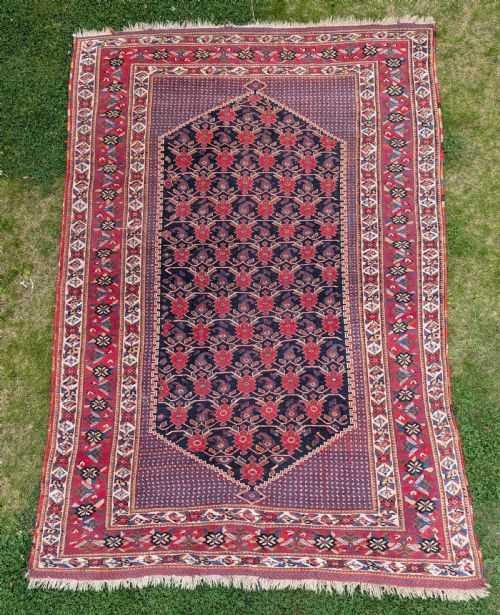
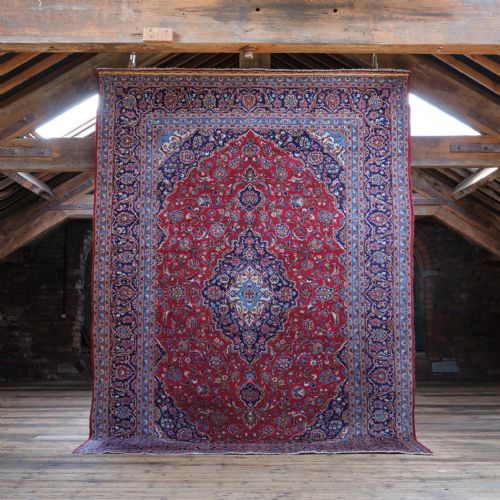

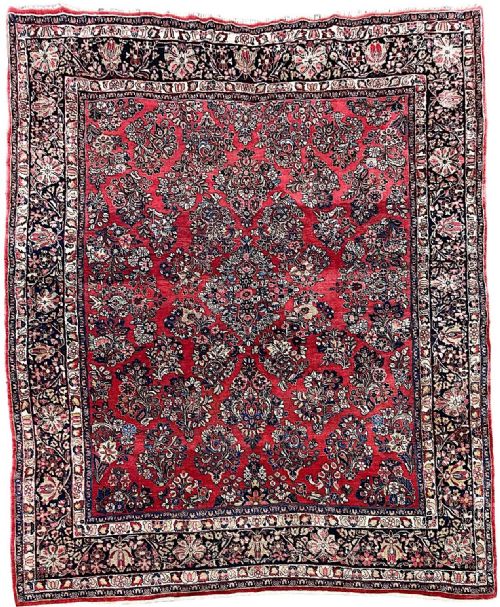

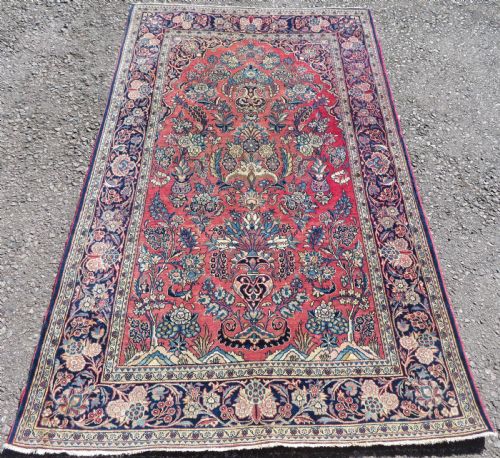


Navy Crimson Rug
These woven floor coverings in navy crimson rug styles bring rich traditional Persian and Anatolian character into a room.
Navy Crimson Rug
A navy crimson rug search brings up hand-knotted carpets, area rugs, hallway runners and saddle bag faces originating primarily from Persia, alongside Anatolian, Turkish and Indian examples. These floor coverings date from the late nineteenth century through to the mid twentieth century, spanning periods such as 1900, 1920 and the nineteenth century.
Buyers will encounter specific regional types on this page, including Kashan, Heriz, Isfahan, Sarouk, Afshar, Hamadan, Qashqai and Tabriz pieces. Forms range from compact hallway runners and prayer rugs to large carpets suited for principal reception rooms.
How they were made
Makers constructed these rugs using natural materials, predominantly wool and cotton, with occasional examples woven in pure silk. Weavers knotted these fibres by hand onto cotton or wool foundation warps and wefts to create dense, durable floor coverings.
The dying process utilised natural sources to achieve deep saturations of colour, creating the characteristic navy and crimson tones found across traditional Persian and tribal designs.
Navy Crimson Rug Retail Price Guide 2026
Typical asking prices for navy crimson rug among the pieces listed under this phrase on Sellingantiques today, from the lower quarter to the upper quarter. They describe what is for sale here now, not the wider market.
Listings span multiple decades from 1880 to 1940, featuring wool, cotton and silk materials across diverse Persian and tribal styles.
What varies in quality
The fineness of the knotting largely determines the precision and intricacy of the rendered pattern. Higher knot densities permit complex floral, medallion and pictorial details to appear crisp and well-defined.
The purity and handling of the wool, alongside the depth of the dye work, separate standard utility weaves from superior examples. Master workshops and skilled tribal weavers achieved greater harmony in colour saturation and structural integrity.
The Navy Crimson Rug Glossary
- Warp
- The vertical foundation threads stretched lengthwise on the loom before knotting begins. The fringe of a finished rug is typically formed from these exposed threads.
- Weft
- The horizontal threads passed alternately over and under the warp threads to secure the rows of knots. They provide structural stability across the width of the piece.
- Prayer rug
- A small format rug featuring a mihrab or arch design at one end, traditionally used for individual prayer. The niche points toward Mecca during use.
- Runner
- A long, narrow carpet format designed specifically for hallways, corridors and staircases. These pieces follow restricted widths to fit transitional spaces.
Navy Crimson Rug: Frequently Asked Questions
How do I clean a wool rug?
Regular gentle vacuuming without a beater bar removes surface dust and loose grit from the pile. Professional specialist cleaning is necessary for deeper maintenance to protect the natural wool fibres.
Water saturation and harsh chemical detergents damage both the pile and the foundation structure. Prompt blotting with a dry cloth manages accidental spills before they set.
Where should I place a runner?
Hallway runners suit narrow transitional spaces, entrance corridors and galley kitchens where foot traffic is frequent. Placing a suitable underlay underneath prevents slipping and cushions the foundation against hard flooring.
Keeping the piece away from direct, continuous strong sunlight preserves the natural dye colours over time. Positioning furniture off the main decorative field lets the pattern remain fully visible.
How do I identify a tribal rug?
Tribal rugs display geometric motifs, stylized animal figures and irregular field layouts woven by nomadic groups rather than urban workshops. These pieces often incorporate memory-driven designs rather than pre-planned cartographic patterns.
Materials tend to be robust, and dimensions can be idiosyncratic due to the portable nature of the looms used. Local dyeing traditions give these pieces a distinct aesthetic distinct from city carpets.
Are these carpets suitable for daily use?
Hand-knotted wool and cotton construction provides exceptional durability for everyday domestic environments. The dense pile absorbs foot traffic while maintaining its structural integrity across decades of use.
Rotating the rug periodically distributes wear evenly across the surface if placed in a high-traffic zone. Quality underlays further support the foundation threads against premature compaction.