

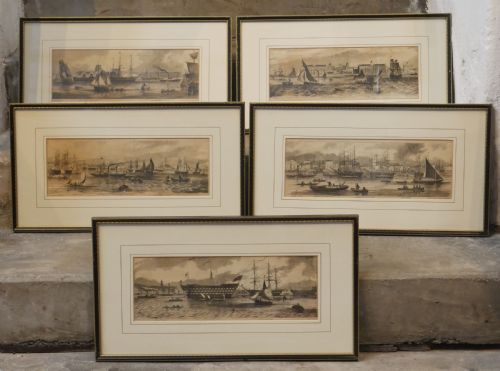


Naval Art Print
Naval art print pieces bring maritime history into a room, offering historic depictions of vessels, officers, and fleet reviews.
Naval Art Print
A naval art print encompasses framed prints, engravings, lithographs, and photographs depicting maritime scenes, royal yachts, and naval officers from the eighteenth century to the early twentieth century. Buyers seeking this phrase encounter works ranging from Victorian marine watercolours and Edwardian maritime prints to Regency portraits of officers.
The selections available here lean heavily toward nineteenth-century works, including engravings of London docks, ship lithographs, and framed photographs of sailors and captains. Alongside printed works, the listings also feature original watercolours, oils, and photographs housed in period frames such as oak and giltwood.
How they were made
Many of these works utilise traditional paper mediums for engravings, lithographs, and photographs, capturing fine details of ships and personnel. Artists and makers applied watercolour and oil pigments to paper and canvas to produce detailed maritime paintings and portraits.
Framing forms an integral part of these pieces, with makers housing prints, paintings, and photographs in wood, gilt, and giltwood frames. Original framing helps preserve the paper and canvas components across decades of display.
Naval Art Print Retail Price Guide 2026
Typical asking prices for naval art print among the pieces listed under this phrase on Sellingantiques today, from the lower quarter to the upper quarter. They describe what is for sale here now, not the wider market.
A stoic captain and a vessel named Winifred share shelf space with a grand review of the fleet for the Queen.
What varies in quality
Quality in these pieces rests upon the precision of the medium and the integrity of the composition, whether examining the brushwork of a marine painting or the sharp ink impressions on an early engraving. Masterful handling of light and water by artists like WF Mitchell or Frank Wood elevates a piece above standard decorative production.
The preservation of the paper, canvas, or card, alongside the authenticity of the original wood or giltwood frame, influences the standing of an item. Pieces retaining their original framing provide a more complete historical context than those rehoused in modern surrounds.
WF Mitchell·Frank Wood·John Scott Russell·Snaffles
The Naval Art Print Glossary
- Engraving
- A printmaking technique where an artist cuts an image into a metal plate to hold ink. This method produces crisp, detailed lines well suited to architectural and maritime subjects.
- Lithograph
- A planographic printing process based on the antipathy of oil and water, allowing multiple impressions from a single stone or plate. It became widely used for producing vibrant ship and fleet prints.
- Giltwood
- Wood that has been coated with a thin layer of gold leaf or gold paint. Frames utilising this finish were popular for displaying important portraits and marine paintings.
- Watercolour
- A painting method where pigment is suspended in a water-based solution on paper. It offers translucent washes that suit the depiction of sea and sky.
Naval Art Print: Frequently Asked Questions
What periods do these pieces cover?
The pieces span from the eighteenth century through the Regency and Victorian eras into the early twentieth century.
Most items originate from the nineteenth and early twentieth centuries, reflecting changing maritime technologies and naval uniforms.
Are these works original or reproductions?
The selection includes original period engravings, lithographs, photographs, watercolours, and oil paintings.
Each item originates from the era it depicts, rather than being a modern replica.
How should I display them at home?
These framed works suit studies, hallways, or living spaces where traditional maritime history is appreciated.
Keep them away from direct sunlight to protect the paper, watercolours, and wooden frames from fading.
What framing do the pieces have?
Many items retain their period surrounds, including original oak, wood, gilt, and giltwood frames.
These frames often match the age of the print or photograph they enclose.